Professor, Urban and Environmental Policy and Planning (UEPP), Virginia Tech; Joann Boughman Innovation Fellow at USG; Acting Director, Center for Future of Work Places and Practices (CFWPP); Head of Outreach and Engagement, Center for European and Transatlantic Studies (CEUTS)
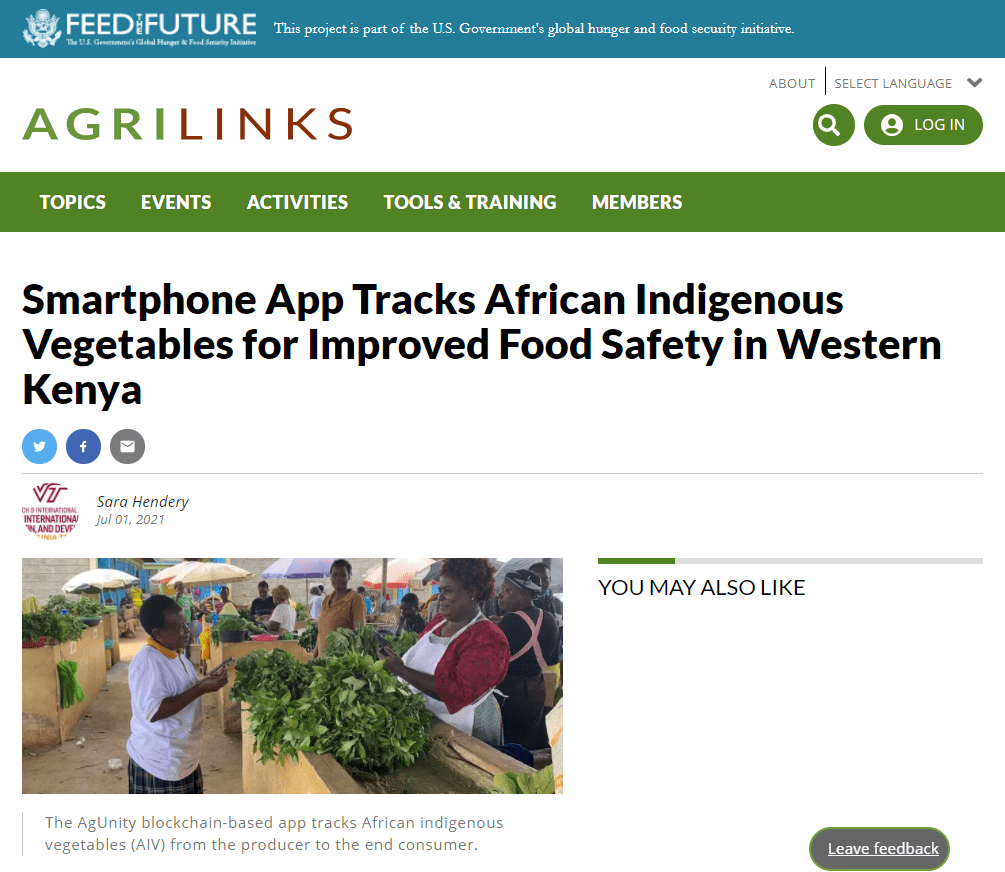
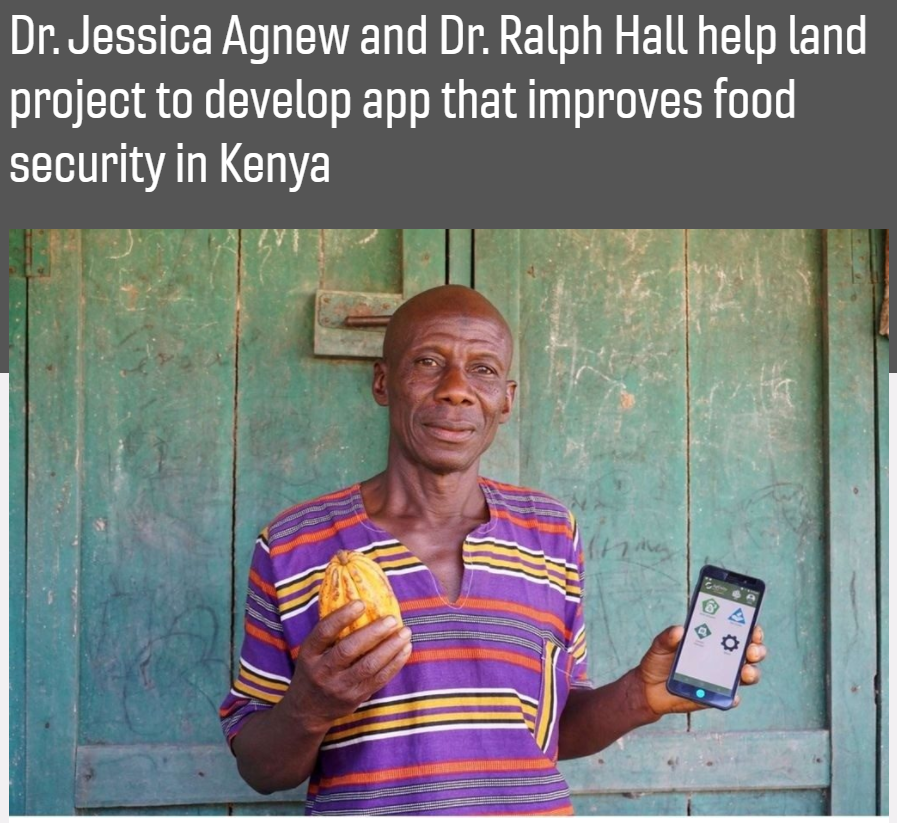
The following AGRILINKS article by Sara Hendery was just published on our USAID LASER PULSE project in Kenya. The purpose of this project is to explore how a blockchain-based technology platform developed by AgUnity, could be used to enhance the supply chain for African Indigenous Vegetables (AIVs). The project is co-managed by our in-country partners at Egerton University.
Earlier this week, I had the pleasure of talking with Prof. Anne Khademian, the Executive Director of the Universities at Shady Grove (USG), about a wide range of topics related to USG’s new strategic planning process. Our conversation covers why I decided to travel to the USA (over 20 years ago!) to study in the Technology and Policy Program at MIT, and how my subsequent research on sustainable development and binary economics/inclusive capitalism, led me to the emerging movement of Community Wealth Building (CWB).
During the spring semester, students in the VT Honors College SuperStudio had the pleasure of engaging with Riccardo Mastini, a researcher at the Institute of Environmental Science and Technology (ICTA) at the Autonomous University of Barcelona. The video below shows Riccardo’s opening remarks that cover the Green New Deal (GND), the need for a new political economy that reduces inequality and protects/enriches the environment, the difference between pubic vs. private services and how the enclosure of public goods can result in artificial scarcity and growth, environmental (in)justice, and the need to move towards a post-growth GND agenda.
The paper behind Riccardo’s remarks that explores the idea of a GND without growth can be access here.
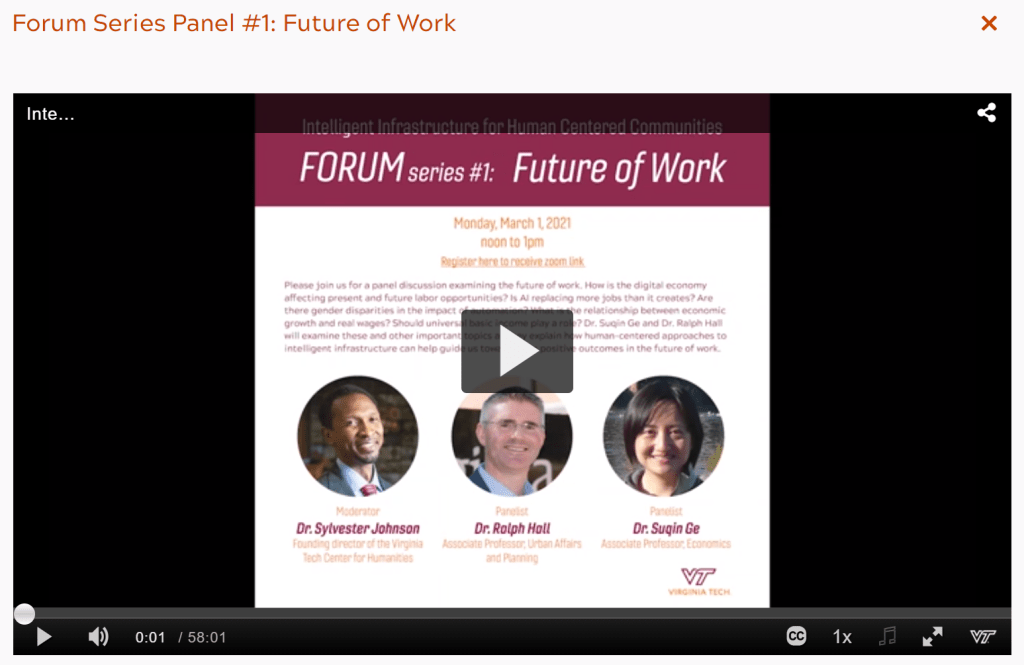
If you missed our conversation on the Future of Work last week and would like to watch a recording of the session, it can now be accessed by clicking on the image below.
If you are interested in the Future of Work, please consider joining Prof. Sylvester Johnson, Prof. Suqin Ge, and I, from 12-1pm (EST), on Monday, March 1, for a discussion that will explore the following questions:
How is the digital economy affecting present and future labor opportunities?
Is AI replacing more jobs than it creates?
Are there gender disparities in the impact of automation?
What is the relationship between economic growth and real wages?
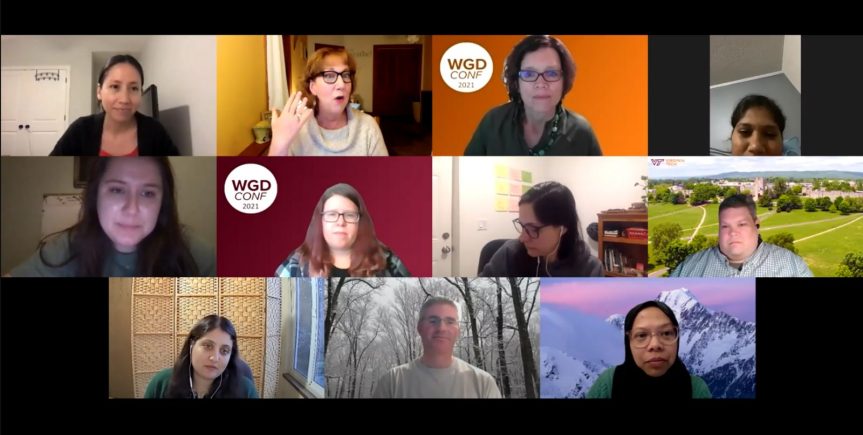
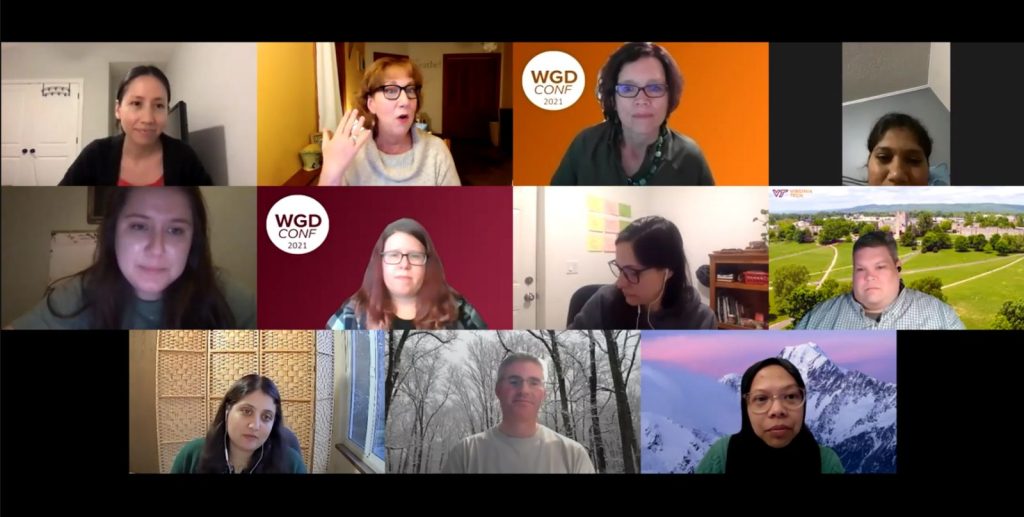
The 2021 Women and Gender in Development Virtual Conference will begin next week, during which I will announce the winners of the 4 Minute Student Flashtalks (4MFlashTalks) competition. This contest has two phases. The first included nine contestants who submitted videos that were part of a jury-judged competition. Two of the videos were selected as winners based on 10 criteria relating to (1) comprehension and context and (2) communication. I will announce these two winners at 11:50am on Feb 25 during the conference.
After concluding the first phase of the competition, the jury decided to invite all the students who submitted videos to a virtual Communicating Science Workshop at Virginia Tech. After carefully reviewing the nine videos, we realized our competition guidance had been too constraining and wanted to provide students with more freedom on how they communicated their research to a general audience. The workshop encouraged students to be personal, direct, spontaneous, responsive, and emotionally expressive. It also promoted the need to develop a story narrative that explains why their research is important to the themselves, their field of study, and the world.
Five of the students re-recorded their presentations (below) for the second phase of the competition – a People’s Choice award. Conference attendees can vote for their favorite video here. I will also announce the People’s Choice winner on Feb 25.
About the 4MFlashTalks: The 4MFlashTalks is a virtual asynchronous competition that promotes student engagement by providing opportunities to graduate students who have completed data collection for their research, to present their work through a brief 4 minute presentation. It is inspired by the 3 Minute Thesis (3MT) research communication competition developed by the University of Queensland in Australia and held in academic institutions around the world. The 4MFlashTalks is an experience intended to communicate research to a non-expert audience in a simple, concise, and articulate manner. This event in the virtual WGD Conference aims to provide a space where all attendees (students, faculty, practitioners, leaders, others) from around the country and the world can learn and connect with future professionals.
The Center for International Research, Education, and Development recently published a short story on our USAID LASER (Long-Term Assistance and Services for Research) PULSE (Partners for University Led Solutions Engine) project entitled “Exploring the Use of Blockchain Technology to Improve Food Security Through African Indigenous Vegetables in Western Kenya.”
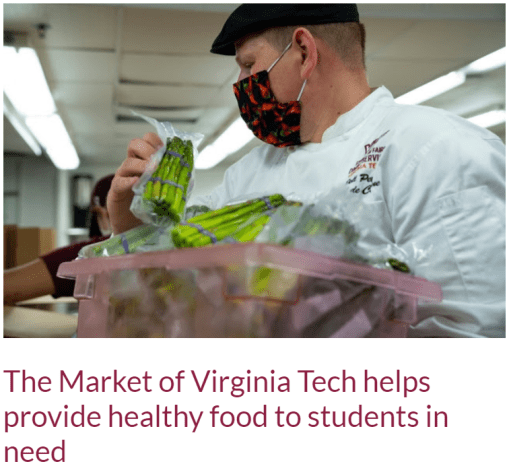
Over the past several months, Dr. Jessica Agnew (Assistant Director, Research, Operations, and Program Management at Center for International Research, Education, and Development, Virginia Tech), Jesse Harden (a PhD student in Computer Science at Virginia Tech), and I have been running an impact evaluation of Phase 1 and 2 of Virginia Tech’s new food access program. The Market of Virginia Tech was officially announced today. In the coming weeks, we plan to release a platform that will share the results from our 2019 study of Food Access and Security at Virginia Tech and the insights we obtained from our impact evaluation of The Market of Virginia Tech. In the future, this new platform will also present the research we are currently undertaking on how blockchain technology can be used to improve food security through African indigenous vegetables in Kenya.
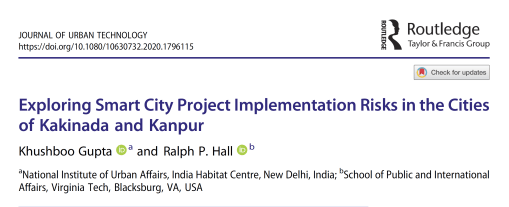
The final paper from Dr. Kushboo Gupta’s dissertation has been published in the Journal of Urban Technology. This new paper focuses on exploring smart city project implementation risks in the cities of Kakinada and Kanpur, India. The list below captures several other contributions by Dr. Gupta that stem from her PhD research:
With an increasing number of smart city initiatives in developed as well as developing nations, smart cities are seen as a catalyst for improving the quality of life for city residents. However, the current understanding of the risks that may hamper the successful implementation of smart city projects remains limited. This research examines the risk landscape for implementing smart city projects in two Indian cities, Kakinada and Kanpur, by interviewing 20 professionals from industry and local government who were closely associated with implementing smart city projects. Seven risks are identified—namely resource management and partnership, institutional, scheduling and execution, social, financial, political, and technology—using thematic analysis. Further, the interrelationships between the risks are modelled using causal mapping techniques. The results suggest different risk priorities among the two types of professionals interviewed. Further, a number of risks were found to be closely connected. These findings suggest that risk mitigation strategies need to take a comprehensive view towards all risks and their interconnections instead of managing each risk in isolation.
On Thursday, April 15, we had the pleasure of speaking with Grace Blakeley – author of Stolen: How to Save the World from Financialisation – during the VT Honors College SuperStudio. Rather than posting an hour-long/unedited video, I thought it would be more helpful to break our conversation into parts. The first video below captures Grace’s introductory remarks. After this, students were able to ask questions ranging from how to “hack” financialization to advice on where to study heterodox economics.
For some context, the SuperStudio combines five advanced undergraduate courses – focused on Environmental Policy and Social Change, Data Analysis for Health Reform, “Drone-Age” Innovation for the Public Good, the Future of Higher Education, and the Future of Employment – that collaborate to examine the potentials and challenges of the Green New Deal. The SuperStudio is designed to engage students in transdisciplinary and collaborative work and provide a space where they can develop critical skills and knowledge that are applied to group or individual capstone projects.
Student Questions
Payton Green to Grace Blakeley – How to build a “populist narrative”?
Lonnie Hamilton III to Grace Blakeley – Thoughts on democratic socialism in Nordic countries?
Lorena Beltran to Grace Blakeley – Impacts of COVID-19 on efforts to advance the Green New Deal?
McKenna Magoffin to Grace Blakeley – Is there a way to “hack” financialization?
Caitlín Adams to Grace Blakeley – Where to study heterodox economics?
Natalie Serio to Grace Blakeley – How to create an influential social media platform?
My Question
Ralph Hall to Grace Blakeley – Will automation/AI undermine efforts to strengthen unions/labor?



 Ralph P Hall