Professor, Urban and Environmental Policy and Planning (UEPP), Virginia Tech; Joann Boughman Innovation Fellow at USG; Acting Director, Center for Future of Work Places and Practices (CFWPP); Head of Outreach and Engagement, Center for European and Transatlantic Studies (CEUTS)
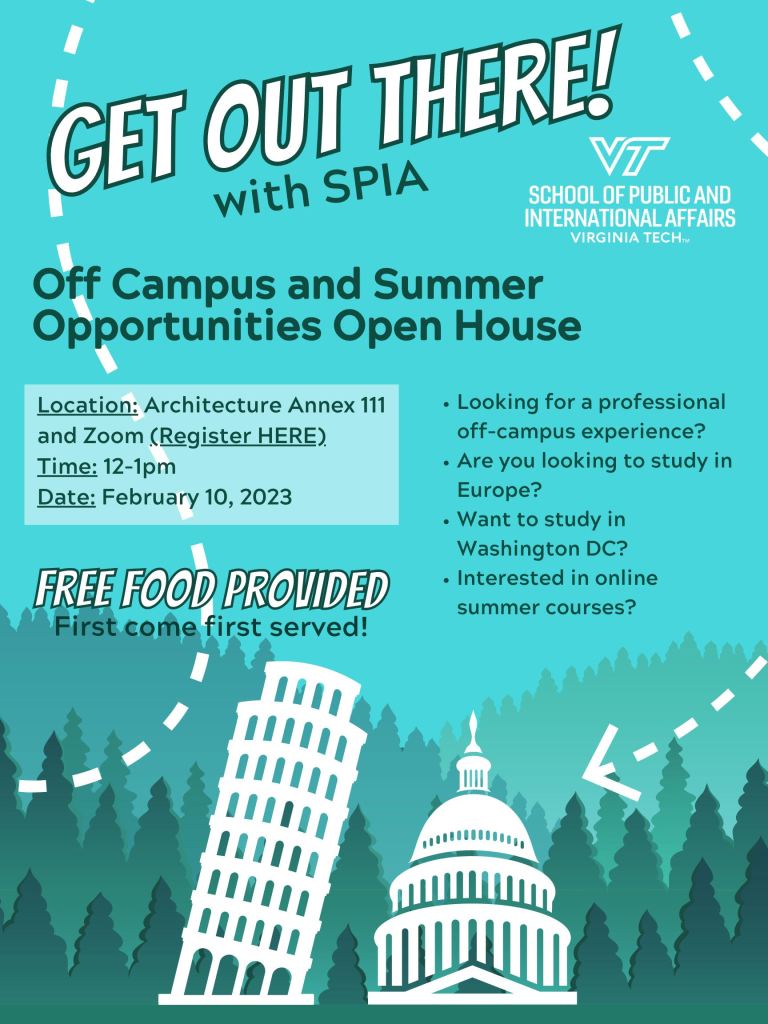
VT undergraduate and graduate students, please join us (in room 111, Architecture Annex or via zoom) on Friday, February 10 at 12pm to learn more about SPIA’s off campus and summer opportunities.
During the event, faculty will give 3-minute presentations on their programs/courses to provide a broad overview of the full range of unique opportunities available to students.
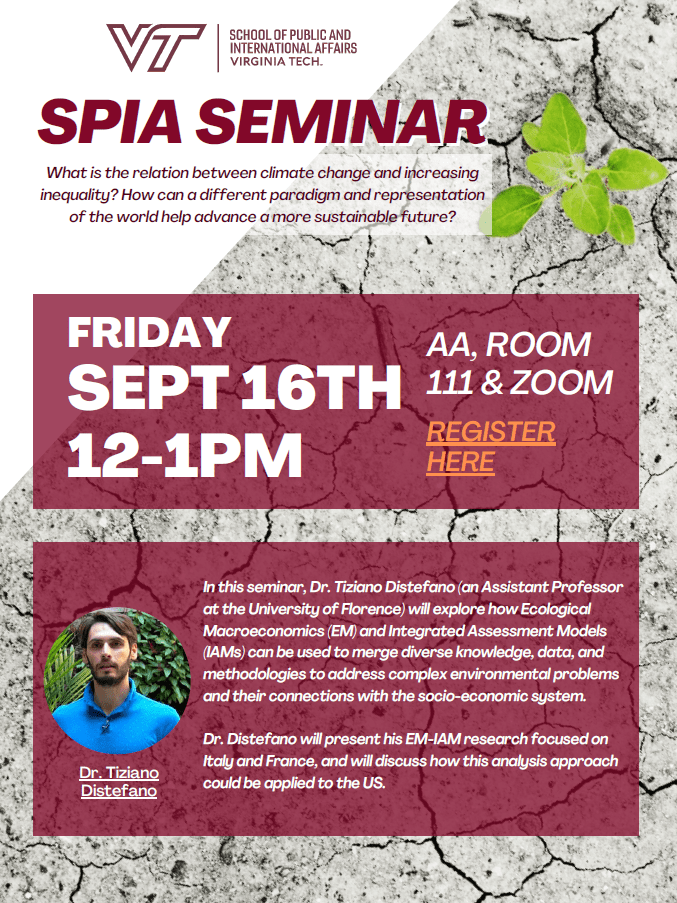
Please find below a recording of Dr. Tiziano Distefano’s SPIA Seminar that explores how the Ecological Macroeconomics (EM) and Integrated Assessment Models (IAMs) developed for Italy and France could be adapted to study the US economy.
What is the relationship between climate change and increasing inequality? How can a different paradigm and representation of the world help advance a more sustainable future?
In this seminar, Dr. Tiziano Distefano (an Assistant Professor at the University of Florence) will explore how Ecological Macroeconomics (EM) and Integrated Assessment Models (IAMs) can be used to merge diverse knowledge, data, and methodologies to address complex environmental problems and their connections with the socio-economic system. Dr. Distefano will present his EM-IAM research focused on Italy and France, and will discuss how this analysis approach could be applied to the US.
Please find below a recording of our international USAID LASER PULSE webinar entitled To Block or Not? Exploring the Use of Blockchain in Last Mile Agriculture Communities.
WebinarDescription – Blockchain technology is heralded for its ability to improve traceability, trust, and trust in agri-food value chains. What is lesser known is whether it is a viable technology for those value chains that originate in last-mile agriculture communities. This webinar explores the contexts in which blockchain offers real solutions to strengthening value chains and its potential for creating social impact, like improved food security or engaging youth in agriculture, and where it does not. For the optimist and the skeptic, this two-hour webinar aims to discard the trendiness of the emerging technology and take a pragmatic view of the opportunities to use blockchain to strengthen last-mile agriculture.
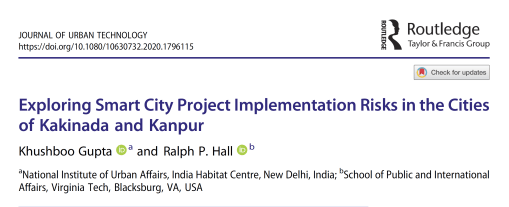
The final paper from Dr. Kushboo Gupta’s dissertation has been published in the Journal of Urban Technology. This new paper focuses on exploring smart city project implementation risks in the cities of Kakinada and Kanpur, India. The list below captures several other contributions by Dr. Gupta that stem from her PhD research:
With an increasing number of smart city initiatives in developed as well as developing nations, smart cities are seen as a catalyst for improving the quality of life for city residents. However, the current understanding of the risks that may hamper the successful implementation of smart city projects remains limited. This research examines the risk landscape for implementing smart city projects in two Indian cities, Kakinada and Kanpur, by interviewing 20 professionals from industry and local government who were closely associated with implementing smart city projects. Seven risks are identified—namely resource management and partnership, institutional, scheduling and execution, social, financial, political, and technology—using thematic analysis. Further, the interrelationships between the risks are modelled using causal mapping techniques. The results suggest different risk priorities among the two types of professionals interviewed. Further, a number of risks were found to be closely connected. These findings suggest that risk mitigation strategies need to take a comprehensive view towards all risks and their interconnections instead of managing each risk in isolation.
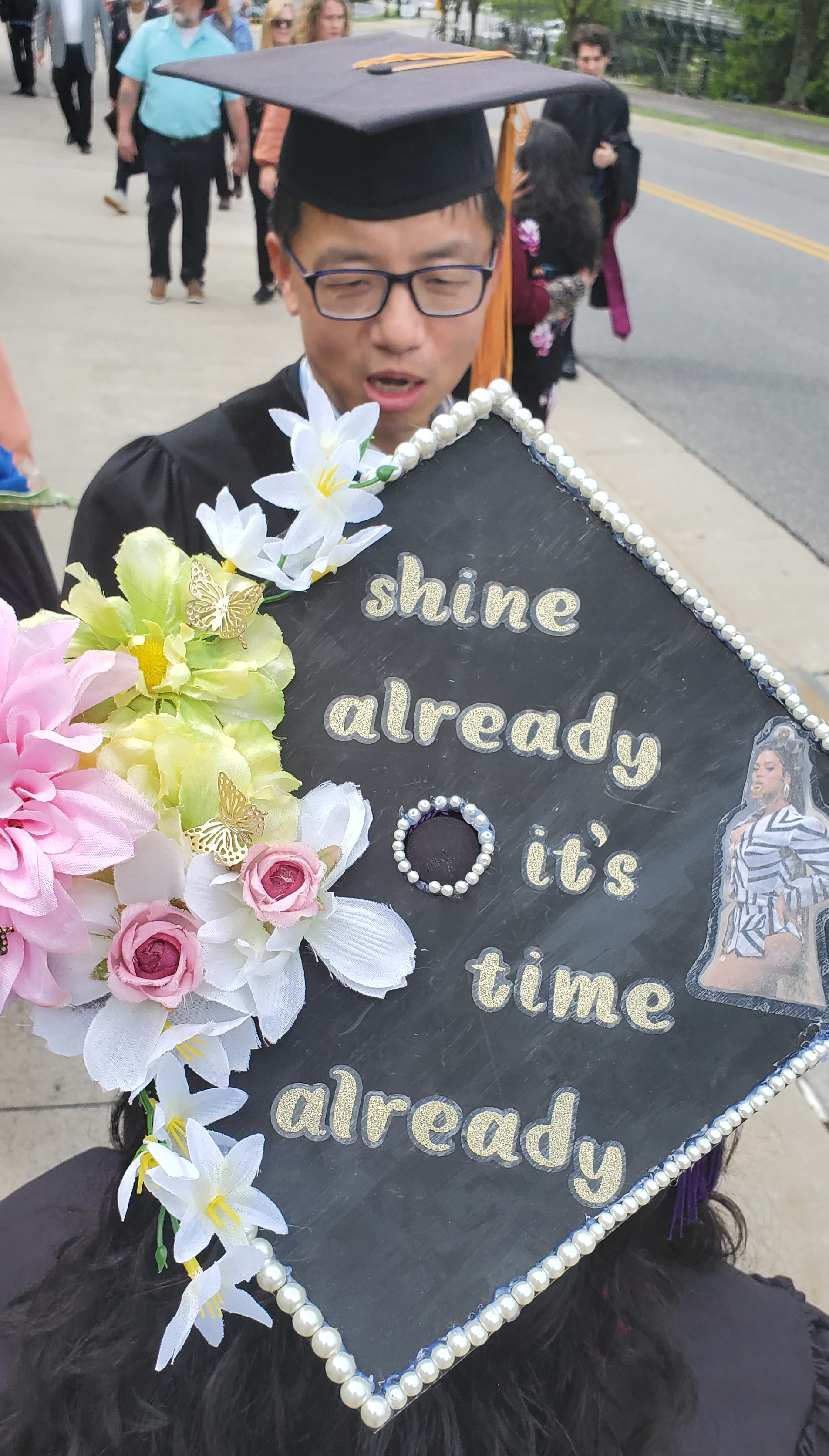
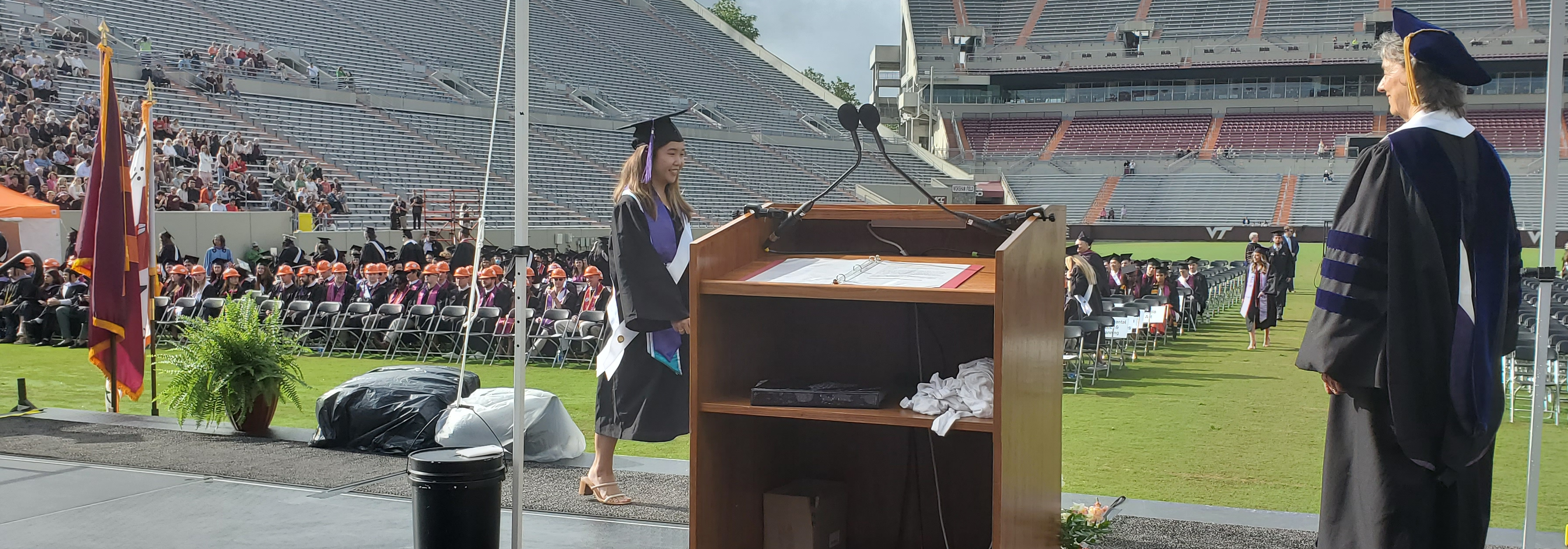
Since I was unable to celebrate with the class of 2020 today, I tasked my children with helping me record a video message for our graduating seniors. I even managed to find enough courage to record myself playing the guitar 🙂
The online VT commencement ceremony will start at 6:30pm (EDT) this evening and can be accessed here: https://commencement.vt.edu
On Thursday, April 15, we had the pleasure of speaking with Grace Blakeley – author of Stolen: How to Save the World from Financialisation – during the VT Honors College SuperStudio. Rather than posting an hour-long/unedited video, I thought it would be more helpful to break our conversation into parts. The first video below captures Grace’s introductory remarks. After this, students were able to ask questions ranging from how to “hack” financialization to advice on where to study heterodox economics.
For some context, the SuperStudio combines five advanced undergraduate courses – focused on Environmental Policy and Social Change, Data Analysis for Health Reform, “Drone-Age” Innovation for the Public Good, the Future of Higher Education, and the Future of Employment – that collaborate to examine the potentials and challenges of the Green New Deal. The SuperStudio is designed to engage students in transdisciplinary and collaborative work and provide a space where they can develop critical skills and knowledge that are applied to group or individual capstone projects.
Student Questions
Payton Green to Grace Blakeley – How to build a “populist narrative”?
Lonnie Hamilton III to Grace Blakeley – Thoughts on democratic socialism in Nordic countries?
Lorena Beltran to Grace Blakeley – Impacts of COVID-19 on efforts to advance the Green New Deal?
McKenna Magoffin to Grace Blakeley – Is there a way to “hack” financialization?
Caitlín Adams to Grace Blakeley – Where to study heterodox economics?
Natalie Serio to Grace Blakeley – How to create an influential social media platform?
My Question
Ralph Hall to Grace Blakeley – Will automation/AI undermine efforts to strengthen unions/labor?



 Ralph P Hall