Agrivoltaics Policy Frameworks in the United States

I’m pleased to share our new report on agrivoltaics that was commissioned by the Virginia Department of Energy. The report examines agrivoltaics practices, policies, and programs across the United States through 2024, highlighting emerging trends, benefits, and lessons learned. Together, these insights offer a foundation for aligning clean energy development with agricultural productivity and land stewardship in Virginia.
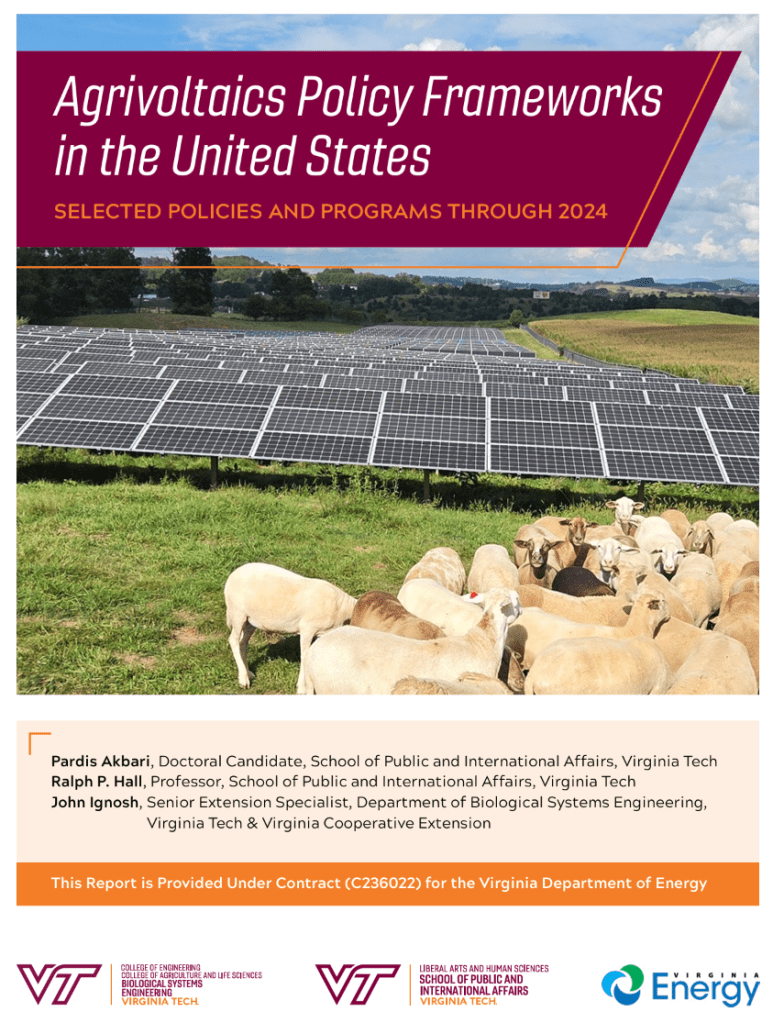
Akbari, P., Hall, R. P., & Ignosh, J. (2026). Agrivolatics Policy Frameworks in the United States: Selected Policies and Programs through 2024. Virginia Tech, Blacksburg. https://hdl.handle.net/10919/141096 

Executive Summary

Agrivoltaics, also known as dual-use solar or agrisolar, is an integrated land-use approach that combines agricultural production and photovoltaic electricity generation on the same site, allowing crops to be cultivated, livestock to be grazed, or pollinator habitats to be maintained while producing renewable energy from solar panels (Department of Energy, 2022; Macknick et al., 2022).

Agrivoltaics presents a potential sustainable solution to land-use competition between food and energy production (Jain, 2024). By integrating solar power generation with agriculture, agrivoltaics systems optimize land use and can increase overall land productivity by 35–73% compared to traditional single-use approaches (Dupraz et al., 2011). The systems can also improve water-use efficiency beneath photovoltaic (PV) panels, reducing evaporation and conserving soil moisture (Adeh et al., 2018). Additionally, agrivoltaics can lower solar panel temperatures by 1-2°C, improving energy efficiency and extending a system’s lifespan (Patel et al., 2019). The partial shading from panels can benefit crops sensitive to heat and sunlight stresses, potentially creating a more favorable microclimate for growth in some production systems and locations (Kussul, 2020; Marucci et al., 2018). Beyond environmental benefits, agrivoltaics may enhance the economic resilience of farms by providing an additional revenue stream from energy generation (Dinesh & Pearce, 2016). 

The Virginia Department of Energy commissioned this review to better understand evolving agrivoltaics practices, policies, and programs across the United States at both the federal and state levels. Its purpose is to identify emerging trends and provide an overview of current and recent efforts supporting the integration of agriculture and solar energy development. This review focuses primarily on agrivoltaics initiatives through 2024. 

The United States federal government has introduced several policies and programs that indirectly support the growth of agrivoltaics as part of the country’s broader clean energy transition. Key legislative actions, including the Bipartisan Infrastructure Law of 2021 and the Inflation Reduction Act of 2022, have provided significant funding to the Department of Energy (DOE) to expand clean energy infrastructure and strengthen domestic energy resilience. Although these laws do not specifically focus on agrivoltaics, they helped to create a more favorable environment for its development. Federal incentives such as the Investment Tax Credit (ITC) and the U.S. Department of Agriculture’s (USDA’s) Rural Energy for America Program (REAP) have also encouraged the use of renewable energy within agricultural settings. In addition, research and development efforts by the Department of Energy (DOE) through its Solar Energy Technologies Office, including the FARMS and InSPIRE programs, and by the USDA’s National Institute of Food and Agriculture (NIFA), have helped improve the understanding of how agrivoltaics systems perform and how they can support both energy generation and agricultural production. 

Across the states, there is growing momentum to promote agrivoltaics through new policies and incentives. Massachusetts continues to lead the way with its SMART program and Agricultural Solar Tariff Generation Unit (ASTGU) incentive, which provide payments and clear design guidelines to ensure that farmland remains in active agricultural use while supporting solar energy production. Other states have developed similar initiatives. For example, New Jersey’s Dual-Use Pilot Program offers incentives for projects that combine solar power with ongoing farming operations, while Colorado supports agrivoltaics through property tax exemptions, research funding, and pilot grant programs. In Virginia, the Department of Environmental Quality’s (DEQ’s) Permit-by-Rule framework now includes reduced project mitigation requirements when practices such as managed grazing and crop cultivation are incorporated when solar projects impact prime farmland. Collectively, these efforts show a growing commitment to balance farmland protection with renewable energy expansion.

A closer look at these initiatives reveals several common elements are emerging that shape the direction of agrivoltaics policy in the United States. Most initiatives rely on financial incentives to make agrivoltaics projects economically viable, recognizing that dual-use systems often require higher upfront costs for design and construction. In addition, many programs include pilot and demonstration projects as a central strategy, providing opportunities to test system designs, crop performance, and management practices under real-world agricultural conditions before broader implementation. 

To support the effective expansion of agrivoltaics in Virginia, a harmonized policy framework and a consistent definition of the practice are necessary. Coordination among incentives, performance standards, and data-sharing mechanisms can enhance agricultural productivity and renewable energy generation goals. When properly integrated, agrivoltaics can be an effective approach toward energy production, food security, and land stewardship goals. This alignment could turn land-use conflicts into opportunities for sustainable development and resilient clean energy growth. This report summarizes various agrivoltaics initiatives across the United States. Because energy and land-use planning policies are frequently updated, the details of these initiatives are often in flux. However, this summary aims to capture the full range of efforts, even if some programs are inactive. By doing so, the compilation helps inform future work in Virginia by sharing national experiences and providing resources for further review of each approach. 

References

Adeh, E. H., Selker, J. S., & Higgins, C. W. (2018). Remarkable agrivoltaic influence on soil moisture, micrometeorology and water-use efficiency. PLoS ONE, 13(11), e0203256. https://doi.org/10.1371/journal.pone.0203256 

Dinesh, H., & Pearce, J. M. (2016). The potential of agrivoltaic systems. Renewable and Sustainable Energy Reviews, 54, 299–308. https://doi.org/10.1016/j.rser.2015.10.024 

Dupraz, C., Marrou, H., Talbot, G., Dufour, L., Nogier, A., & Ferard, Y. (2011). Combining solar photovoltaic panels and food crops for optimising land use: Towards new agrivoltaic schemes. Renewable Energy, 36(10), 2725–2732. https://doi.org/10.1016/j.renene.2011.03.005 

Jain, S. (2024). Agrivoltaics: The synergy between solar panels and agricultural production. Darpan International Research Analysis, 12(3), 137–148. https://doi.org/10.36676/dira.v12.i3.61 

Kussul, E., Baydyk, T., Garcia, N., Velasco Herrera, G., & Curtidor López, A. V. (2020). Combinations of solar concentrators with agricultural plants. Journal of Environmental Science and Engineering B, 9(5), 168–181. https://doi.org/10.17265/2162-5263/2020.05.002 

Macknick, J., Hartmann, H., Barron-Gafford, G., Beatty, B., Burton, R., Choi, C. S., Davis, M., Davis, R., Figueroa, J., Garrett, A., Hain, L., Herbert, S., Janski, J., Kinzer, A., Knapp, A., Lehan, M., Losey, J., Marley, J., MacDonald, J., McCall, J., Nebert, L., Ravi, S., Schmidt, J., Staie, B., & Walston, L. (2022). The 5 Cs of agrivoltaic success factors in the United States: Lessons from the InSPIRE research study (NREL/ TP-6A20-83566). National Renewable Energy Laboratory. https://docs.nrel.gov/docs/fy22osti/83566.pdf (Archived at https://perma.cc/A7HS-SC8R)

Marucci, A., Zambon, I., Colantoni, A., & Monarca, D. (2018). A combination of agricultural and energy purposes: Evaluation of a prototype of photovoltaic greenhouse tunnel. Renewable and Sustainable Energy Reviews, 82, 1178–1186. https://doi.org/10.1016/j.rser.2017.09.029 

Patel, B., Gami, B., Baria, V., Patel, A., & Patel, P. (2019). Cogeneration of solar electricity and agriculture produce by photovoltaic and photosynthesis—Dual model by Abellon, India. Journal of Solar Energy Engineering, 141(3), 031014. https://doi.org/10.1115/1.4041899 

U.S. Department of Energy. (2022, December 8). Foundational Agrivoltaic Research for Megawatt Scale (FARMS) funding program. https://www.energy.gov/eere/solar/foundational-agrivoltaic-research-megawattscale-farms-funding-program (Archived at https://perma.cc/8SFL-4NVM)


2026 Ecological Economics Summer Schools and Conference

If you are a PhD student, postdoc/early-career scholar, or practitioner who is interested in sustainability, ecological economics, and macroeconomic transformations, please take a look at the following opportunities.

Where: Pisa, Italy

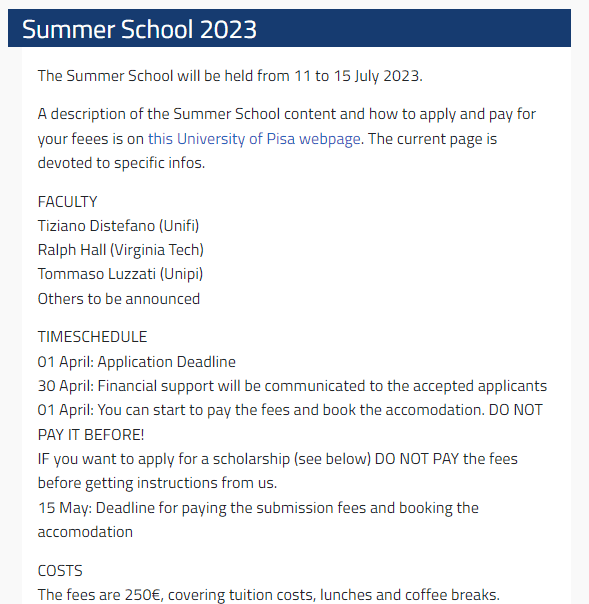
This summer school – now in its 5th year – is designed for PhD and post-doc students. In special cases, master’s and bachelor’s students may also be eligible. A maximum of 60 participants will be admitted.

The summer school is full-time and involves approximately 23 hours of class attendance and 52 hours of individual study. After completing the final exam, on Saturday 11 July, students will recieve 3 ECTS (European Credit Transfer and Accumulation System).

FACULTY

  • Keynote lecture: Giulia Romano (Università di Pisa)
  • Mario Biggeri (University of Florence, ITA)
  • Leonardo Boncinelli (University of Florence, ITA)
  • David Cano (University of Pisa, ITA)
  • Simone D’Alessandro (University of Pisa, ITA)
  • Tiziano Distefano (University of Florence, ITA)
  • Elisa Giuliani, Vice-Rector for Sustainability and the 2030 Agenda – Università di Pisa
  • Ralph Hall, (Virginia Tech, USA)
  • Tommaso Luzzati, (University of Pisa, ITA)
  • Igor Matutinovic, Zagreb School of Economics and Management
  • Emilio Padilla Rosa, Universitat Autonoma Barcelona
  • J. Christopher Proctor, Bocconi University – Institute for European Policymaking
  • Marcela Villarreal, former Director of the Partnerships and UN Collaboration Division at the Food and Agriculture Organization of the United Nations (FAO)

Learn more and apply here.

When: September 7-9, 2026

Where: Florence, Italy

This summer school offers an intensive introduction to Ecological Macroeconomics, with a special focus on its relevance for the Global South. Participants will receive a solid grounding in the foundations of Ecological Economics and Post-Keynesian Macroeconomics, and will learn key modelling approaches used to analyse sustainability transitions in diverse socio-economic contexts.

The programme covers Input–Output analysis, Stock-Flow Consistent modelling, and System Dynamics, providing participants with the conceptual and technical tools needed to explore the interactions between economic structures, environmental constraints, and social outcomes. A core component of the school is hands-on training on how to build Integrated Assessment Models (IAMs) that incorporate biophysical limits, distributional dynamics, inequality, and policy scenarios.

Participants will work through practical modelling labs using Vensim and R, enabling them to implement dynamic models, run simulations, and analyse alternative development pathways. The school aims to equip a new generation of researchers—especially from and for the Global South—with state-of-the-art modelling skills to address climate, energy, and development challenges.

FACULTY

  • Tiziano Distefano (University of Florence, ITA)
  • Simone D’Alessandro (University of Pisa, ITA)
  • Guilherme Morlin (University of Pisa, ITA)
  • David An (University of Florence, ITA)
  • Vinicius Centeno (University of Florence, ITA)

Learn more and apply here.

When: September 10-12, 2026

Where: Florence, Italy

Ecological Macroeconomics is an emerging field at the intersection of macroeconomics, ecological economics, and complexity science. It develops modelling frameworks that embed economies within biophysical limits, explicitly address inequality and social justice, and explore de- and post-growth futures through scenario analysis rather than optimisation.

This inaugural international conference aims to bring together scholars, early-career researchers, students, and practitioners working on ecological macroeconomic theory and modelling, with a particular interest in applications to the Global South and policy design for a just transition.

Learn more and apply here.

Recording of Dr. Arlene Blum’s Seminar

I’m pleased to share below a recording of Dr. Arlene Blum’s seminar entitled “Climbing your own Everest: Mountains & Molecules.” In this talk, Arlene explores her amazing career as a pioneering mountaineer and impactful chemist. 

At the end of the seminar, I reminisce on how Arlene kindly supported the first class I taught while a postdoc at Stanford. It is truly remarkable to see what she has accomplished with the Green Science Policy Institute that was only an idea being developed back in 2007. 

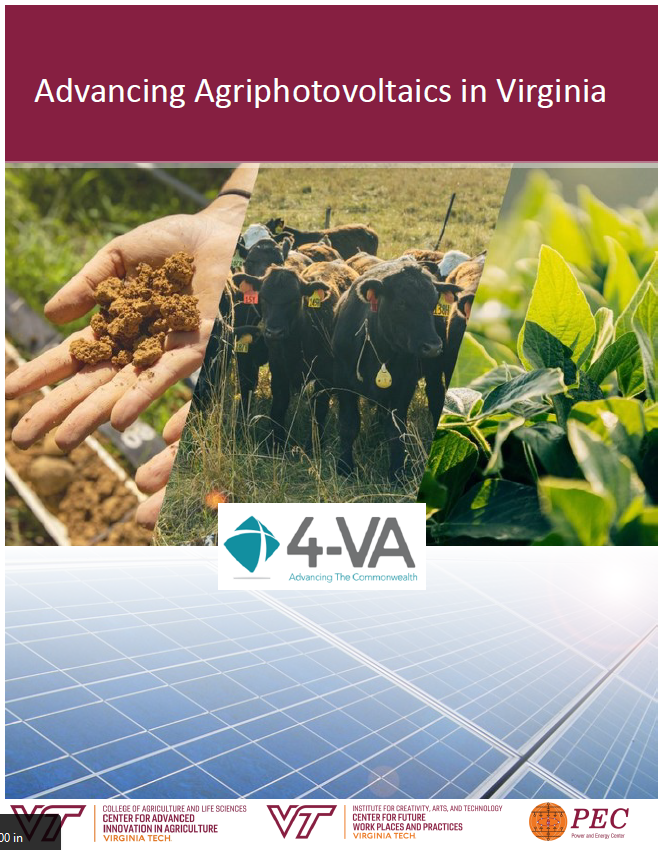
Workshop – Advancing Agriphotovoltaics (APV) in Virginia

On August 6 and 7, the Center for Advanced Innovation in Agriculture (CAIA), the Center for Future Work Places and Practices (CFWPP), and the Power and Energy Center (PEC) at Virginia Tech will be hosting a workshop on Advancing Agriphotovoltaics (APV) in Virginia.

The workshop will bring together industry leaders, policy makers, agricultural professionals, and other key stakeholders to:​

  • Establish a network to support APV advancement in Virginia,​
  • Develop collaborative strategies for supporting APV during the renewable energy transition, and​
  • Explore opportunities and challenges in APV identified by diverse stakeholder perspectives​.

The following panels will be held on August 6 to inform a series of facilitated group discussions on August 7.

Agriculture Panel (Moderator: Prof. John Fike, School of Plant and Environmental Sciences, VT)

  • Eric Paulson, Executive Secretary of the Virginia State Dairymen’s Association (VSDA).
  • Meredith Ledlie Johnson, Policy Systems and Environmental Change Programming Manger, Virginia Cooperative Extension (VCE).
  • Jim Riddell, Government Affairs Specialist, consultant, and representative of the Virginia Cattlemen’s Association.

Solar Developers Panel (Moderator: Prof. Ralph Hall, School of Public and International Affairs, VT)

  • Lauren Wheeler, GIS Analyst for the Timmons Group in the Energy and Renewables practice and leads the Virginia permitting team.
  • Iain Ward, Founder and CEO of Solar Agricultural Services, Inc. (SolAg).
  • Jesse Robertson-DuBois, Director, Sustainable Solar Development, BlueWave.
  • Katie Hill, Director of Environmental Compliance at Strata Clean Energy.

Utilities Panel (Moderator: Nam Nguyen, Executive Director, VTES)

Policy Panel (Moderator: John Ignosh, Senior Extension Specialist, Biological Systems Engineering, Virginia Tech)

  • Dana Ashford, Acting Director of USDA-NRCS Ecological Sciences Division.
  • Aaron Berryhill, Solar Program Manager, Virginia Department of Energy.
  • Samantha Levy, Conservation and Climate Policy Manager, American Farmland Trust.
  • Carrie Hearne, Commission on Electric Utility Regulation.

The workshop is made possible by funding received from 4-VA.

Talking Transitions: How Cities Navigate the Green Transition

I recently had the pleasure of participating on Episode two of Talking Transitions, a new podcast series (hosted by David Weston) from FORESIGHT Climate & Energy and EY that focuses on how the transition to a sustainable economy may impact the energy and resources industry, the financial services sector, and Government.

In our poadcast, Prof. Abbas El-Zein (University of Sydney in Australia), George Atalla (EY’s Global Government and Public Sector Leader), and I delved into the transitions cities and urban areas are facing and their role in shifting to a sustainable economy.

You can listen to the podcast and the series on Apple Podcasts and Spotify.

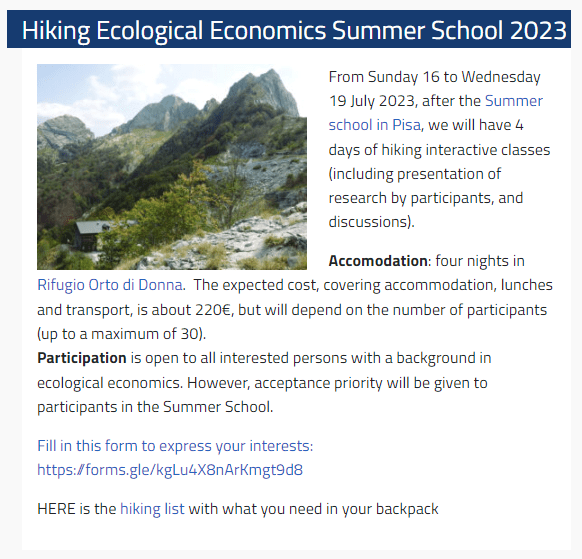
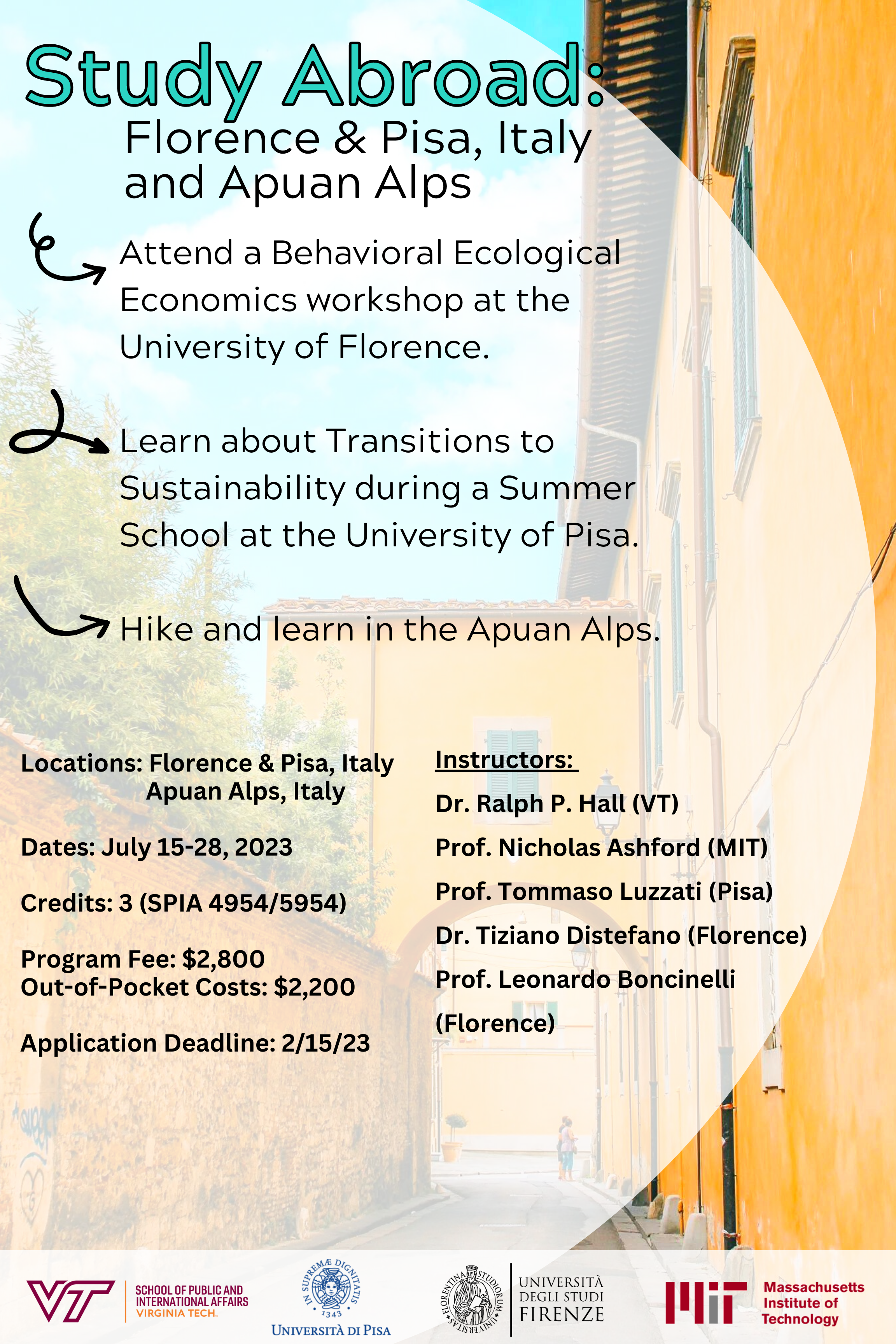
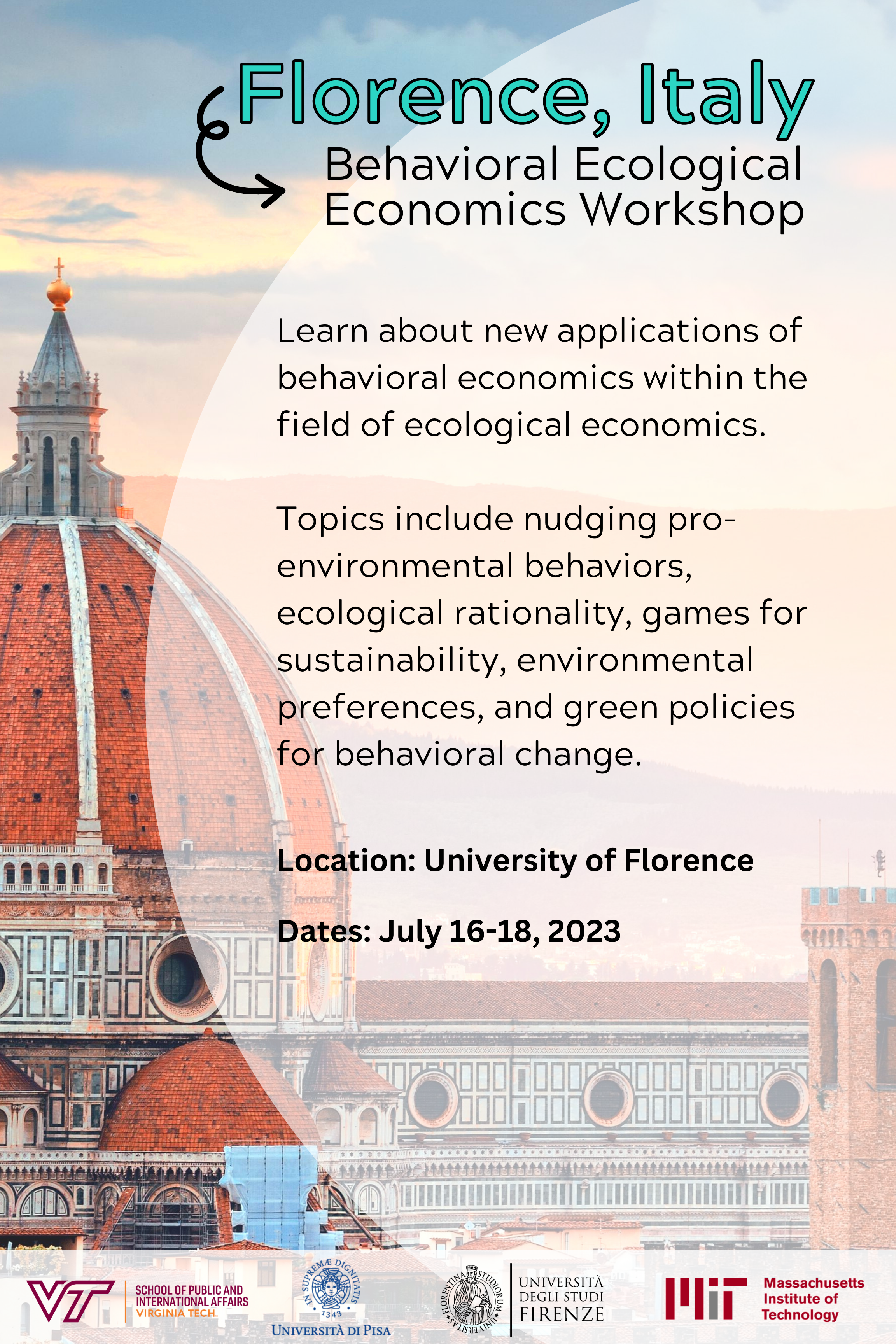
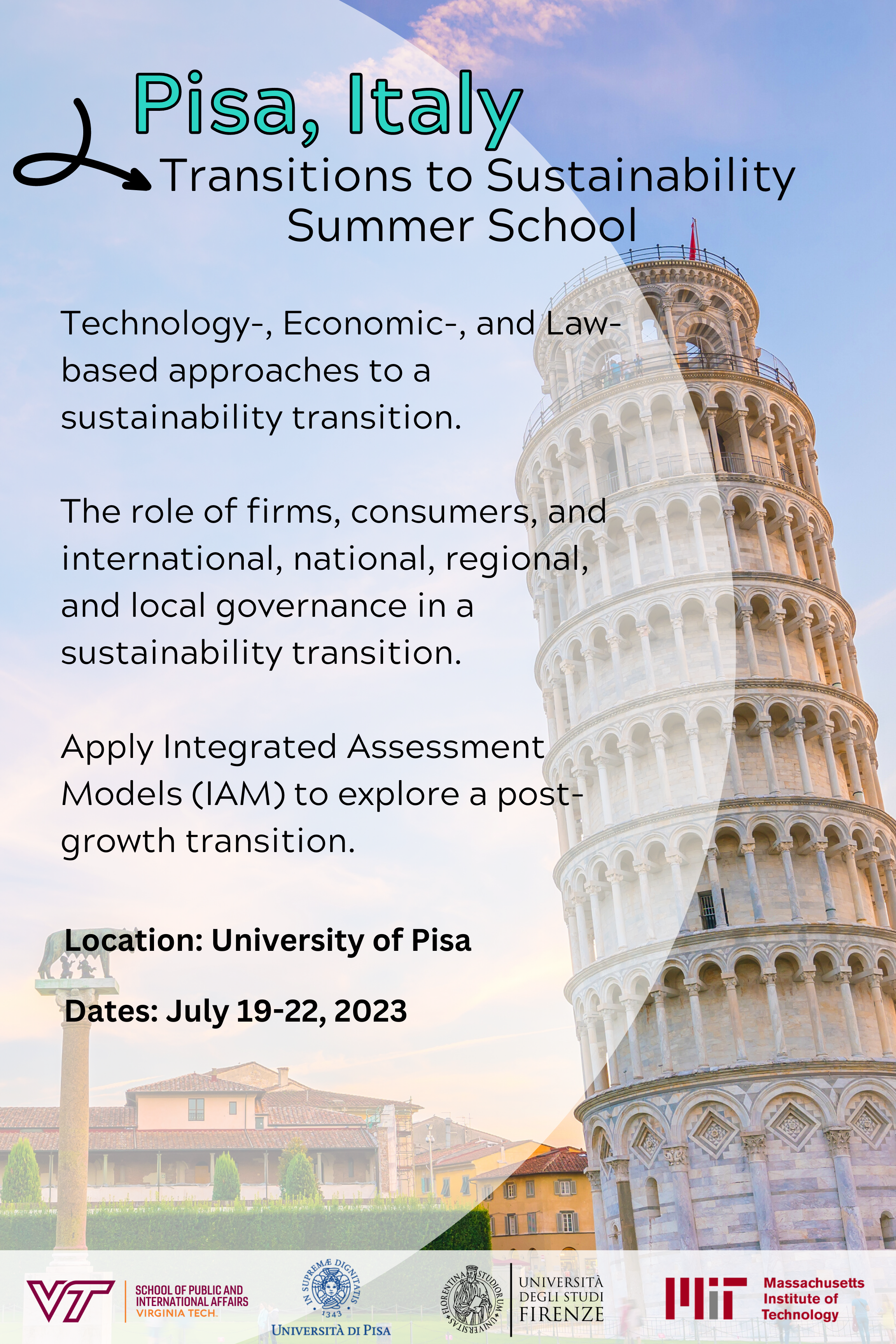
2023 Study Abroad Program

The three main components of our 2023 study abroad program in Italy are now open for any student to apply. Virginia Tech students who are accepted into the VT program will be automatically enrolled into each part of the program.

VT Students: The application portal will remain open for the next week, so please apply this week if you would like to be considered for the program. Please also make sure you apply for a GEO Scholarship (due March 15th).

Non-VT/International Students: I hope you will considered applying to one or more parts of the program via the links below. In 2022, we had over 20 countries represented in the Pisa summer school that hosted around 40 students. It was a really engaging and culturally rich experience for everyone involved in the program.

Get Out There with SPIA – Slides & Recordings

Please find below links to the 3-minute presentations given during the “Get Out There with SPIA” event held on February 10. The slides from the event can be accessed here

If you have any questions about a specific program/course, please reach out to the lead faculty member(s) listed below. The first two summer programs have an application deadline of February 15, so please apply before then if you would like to be considered for one of these. 

Washington, D.C. Semester, Leadership through Policy & Governance (WSLG) (Summer) & U.S. Congressional Oversight in Action (Winter)

Study Abroad in Italy (Florence, Pisa, and the Apuan Alps), Sustainable Transitions in Employment, Economic Welfare, and the Environment (Summer)

Support Provided by the VT Global Education Office

Washington, D.C. Semester in Global Engagement (WSGE) (Fall and Spring)

UAP 2004 Real Estate (Summer, online course)

SPIA 2005, 2006, & 2014 Urban Analytics (Summer, online course)

Homeland Security Policy (HSP) Graduate Certificate (open to seniors) (Video)

Study Abroad, Sustainable Policy Making & Planning in Europe (Summer)

  • The 2023 program is full. If you are interested in the 2024 program, please make sure you apply early in the fall semester. 
  • Contacts: Ralph Buehler, ralphbu@vt.edu; Todd Schenk, tschenk@vt.edu

2023 Study Abroad Progam in Florence/Pisa, Italy

If you are a rising senior or graduate student at Virginia Tech and are looking for a unique sustainability-related study abroad experience, please find me on the Drillfield on Wednesday (September 21) to learn more about the planned 2023 Florence-Pisa program in Italy or signup for the information session that will be held from 3-4pm on Friday, October 14.

If you are unable to attend the study abroad fair or information session, please complete this simple form to be kept informed of program updates.

Recording of SPIA Seminar with Dr. Tiziano Distefano

Please find below a recording of Dr. Tiziano Distefano’s SPIA Seminar that explores how the Ecological Macroeconomics (EM) and Integrated Assessment Models (IAMs) developed for Italy and France could be adapted to study the US economy.