2026 Ecological Economics Summer Schools and Conference

If you are a PhD student, postdoc/early-career scholar, or practitioner who is interested in sustainability, ecological economics, and macroeconomic transformations, please take a look at the following opportunities.
Where: Pisa, Italy

This summer school – now in its 5th year – is designed for PhD and post-doc students. In special cases, master’s and bachelor’s students may also be eligible. A maximum of 60 participants will be admitted.

The summer school is full-time and involves approximately 23 hours of class attendance and 52 hours of individual study. After completing the final exam, on Saturday 11 July, students will recieve 3 ECTS (European Credit Transfer and Accumulation System).

FACULTY

  • Keynote lecture: Giulia Romano (Università di Pisa)
  • Mario Biggeri (University of Florence, ITA)
  • Leonardo Boncinelli (University of Florence, ITA)
  • David Cano (University of Pisa, ITA)
  • Simone D’Alessandro (University of Pisa, ITA)
  • Tiziano Distefano (University of Florence, ITA)
  • Elisa Giuliani, Vice-Rector for Sustainability and the 2030 Agenda – Università di Pisa
  • Ralph Hall, (Virginia Tech, USA)
  • Tommaso Luzzati, (University of Pisa, ITA)
  • Igor Matutinovic, Zagreb School of Economics and Management
  • Emilio Padilla Rosa, Universitat Autonoma Barcelona
  • J. Christopher Proctor, Bocconi University – Institute for European Policymaking
  • Marcela Villarreal, former Director of the Partnerships and UN Collaboration Division at the Food and Agriculture Organization of the United Nations (FAO)

Learn more and apply here.

When: September 7-9, 2026

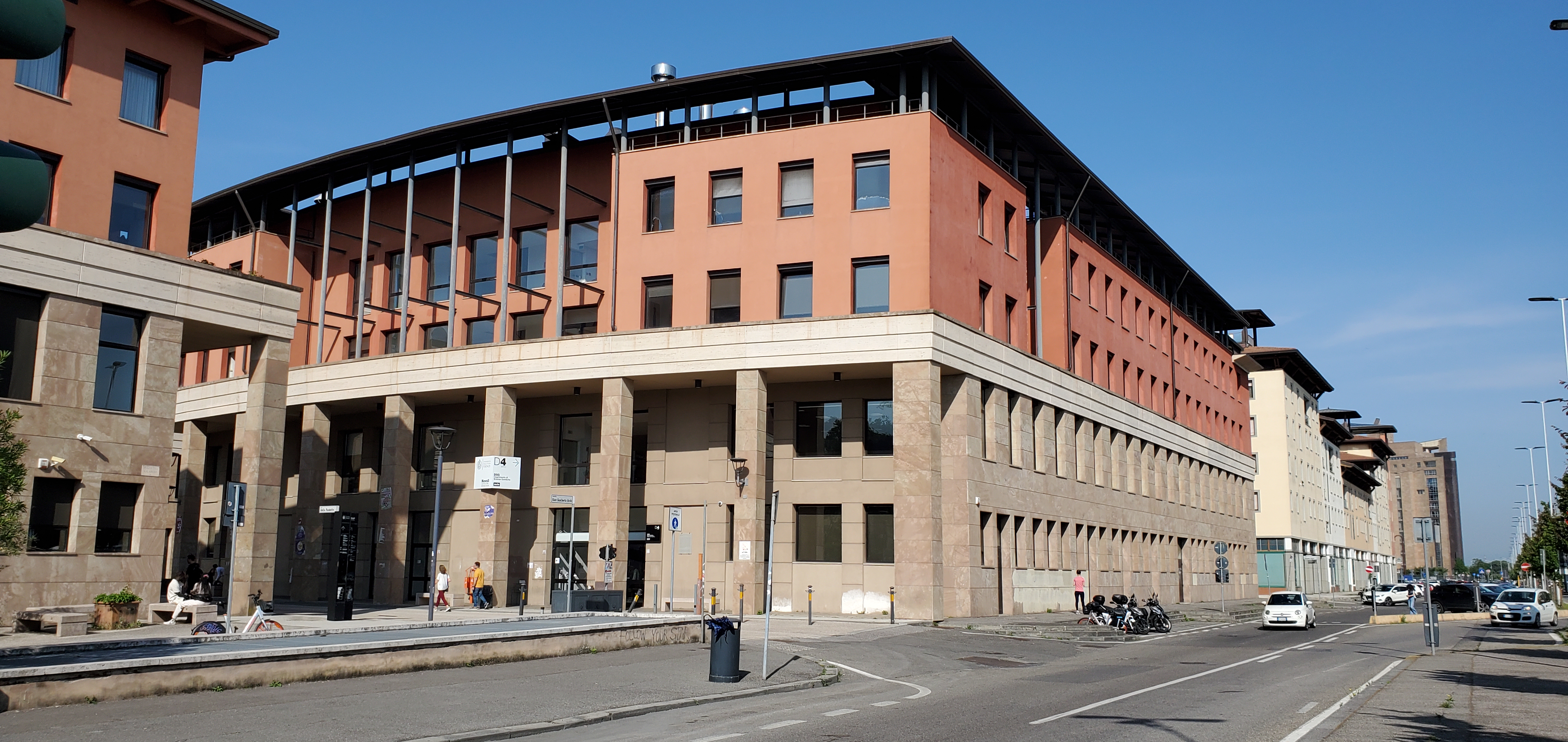
Where: Florence, Italy

This summer school offers an intensive introduction to Ecological Macroeconomics, with a special focus on its relevance for the Global South. Participants will receive a solid grounding in the foundations of Ecological Economics and Post-Keynesian Macroeconomics, and will learn key modelling approaches used to analyse sustainability transitions in diverse socio-economic contexts.

The programme covers Input–Output analysis, Stock-Flow Consistent modelling, and System Dynamics, providing participants with the conceptual and technical tools needed to explore the interactions between economic structures, environmental constraints, and social outcomes. A core component of the school is hands-on training on how to build Integrated Assessment Models (IAMs) that incorporate biophysical limits, distributional dynamics, inequality, and policy scenarios.

Participants will work through practical modelling labs using Vensim and R, enabling them to implement dynamic models, run simulations, and analyse alternative development pathways. The school aims to equip a new generation of researchers—especially from and for the Global South—with state-of-the-art modelling skills to address climate, energy, and development challenges.

FACULTY

  • Tiziano Distefano (University of Florence, ITA)
  • Simone D’Alessandro (University of Pisa, ITA)
  • Guilherme Morlin (University of Pisa, ITA)
  • David An (University of Florence, ITA)
  • Vinicius Centeno (University of Florence, ITA)

Learn more and apply here.

When: September 10-12, 2026

Where: Florence, Italy

Ecological Macroeconomics is an emerging field at the intersection of macroeconomics, ecological economics, and complexity science. It develops modelling frameworks that embed economies within biophysical limits, explicitly address inequality and social justice, and explore de- and post-growth futures through scenario analysis rather than optimisation.

This inaugural international conference aims to bring together scholars, early-career researchers, students, and practitioners working on ecological macroeconomic theory and modelling, with a particular interest in applications to the Global South and policy design for a just transition.

Learn more and apply here.

Generative AI for High School Innovators

I’m pleased to announce the Center for Future Work Places and Practices (CFWPP) will be running a new two-week course this summer for high school students, entitled “From Data to Generative AI: A Journey through Machine Learning.”

This course is designed for students in Grades 9–12. No prior experience in coding or artificial intelligence is required—just bring your curiosity and enthusiasm.

Win a Scholarship! Essay Contest for VA Students

Virginia high school students in grades 9-11 are invited to participate in an essay contest exploring AI’s future!

  • Theme: How AI is shaping society, education, work, or ethics
  • Length: 800-1,000 words
  • Prize: Five (5) winners will receive a full scholarship to this summer school!
  • Deadline: June 20, 2025
  • Award Notification: June 30, 2025
  • Submit: Essay + CV to vtcfwpp@gmail.com

What Student Will Learn

  • Understand how generative AI works – from neural networks to transformers like GPT and DALL·E.
  • Create content with AI tools – use platforms like ChatGPT, Midjourney, and Llama to write stories, design graphics, and generate music.
  • Analyze ethical and social implications – explore bias, misinformation, creativity, authorship, and responsible AI use.
  • Develop your own AI mini-project – pitch and present a creative application of generative AI to solve a real-world problem or express a unique idea.
  • Build foundational knowledge in machine learning concepts like training data, model outputs, and prompt engineering.

Agenda/Schedule (July, 2025)

Week 1: Foundations of Machine Learning and AI
Session 1: Introduction to AI and Machine Learning
Session 2: How Machines Learn
Session 3: Data in Machine Learning
Session 4: Machine Learning with AWS
Session 5: Building Our First ML Model

Week 2: Generative AI and more
Session 6: Introduction to Generative AI
Session 7: Neural Networks and Deep Learning
Session 8: Natural Language Processing (NLP)
Session 9: Ethics and Societal Impact of AI
Session 10: Capstone Project and Showcase

Prerequisites: Curious, open to learning, comfortable with basic use of computers.

Tuition Fees: In-State: $400, Out-of-State: $1000

Visiting Professor – University of Florence

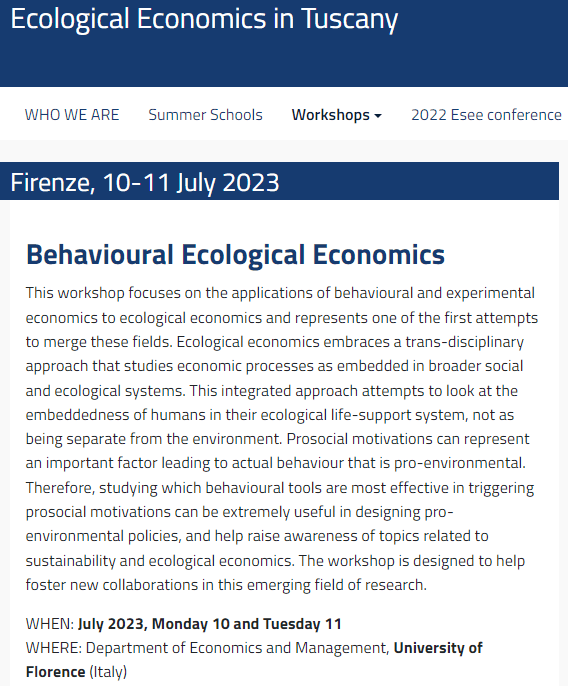
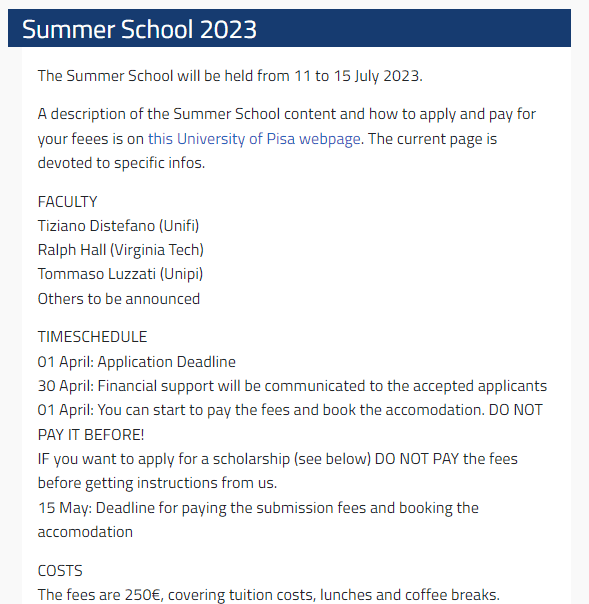
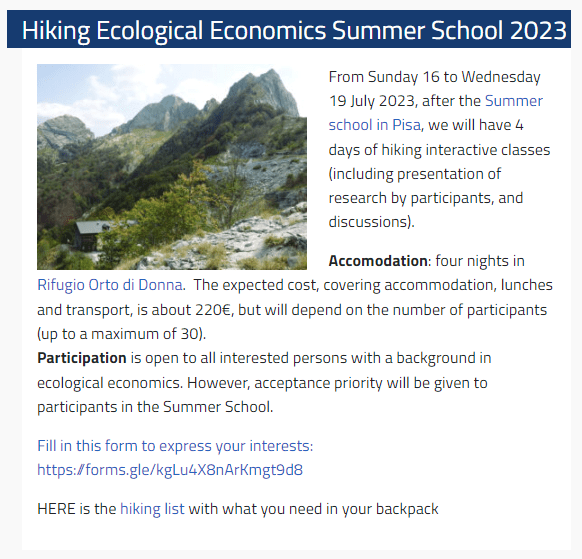
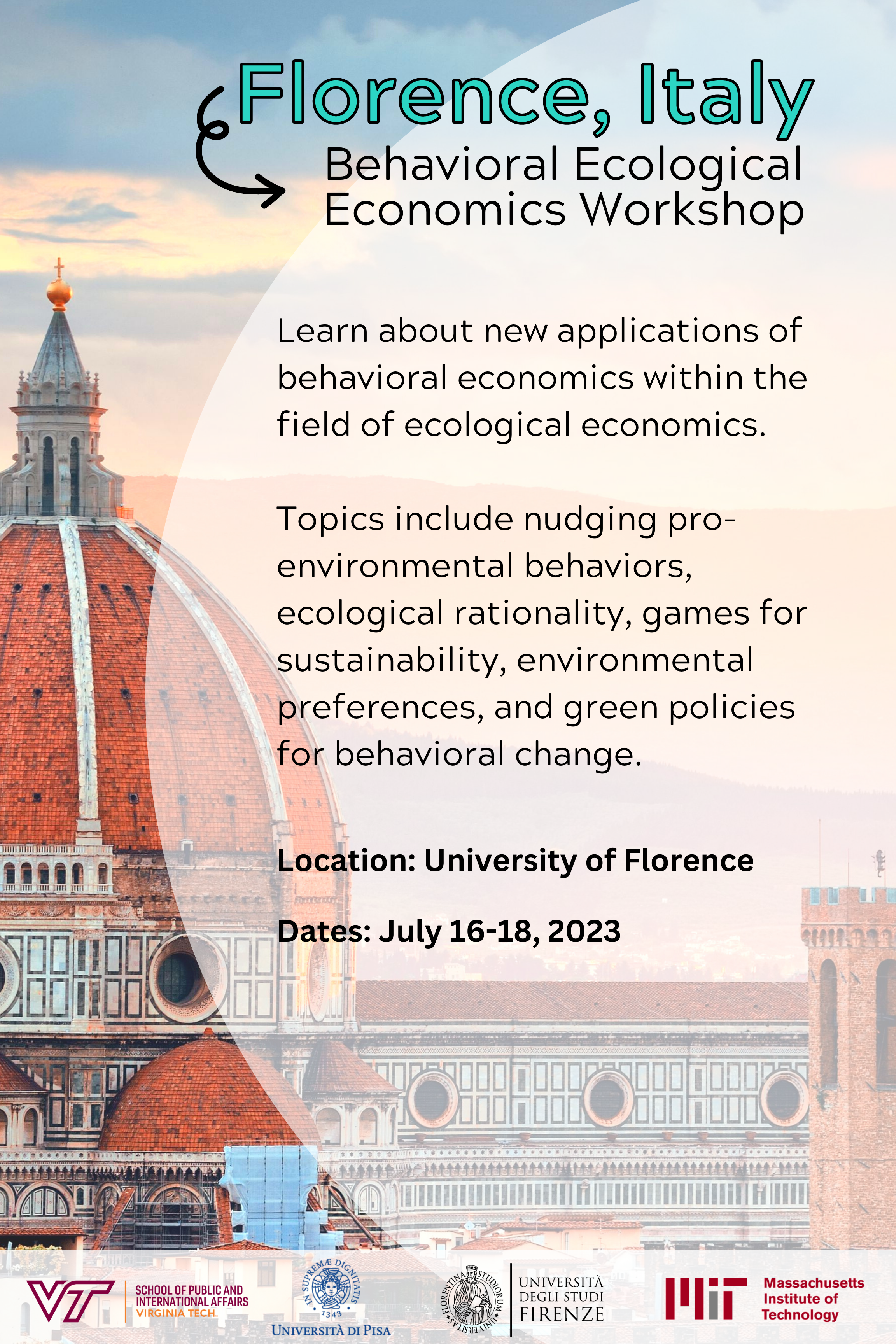
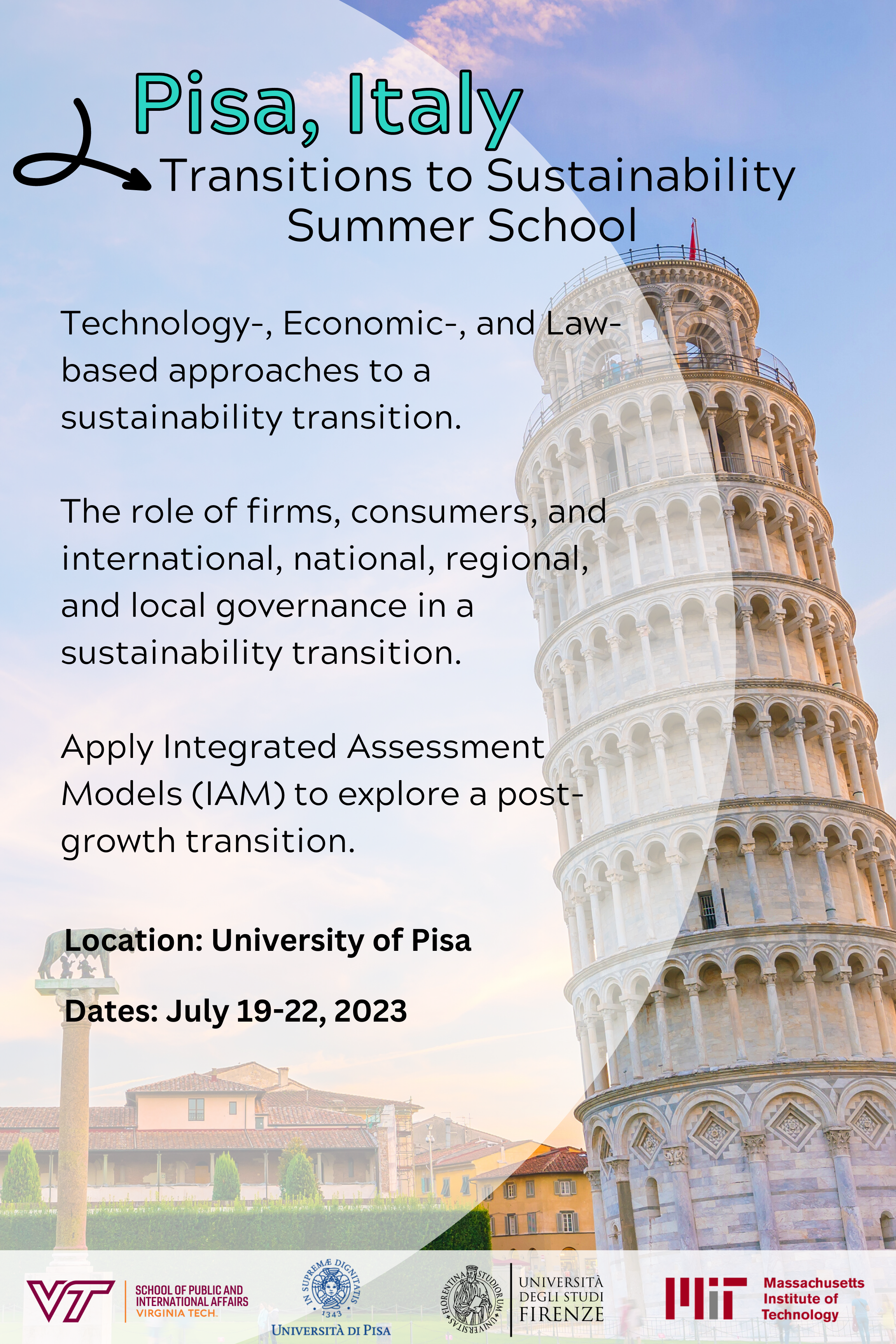
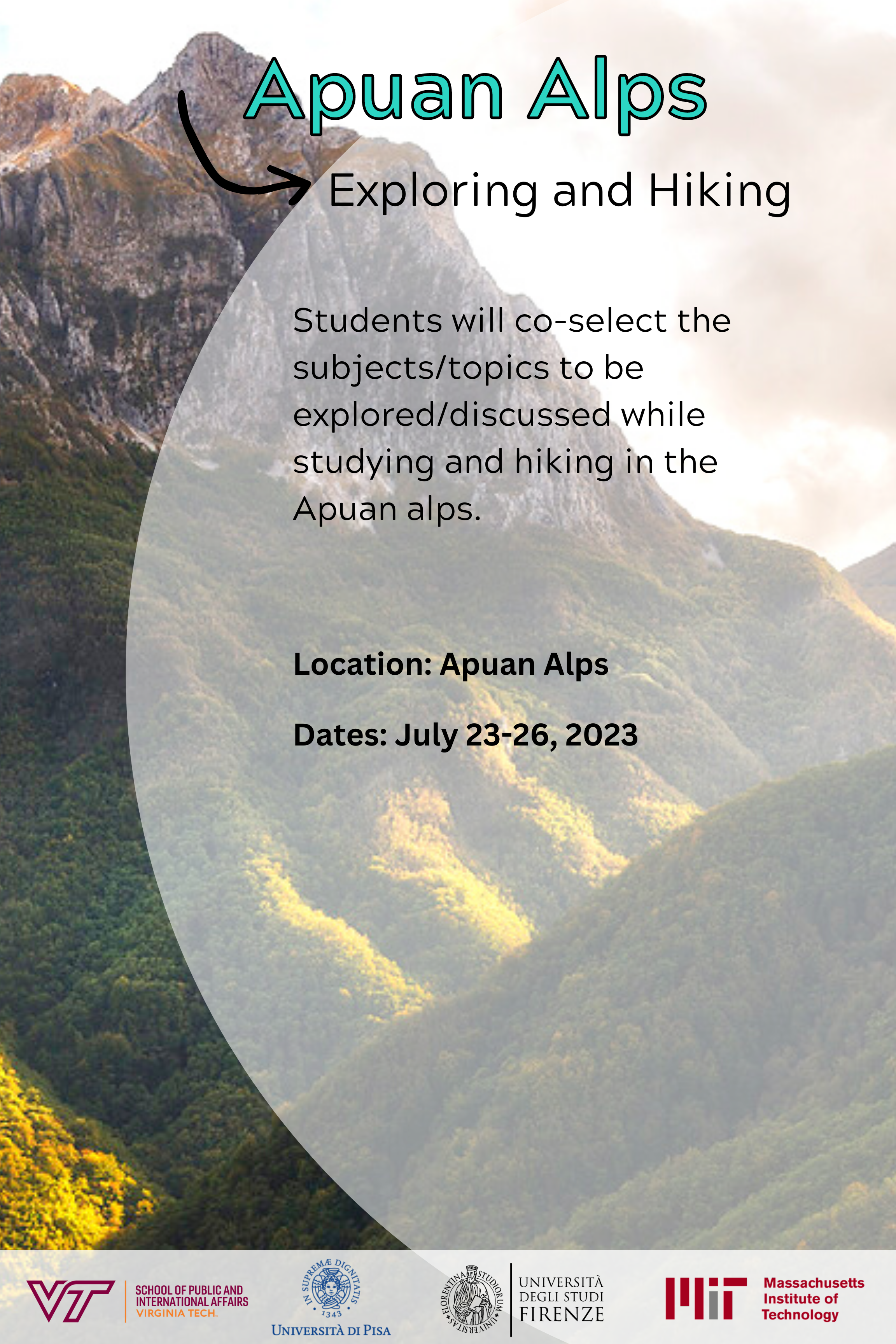
Today, I began a summer position as a visiting professor in the Department of Economics and Management at the University of Florence. During my time here I will deliver seminars on inclusive economics and Multiple Use Water Services (MUS), engage in a two-day workshop on Behavioural Ecological Economics (at the University of Florence), co-teach a summer school on Leveraging Ecological Economics to Advance the Sustainability Transition (at the University of Pisa), and co-teach a Hiking Ecological Economics Summer School (in the Apuan Alps). I’m looking forward to meeting over 100 students from across the EU, US, and beyond who have enrolled in the above activities.

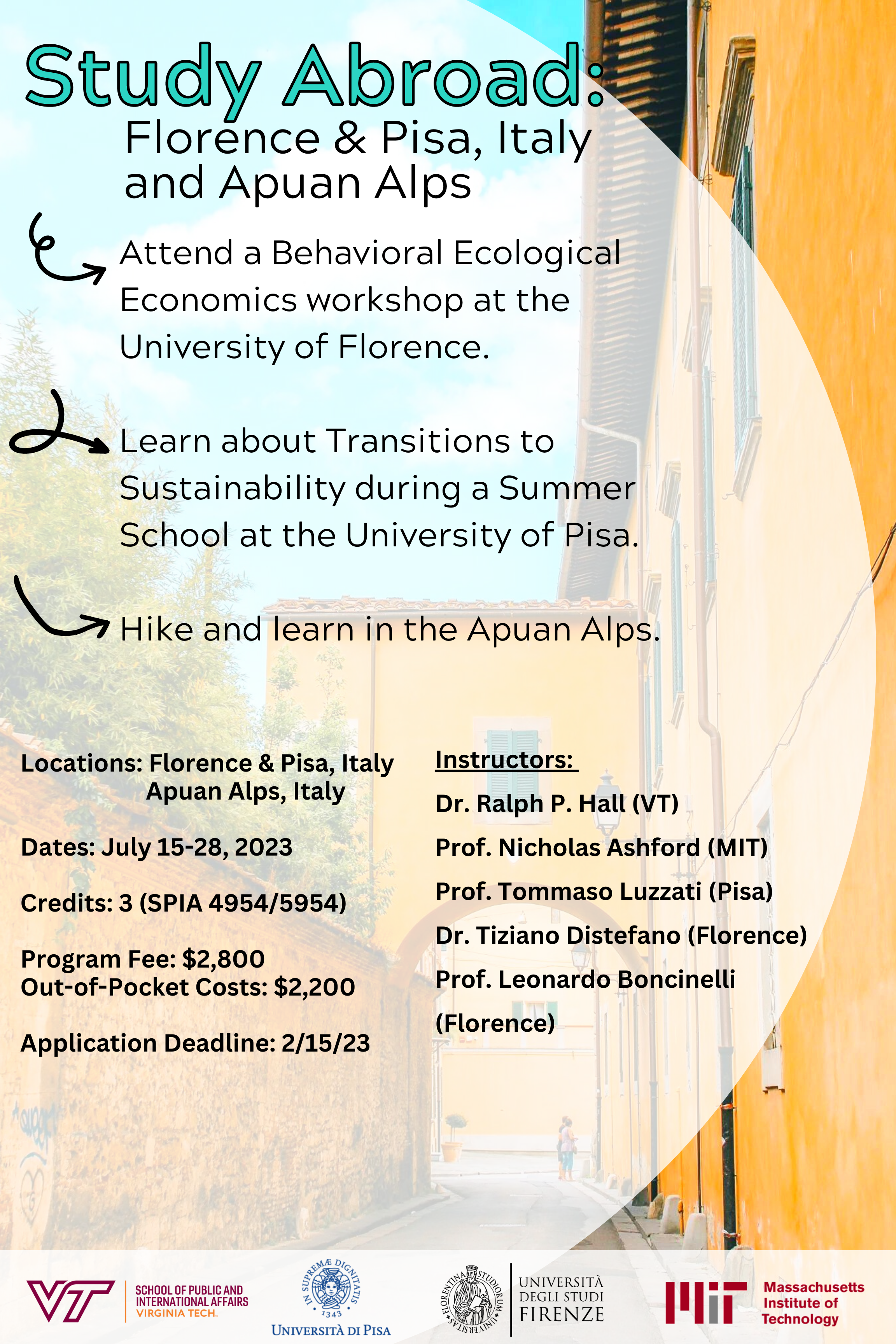
2023 Study Abroad Program

The three main components of our 2023 study abroad program in Italy are now open for any student to apply. Virginia Tech students who are accepted into the VT program will be automatically enrolled into each part of the program.

VT Students: The application portal will remain open for the next week, so please apply this week if you would like to be considered for the program. Please also make sure you apply for a GEO Scholarship (due March 15th).

Non-VT/International Students: I hope you will considered applying to one or more parts of the program via the links below. In 2022, we had over 20 countries represented in the Pisa summer school that hosted around 40 students. It was a really engaging and culturally rich experience for everyone involved in the program.

Get Out There with SPIA – Slides & Recordings

Please find below links to the 3-minute presentations given during the “Get Out There with SPIA” event held on February 10. The slides from the event can be accessed here

If you have any questions about a specific program/course, please reach out to the lead faculty member(s) listed below. The first two summer programs have an application deadline of February 15, so please apply before then if you would like to be considered for one of these. 

Washington, D.C. Semester, Leadership through Policy & Governance (WSLG) (Summer) & U.S. Congressional Oversight in Action (Winter)

Study Abroad in Italy (Florence, Pisa, and the Apuan Alps), Sustainable Transitions in Employment, Economic Welfare, and the Environment (Summer)

Support Provided by the VT Global Education Office

Washington, D.C. Semester in Global Engagement (WSGE) (Fall and Spring)

UAP 2004 Real Estate (Summer, online course)

SPIA 2005, 2006, & 2014 Urban Analytics (Summer, online course)

Homeland Security Policy (HSP) Graduate Certificate (open to seniors) (Video)

Study Abroad, Sustainable Policy Making & Planning in Europe (Summer)

  • The 2023 program is full. If you are interested in the 2024 program, please make sure you apply early in the fall semester. 
  • Contacts: Ralph Buehler, ralphbu@vt.edu; Todd Schenk, tschenk@vt.edu

2023 Study Abroad Progam in Florence/Pisa, Italy

If you are a rising senior or graduate student at Virginia Tech and are looking for a unique sustainability-related study abroad experience, please find me on the Drillfield on Wednesday (September 21) to learn more about the planned 2023 Florence-Pisa program in Italy or signup for the information session that will be held from 3-4pm on Friday, October 14.

If you are unable to attend the study abroad fair or information session, please complete this simple form to be kept informed of program updates.

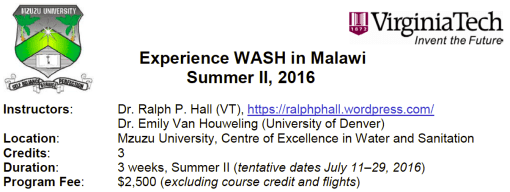
Experience WASH in Malawi – Info Sessions

On Monday, November 16, I will be holding two information sessions (at 9:30am and 3pm) on the “Experience WASH in Malawi” study abroad course I will be offering during the summer of 2016. The information sessions will be held in room 111 of the Architecture Annex (and via polycom in room 220, Prince Street, Alexandria, VA).

This applied and service oriented study abroad experience will provide undergraduate and graduate students with a grounded understanding of WASH (Water, Sanitation, and Hygiene) in Malawi. The first part of the course will take place in the classroom with lectures, discussions, and small group projects led by faculty at Mzuzu University, Dr. Emily Van Houweling, and I. The course will begin with a general review of the state of water and sanitation services in different parts of the world and will raise the question of what constitutes access to water. We will review important concepts in WASH and provide an overview of the most pressing WASH issues in Malawi. Following this introduction, students will study the design of relevant WASH technologies and educational programs from the perspective of public health, cultural appropriateness, and sustainability. Armed with an understanding of critical WASH issues and technologies, students will then undertake community-based fieldwork on a WASH-related problem in partnership with the Mzuzu University Centre of Excellence in Water and Sanitation.

2015-11-04_2110

A unique aspect of the course is that Virginia Tech and University of Denver students will work alongside students from Mzuzu University to explore a wide range of WASH issues both in the classroom and the field. This pairing of students will promote cultural exchange and enable discussions about ethics and power in the field of international development. The joint teaching model, combined student cohort, and experiential approach to learning will provide students from the U.S. and Malawi with a rich educational and cultural experience.

The course is designed for students interested in working in the global WASH sector or pursuing a career in international development.

Bern Meetings – July 2-3, 2012

VT/UVA students and I standing outside of the the U.S. Embassy in Bern

To conclude the first module of the 2012 Sustainable Europe summer course, the students and I traveled to the city of Bern to discuss the notion of sustainable development with senior government officials and a researcher at the University of Bern. Our first meeting with U.S. Ambassador Donald Beyer, Susan Elbow (Deputy Chief of Mission), and Alex Daniels (Press and Cultural Attaché) provided the students with an excellent opportunity to learn about the close diplomatic and economic relationships that exist between the U.S. and Switzerland. This is the second time Ambassador Beyer has welcomed VT/UVA students taking the summer program and I believe this meeting/conversation is one of the highlights of the course. I encourage you to explore each of the students’ blogs to read more about the questions they asked during this meeting.

VT/UVA students and I with US Ambassador Donald Beyer and Susan Elbow

VT/UVA students with members of the Swiss Federal Government

Our second meeting with Stefan Ruchti (Federal Department of Foreign Affairs), Daniel Wachter (Head of the Sustainable Development Section, Federal Office for Spatial Development), Daniel Dubas (Federal Office for Spatial Development), and Lorenz Kurtz (Federal Department of Foreign Affairs) was held at the impressive Bernerhof building. The topic of the meeting was the Swiss Government’s Sustainable Development Strategy. Having spent more than a decade thinking deeply about sustainable development, I was particularly interested in hearing Daniel Wachter’s presentation on how sustainable development is being operationalized in Switzerland. During the meeting, the students had an opportunity to apply the knowledge they had developed during the first module of the course by engaging Stefan, Daniel, Daniel, and Lorenz in a conversation about strategies to promote sustainable development. This conversation proved to be a valuable way to connect the theories/concepts the students had researched to the real-world challenges of creating a national sustainable development strategy.

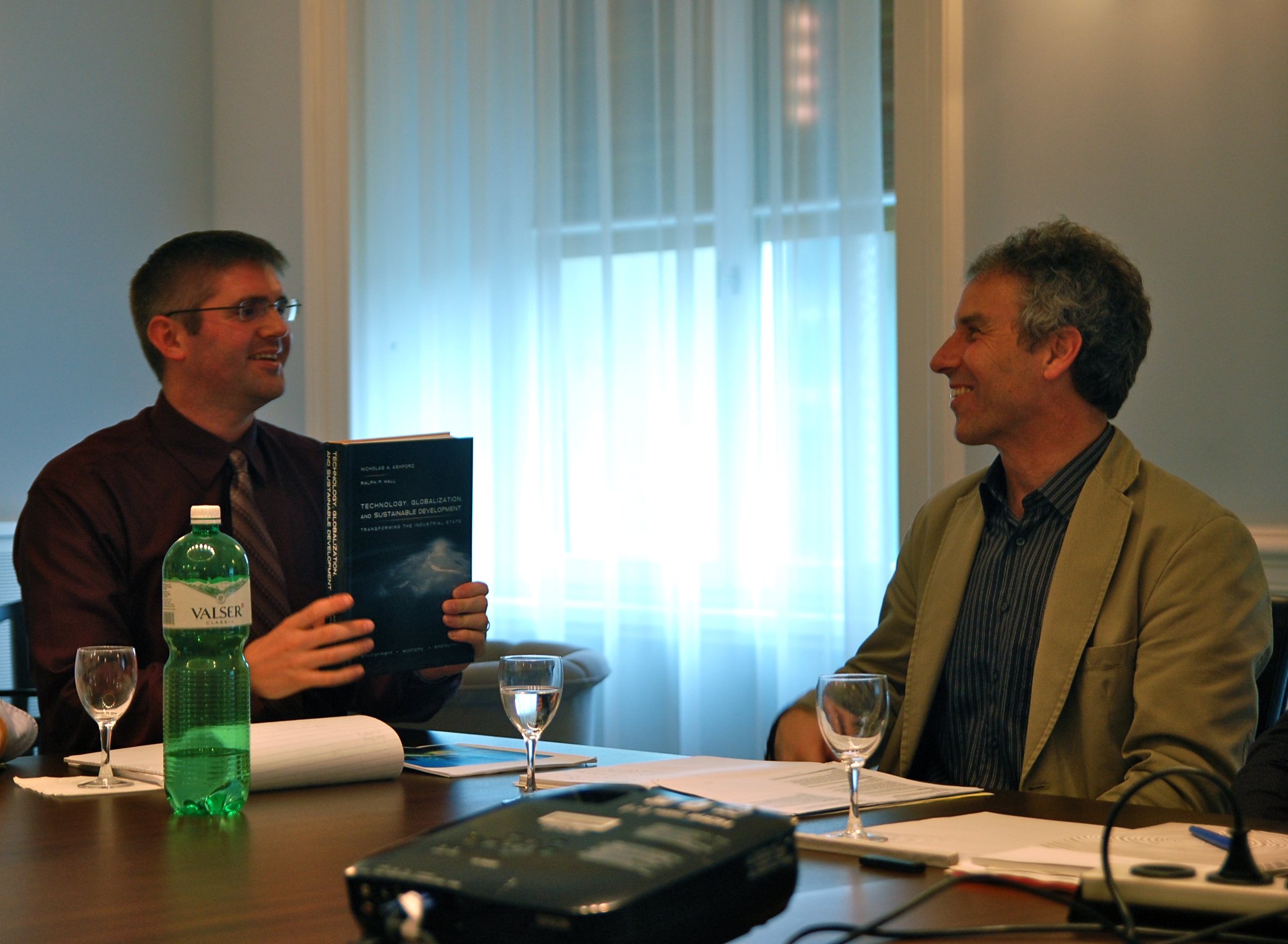
A photo of me presenting Stefan Ruchti and his colleagues with a copy of my textbook

Our final meeting was held at the University of Bern, where Fabian Streiff (a PhD candidate in Economic Geography) provided a detailed overview of the photovoltaic industry in Europe and Switzerland and explored the potential expansion of this industry domestically in the context of the Swiss Cleantech Strategy. Following this meeting, we toured the University of Bern and I had the opportunity to speak with Ellen Krause (Executive Director of the International Office, University of Bern) and Zoë Ghielmetti (Executive Director of International and National Relations, University of Bern) about the new student exchange agreement established between Virginia Tech and the University of Bern. This agreement enables students from each institution to study at the partner institution while receiving academic credit at their home institution.