100andChange Moonshot

Our proposal for the MacArthur 100&Change ($100 million) grant was submitted this morning. Using the language of Virginia Tech’s Beyond Boundaries initiative, this is our ‘moonshot’ idea. If implemented it could fundamentally retool the global economy to provide everyone with a capital ownership stake in an inherently sustainable economy. Here is the executive summary of our proposal:

Boldly conquering global poverty will require an innovative economic paradigm that provides everyone on this planet with a personal ownership stake in the future. This project aims to transform our economic systems and promote sustainable enterprises by leveraging creativity and innovation. Our forward-looking mechanisms will enable all people to obtain a capital-based income that will supplement their labor income. Using the principles of binary economics, people will acquire capital with credit repayable with pre-tax future earnings of capital (future savings). The approach does not require coercive actions of government or a redistribution of existing wealth. As capital ownership becomes more broadly distributed, the economy will grow as people spend their newly acquired income on inherently sustainable goods and services. Our team’s alliance of academics and expanded-ownership pioneers will demonstrate how universalizing access to capital ownership can reduce inequality and advance sustainable development to create inclusive and sustainable prosperity for all.

In this post, I wanted to reflect a little on how we made it to this point.

My decision to advance a proposal came after listening to Regina Dugan speak at Virginia Tech in August. During her talk, Dugan commented that organizations are often limited not by what they can do, but by what they “believe” they can do. Having initially decided not to develop a 100&Change proposal due to the sheer scale of the grant and significant global competition, her comments and the Beyond Boundaries initiative made me rethink this decision.

I would put my ideas for how to spend this scale of funding into two categories. The first contains those ideas that could lead to siginfnicant progress, but largely within the existing development paradigm. One example would be the creation of an accessible and open data-rich sustainable water decision-support platform that could be expanded to include other sectors of the economy such as energy and agriculture. The second category contains those ideas that are potentially transformative in a macro sense, but are also currently on the fringe of mainstream thinking. One example, and the anchor of our 100&Change proposal, is the theory of binary economics that has been developed for over fifty years, but has yet to receive significant attention.

During her talk at Virginia Tech, Dugan commented that real innovations tend to occur when you feel uncomfortable about what you are doing – uncomfortable in the sense that there is no known pathway to success and there is a high potential of failure. While binary economics inspired the creation of employee stock ownership plans (ESOPs), its economic principles have yet to be fully implemented in a way that increasingly broadens capital ownership and creates a sustainable economy. Thus, some could argue that it is an unproven idea. Flying at Mac 20 was also an unproven idea until it was not. With regards to the high potential of failure, I view this in the context of a highly competitive grant competition, rather than failing in terms of the approach. Having spent many years exploring the approach with Prof. Robert Ashford, I feel confident it has the potential to reduce inequality and stimulate significant economic growth. The basic idea is that if everyone received an additional and growing income from capital ownership, they would spend this money on goods and services, stimulating further growth (‘binary growth’). Given the potential negative environmental impacts of this growth, our proposal developed an innovate way to finance the growth of inherently sustainable goods and services. The problem statement from our proposal clearly explains the combination of these two ideas.

Few people today produce enough to take care of themselves or their families. Labor, the main source of economic productiveness prior to the industrial revolution, has declined in relative productiveness as labor-displacing technology advances and becomes hyper-productive in comparison to labor [see the Second Machine Age]. These trends are driving the growth in inequality and the erosion in labor earning capacity, with the ownership of productive wealth being highly concentrated, and with most people owning little or nothing. Attempts to generate equitable growth via government stimulus or austerity programs have failed.

A second critical and related problem is the negative environmental impacts that accompany technology-fueled growth. The Rio+20 promise of a Green Economy has yet to truly materialize, but simply going green is not enough. A new, inherently sustainable industrial revolution is needed, where products and services are produced, used, and disposed of in closed-loop, hyper-efficient systems. A major challenge, however, is the creation of markets for these next-generation products and services. These markets need to provide all people with an equal opportunity to earn incomes from their labor and from a capital ownership stake in the inherently sustainable products and services they benefit from.

When put together, these two macro problems – i.e., inadequate income and the negative environmental impacts of growth – underlie most of the major challenges facing humankind. The fundamental problem addressed by this proposal is how to create Inclusive and Sustainable Prosperity for All.

Since we decided to advance a 100&Change proposal in the first week of September (four weeks ago!), I needed to recruit help to make this proposal happen. I decided to focus my sustainability seminar on the topic of binary economics and asked my graduate students to help structure the content of the 100&Change ‘pitch’ video. They willingly agreed to help and spent several weeks reading, learning, and struggling with the ideas before developing what I considered to be a firm understanding of binary economic principles. The pictures below capture some of the ideas we discussed during this learning process. We also developed a number of concept videos that can be viewed here and here.

This slideshow requires JavaScript.

While my students helped develop the video (with technical support from TLOS), I was fortunate to have colleagues in the School of Public and International Affairs (SPIA), the Office of International, Research, Education, and Development (OIRED), and the Institute for Policy and Governance (IPG) who both understood the approach and worked hard to help craft a viable project (described below).

This project will make the ownership of capital – a critical and growing form of income – more inclusive by using future capital earnings (future savings) to finance broadening capital acquisition to provide growing numbers of people with capital income. The new capital income will target inherently sustainable goods and services, stimulating innovation and supporting long-term sustainability. As production becomes ever more capital intensive, providing everyone with an ownership stake in capital will be critical to broadly increasing purchasing power, reducing inequality, and fostering sustainable communities.

Because most people lack the capacity to generate past savings, there must be a shift to using future savings to finance new capital. Presently, almost all capital acquired by corporations is acquired with the earnings of capital, and much of it is acquired with borrowed money. The new mechanisms developed by the project team will open to all people the techniques of corporate finance that will broaden capital ownership and provide beneficiaries with a growing capital income. Because present demand for the employment of capital and labor is dependent on expected demand for goods or services in a future period, a voluntary pattern of steadily broadening capital acquisition promises more production-based consumer demand in future years and therefore more demand for a fuller employment of labor and capital in earlier years. Further, the targeted use of newly acquired capital income to purchase inherently sustainable goods and services will significantly expand the market for these goods and services, creating powerful incentives for innovation.

What is perhaps most interesting about this experience is that while I initially viewed the challenge of creating a 100&Change proposal as a moonshot, the more we worked on the idea and began to form the team, the more it became a realistic possibility. My graduate students proved to be the best critics of the ideas we were exploring and played an important role in framing the approach to the project. In many ways, as the proposal evolved, so too did the team’s confidence in what we could accomplished with binary economics. Our final 90-second video (below) is ‘one small step’ towards a broader understanding of the approach.

After completing our proposal, I started watching the other 100&Change videos on YouTube and realized that our approach could finance those ideas focused on the creation of inherently sustainable goods and services. Thus, if you find yourself wondering what inherently sustainable means, take a look at the available videos and get inspired.
Regina Dugan … Part 2: Design Space

Earlier this week, I posted my reflection to Regina Dugan’s Presidential Lecture. After a couple of days of thinking, I wanted to extend one of the ideas I discussed and connect it with my research on innovation/transformation.

In my previous post, I discussed the idea of creating sandbox spaces or studios where students from any discipline can work on ‘use-inspired’ solutions to significant problems. I wanted to extend this idea by introducing the concept of “design space.”

In 1978, Allen, Utterback, et al. of MIT introduced “design space” as a cognitive concept that refers to the dimensions along which the designers of technical systems concern themselves. The basic idea is simple. Once a problem is clearly defined (or bounded), so too is the design space within which a solution to the problem can be created. A well-defined design space opens up the creativity of an engineer, designer, etc., by clarifying the dimensions of a problem that must be solved. A poorly defined problem cannot be easily solved, if at all. While the roots of the idea stem from innovation theory, Nicholas Ashford and I have argued that the idea of “design space” can be applied in a technical and regulatory setting to advance sustainable development.

If solutions to problems are sought only along traditional engineering lines, unconventional solutions – which may or may not be high-tech – are ignored. Put differently, if the design space ignores a specific factor or dimension, the solution to a problem is also likely to ignore this factor or dimension. From an organizational perspective, organizations that limit themselves to current or traditional strategies or agendas, are likely to have a constrained use of the available design space, reducing the chance they will be able to fundamentally transform their functions. Thus, organizations can become ‘locked-in’ to their own routines and ways of thinking if they do not have a process to engage with outsiders and radically new ideas. The implications of this idea for the Beyond Boundaries process should be clear.

The Presidential Lecture series provides a good example of how Virginia Tech is trying to engage with ‘outsiders’ to expand the Beyond Boundaries design space – i.e., to help us identify important factors or dimensions that we previously had not considered.

In the context of creating sandbox spaces or problem-solving studios, it would be critical to broaden the design space to capture the full scope of issues that underlie a complex problem. For example, a design space for a sustainable development problem would be necessarily broad (or multidimensional). In this case, the design space would need to be ‘opened up’ (perhaps, through engagement with ‘outsiders’) to achieve mutually supportive social goals, co-optimizing the determinants of economic welfare, environment, consumer and public health and safety, and employment, etc. A failure to do this may result in solutions that create problems in those areas excluded from the design space. I believe that limited or single-purpose design spaces are one of the reasons progress towards sustainable development has been so slow.

Finally, the way in which Virginia Tech crafts the design spaces for the Destination Areas (DAs), is likely to be critical to the type and scope of problems that the university will be able to address. We should heed Regina Dugan’s advice and not limit the DA design spaces to what we feel comfortable doing. We need to stretch our imagination and capabilities to the point of discomfort, in search of disruptive and transformative ideas. The sandbox spaces or problem-solving studios could provide safe places where students and faculty could fantastically succeed or fail, both outcomes are part of the same transformative coin.

Reference:

Allen, T. J., J. M. Utterback, et al. (1978). “Government Influence on the Process of Innovation in Europe and Japan.” Research Policy 7(2): 124– 149.

First Reviews of Sustainable Transportation Book

The first reviews of my co-authored book entitled Sustainable Transportation: Indicators, Frameworks, and Performance Management have been published.

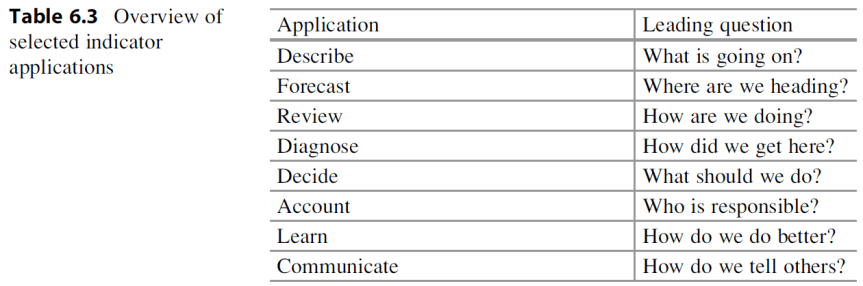
2016-06-17_2014The first review (in Danish) is from Prof. Steen Leleur (Technical University of Denmark) and can be accessed by clicking on the image to the left. I appreciate that Prof. Leleur highlighted the chapters on indicators (Chapter 6) and frameworks (Chapter 7). We tried to make these chapters as comprehensive and accessible as possible given their importance to the measurement of sustainable transportation. I believe a unique aspect of the book is the presentation of eight indicator applications (below), which embody the purpose to which the indicators are to be put. These indicator applications are applied to the four case studies in part two of the book to identify how indicators are being used for analysis, communication, and/or decision support. I agree with Prof. Leleur that it would have been nice to have included an index in the back of the book. Unfortunately, we did not have the resources to do this, but I hope this can be rectified in a future edition of the book.

2016-06-17_2027

Bogen kan varmt anbefales til læsere, der ønsker et nærmere kendskab til transport og bæredygtighed og specielt til læsere, der på en eller anden måde er inddraget i udvikling og implementering af bæredygtig transport” (Steen Leleur). [Translation: The book is highly recommended for readers who want a closer knowledge of transport and sustainability, especially for readers who are in some way implicated in the development and implementation of sustainable transport.]

2016-06-17_2039

The second review is from Prof. Joseph Sussman (MIT) and can be accessed from the Journal of Planning Education and Research. During my doctoral research at MIT I had the pleasure of holding many extended discussions with Prof. Sussman on how sustainable transportation should or could be framed within the context of sustainable development. I credit much of the clarity we were able to develop on this complex subject to these early conversations and debates, which I continued with my co-authors during the writing of the book. I was pleased Prof. Sussman believes the book provides “a deeper, more scholarly treatment” of this subject than what we were able to achieve over a decade ago.

This book represents a milestone along the path of a deeper understanding of both the transportation field and the planet’s need for an effective strategy to work toward a sustainable society. Any serious student of these topics would be remiss in not obtaining this book and reading it with care” (Joseph Sussman).

Congratulations Selma Elouardighi!

This afternoon, Selma Elouardighi successfully defended her dissertation entitled “The Transfer of Environmental Best Practices from Developed to Developing Countries through Multinational Corporations.”

I have provided a brief excerpt from her dissertation below that captures the essence of her research.

This research was prompted by a desire to understand why Moroccan cement companies have adopted advanced environmental responsibility practices far beyond those used by companies in the other sectors of the national economy. While corporate environmental stewardship in Morocco is generally lacking, cement producers have adopted best practices. This observation prompted two questions: why did the cement sector adopt, of its own volition, advanced environmental performance in the absence of the impetus of the state (i.e., stringent and enforced regulation), and how was the industry able to change course, develop, and adopt these best practices? Answering these questions meant identifying the power structures capable of inducing behavioral change within Moroccan companies, as well as the mechanics through which new knowledge is generated within the same context.

Using process tracing as a research methodology, … this research analyzed the external business environment of cement subsidiaries in Morocco, and uncovered the processes through which the adoption of EBP by Moroccan cement subsidiaries was enabled.

Using the knowledge she obtained through her research, Selma set-up an NGO in Morocco in 2014 to help create an Industrial Cluster for Environmental Services (known as CISE-Marco). The NGO and its partners subsequently applied for and received a green entrepreneurship grant from the U.S. Department of State to promote cleaner production processes and green jobs in Morocco. Her research and subsequent work provide an excellent example of how students from SPIA’s PGG program are focusing on significant and real-world problems.

I served as the co-chair of Selma’s doctoral committee, alongside Edward Weisband (co-chair), Karen Hult, and Deborah Gallagher.

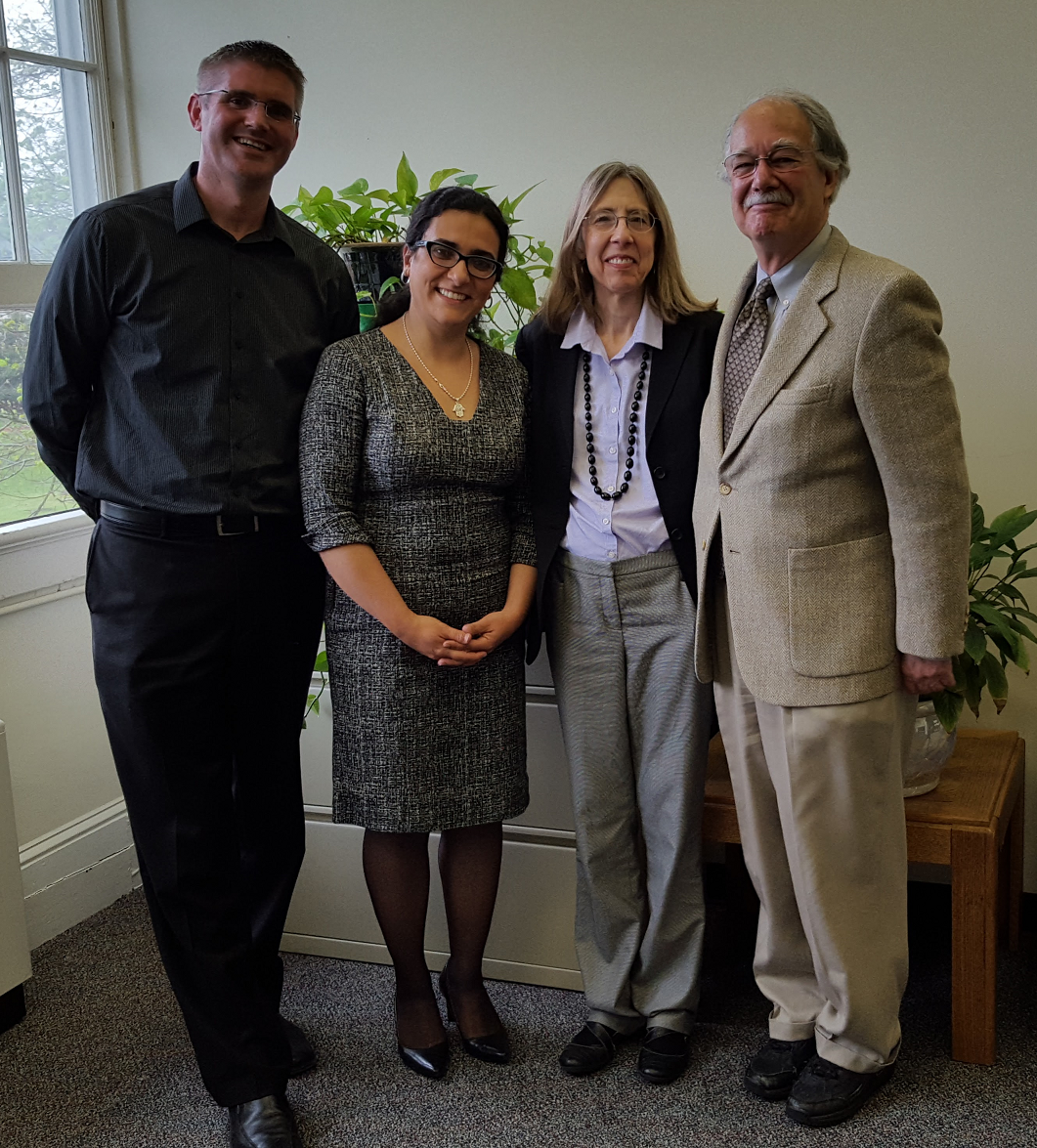
Ralph Hall, Selma Elouardighi, Karen Hult, and Edward Weisband

Data Anonymization Presentation

Tomorrow, Eric Vance and I will give the presentation below as part of Virginia Tech’s 2016 Open Data Week. During our presentation, we will discuss the data anonymization lessons we learned through a multi-year impact evaluation we undertook in Mozambique for the Millennium Challenge Corporation (MCC). We hope to see you there!

When: Tuesday, March 29, from 2:00-3:15 p.m

Where: Newman Library, Level 2, room 207A

VT Authors Event

The photos below were taken this afternoon at the 11th Annual VT Authors Recognition Event. In 2015, over 70 VT faculty published more than 80 books. I attended the event to talk with fellow authors about the book I co-authored with Henrik GudmundssonGreg Marsden, and Joe Zietsman entitled Sustainable Transportation: Indicators, Frameworks, and Performance Management.

Video Feedback Community

Thanks to everyone who attended my CHEP 2016 practice session yesterday on Providing Video Feedback on Assignments. After my presentation I spoke with several people who were interested in creating a private community where educators could discuss issues related to providing video feedback. This community would be a place to discuss platform/software/technical issues and to discuss ways to maximize the value of the video feedback provided to students. Thus, I have decided to keep the “Video Feedback” community I created for the practice session and will enroll educators into this community upon request. Please send me an email if you would like to join the conversation (make sure you send this email from the account you have linked to a Google+ profile).

The Video Feedback community can be accessed by selecting the image below. If you are not yet a member and would like to join, you can ask to join the community while viewing the community information. I recommend you list your academic affiliation on your Google+ profile so I know your interest in the community is genuine.

2016-02-11_0903

Providing Video Feedback on Assignments

On Wednesday, February 10, at 10am, I will be giving a Practice Session at the 2016 Conference on Higher Education Pedagogy on Providing Video Feedback on Assignments. I have posted below the material I will be using during this 50-minute session.

During the session I will discuss how to [1] create a video-feedback platform using SnagIt, Google+, Google Circles, and YouTube, [2] structure the process of providing video feedback, and [3] what to include in the feedback video. I plan to share what I have learned from experimenting with Google Apps and screen capture software, and from recording over 300 assignment feedback videos.

Click on the image below to access the first Google Doc that will be used during the practice session. This document provides instructions on what participants will need to do to be able to engage in the session.

2016-02-09_0930

The second Google Doc below provides guidance on how to set up a Google Apps platform for a course.

2016-02-09_0931

The slides below provide some initial results from my research into providing video feedback on assignments.

MCC Event – Open Data: Big Impact

On Tuesday, February 2, 2016, Eric Vance and I will take part in the MCC’s Open Data: Big Impact event in Washington, D.C. We will join a panel discussion entitled “(Some of) the Data’s Out There, Now What?” The panel discussion will be hosted by Beth Tritter (Vice President, Policy and Evaluation, MCC). Eric and I will be joined on the panel by Jacqueline Homann (Masters Graduate, Lyndon B. Johnson School of Public Affairs, University of Texas) and Jennifer Sturdy (Director, Berkeley Initiative for Transparency in the Social Sciences). 2016-02-01_1118

The presentation below contains an outline of our discussion notes. It also includes some information about the sample frame we developed for our impact evaluation of the MCC-funded Rural Water Supply Program in Nampula, Mozambique, and links to presentations (i.e., a seminar and webinar) of the evaluation results and the final report.