
Fall 2023 – SPIA Undergraduate Newsletter
Professor, Urban and Environmental Policy and Planning (UEPP), Virginia Tech; Joann Boughman Innovation Fellow at USG; Acting Director, Center for Future of Work Places and Practices (CFWPP); Head of Outreach and Engagement, Center for European and Transatlantic Studies (CEUTS)

Congratulations to Shahidur Rashid Talukdar for successfully defending his PhD dissertation entitled “Policy conflicts among local government officials: How does officials’ engagement with regional governance relate to their position divergence on sustainability policy?” The abstract for his dissertation is provided below.
Shahidur will receive a Ph.D. in Public Administration and Public Affairs from the Center for Public Administration and Policy (CPAP) at Virginia Tech.
I served as a member of Shahidur’s doctoral committee, along with Prof. Karen Hult (Committee Chair), Dr. David Bredenkamp, and Dr. Stephanie Davis. It is customary in CPAP to hold PhD defenses in full academic regalia.

Abstract
Policy conflict plays an important role in shaping public policy—both as a process and as a product. The policy conflict framework—a relatively novel theoretical framework, developed by Christopher Weible and Tanya Heikkila in 2017—considers position divergence among policymakers a key characteristic of policy conflict, which can be affected several factors including organizational and network affiliation of policymakers. This dissertation analyzes position divergence among local and regional officials over community sustainability policy, with a focus on affordable housing, which is a major concern of community sustainability. This research examines if, and how, local government officials’ engagement with regional governance can play a role in shaping their policy positions. Understanding what influences officials’ policy positions is essential in managing conflicts that arise in the making of sustainability policies in general and affordable housing policies, in particular.
This study argues that local government officials’ engagement with regional governance can lower policy position divergence among them by influencing their policy core beliefs and policy relevant knowledge. This analysis includes testing several hypotheses using data from a state-wide survey of local and regional policymakers. Employing cross-tabulations, multivariate regressions, and ordered logit analysis, this study finds that (a) policymakers share a wide range of policy positions on community sustainability policies and (b) for local government officials engaged with regional governance, position divergence on community sustainability is lower than that among those who are not engaged with regional governance. Although position divergence on affordable housing among those engaged with regional governance is generally lower than those who are not engaged with regional governance, this finding is not robust. In some regions and localities, the relationship between position divergence and engagement with regional governance does not hold.
Furthermore, this study finds that local government officials’ engagement with regional governance is associated with higher levels of policy relevant knowledge, which can influence the policymakers’ policy positions. Policy core beliefs do not have a statistically significant relationship with policymakers’ engagement with regional governance. The analysis suggests that local government officials’ policy core beliefs may not be affected by their engagement with regional governance.
Congratulations to Ibrahim Altasan for successfully defending his PhD dissertation entitled “The Governance of Mobilized Urban Policies: The Case of Riyadh’s Transit-Oriented Development Program.” The general audience abstract for his dissertation is provided below.
Ibrahim has been a valued member of our Planning, Governance, and Globalization (PGG) doctoral community, where he has become known (by our undergraduates in the Smart and Sustainable Cities major) as our resident expert on Urban Footprint.
I co-chaired Ibrahim’s dissertation committee with Dr. Todd Schenk. We were joined on the committee by Dr. Robert Oliver and Dr. Hamad Alsaiari.
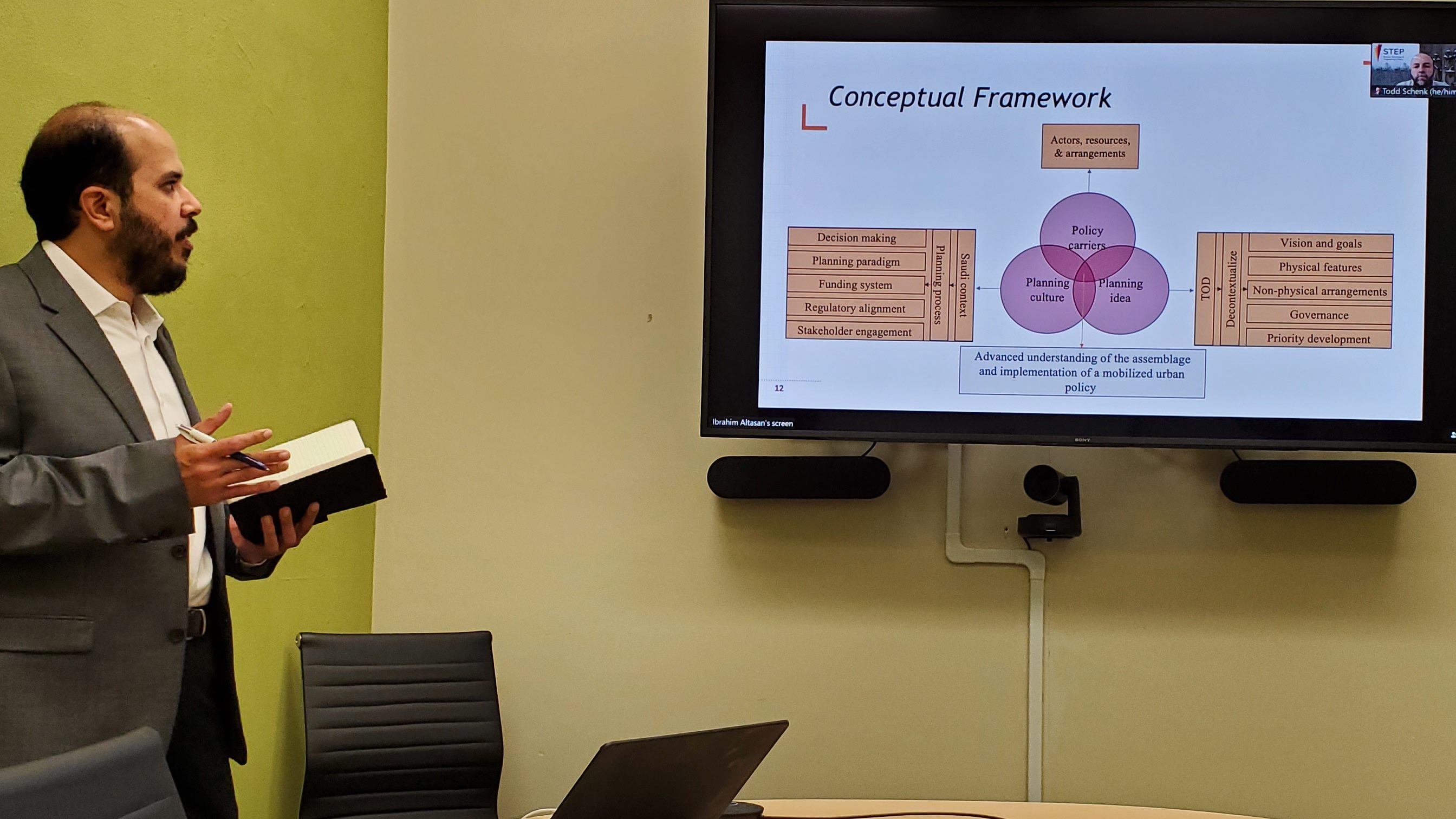

General Audience Abstract
Nowadays, city officials are looking outside their borders for urban policies that promote sustainability and improve quality of life. However, city officials rarely consider how differences between local urban areas could affect the adoption of urban policy. To address this challenge, the field of Urban Policy Mobility (UPM) emerged to shed light on how the unique local factors that shape each city environment affect what elements of an urban policy are or are not adopted. This study examines the changes that occurred when a Transit-Oriented Development (TOD) urban policy was introduced in Riyadh, Saudi Arabia. In order to learn about the changes and challenges of Riyadh’s TOD policy, interviews were conducted with employees responsible for the policy. Additionally, TOD policy documents and other publications that contained information about Riyadh’s TOD were reviewed to obtain additional data to help build a deeper understanding of why certain policy elements were implemented and others were not. The study found that: 1) the TOD policy was not completely translated into Riyadh where the focus is more on increasing building density, diversifying land uses, and enhancing design aesthetics, which resulted in overlooking other important policy elements that enhance economic and social sustainability; and 2) the implementation of the TOD policy led to governance challenges due to the differences in how urban planning is undertaken in Riyadh when compared with TOD policy environments in western countries. This in-depth study of Riyadh’s experience can inform other cities that are looking to implement urban policies borrowed from overseas.
Our USAID LASER PULSE team is honored to take home the prize for Best Documentary Short (Directed by Bethany Teague) at The African Film & Arts Festival (TAFF) in Dallas.
Please visit our Facebook page to learn more about the The Vegetable Connection documentary.

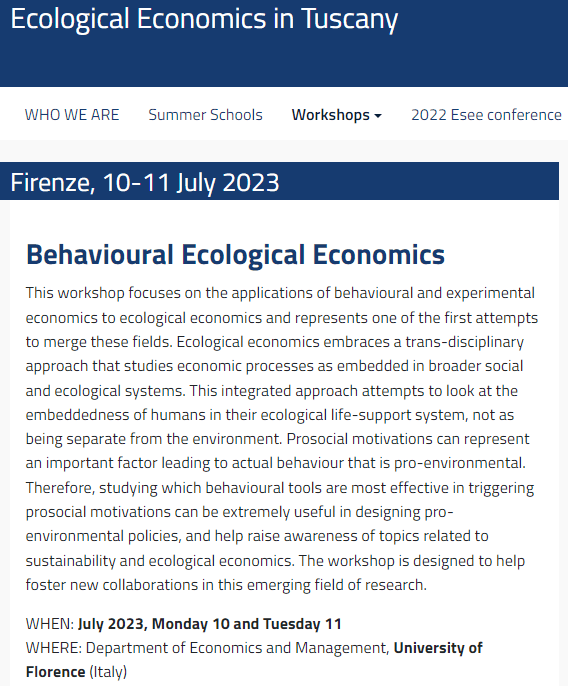
Today, I began a summer position as a visiting professor in the Department of Economics and Management at the University of Florence. During my time here I will deliver seminars on inclusive economics and Multiple Use Water Services (MUS), engage in a two-day workshop on Behavioural Ecological Economics (at the University of Florence), co-teach a summer school on Leveraging Ecological Economics to Advance the Sustainability Transition (at the University of Pisa), and co-teach a Hiking Ecological Economics Summer School (in the Apuan Alps). I’m looking forward to meeting over 100 students from across the EU, US, and beyond who have enrolled in the above activities.




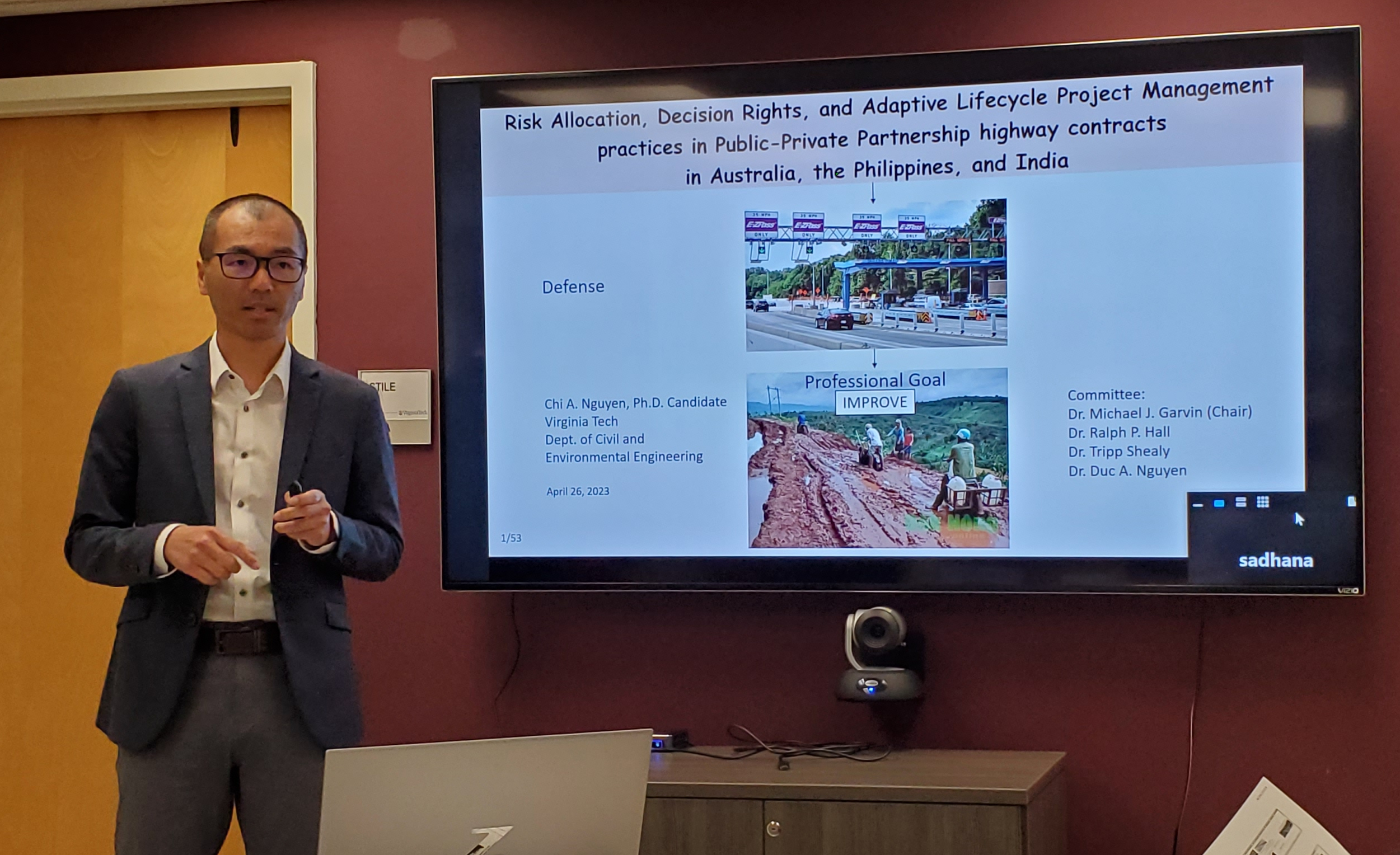
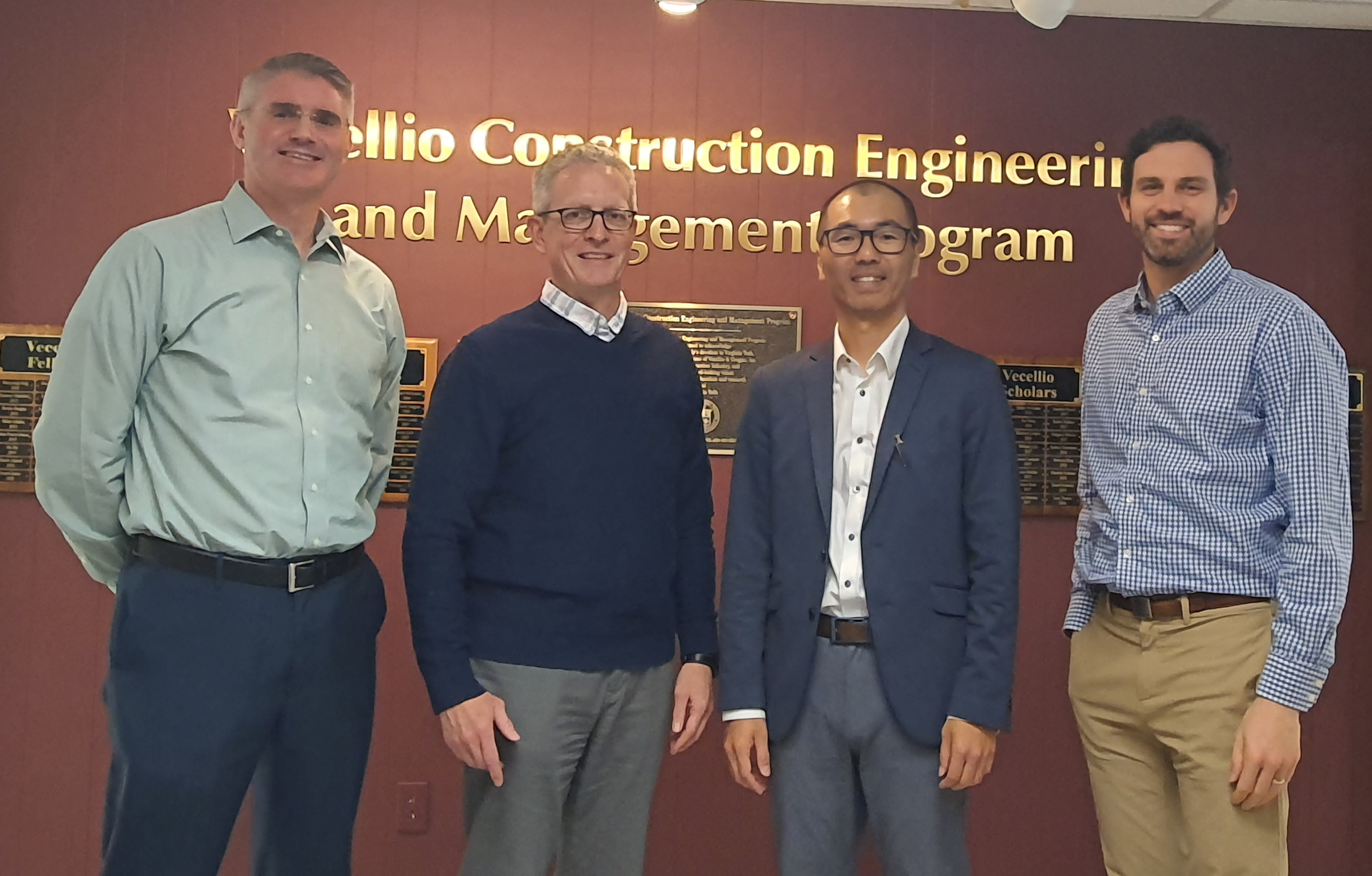
Congratulations to Dr. Chi Nguyen Anh for successfully defending his PhD dissertation entilted “Risk Allocation, Decision Rights, and Adaptive Lifecycle Project Management Practices in Public-Private Partnership Highway Contracts in Australia, the Philippines, and India.” The general audience abstract for his dissertation is provided below.
I served on Chi’s dissertation committee along with Michael Garvin (Committee Chair), Duc A. Nguyen, and Tripp Shealy.
Abstract
Public-private partnerships (PPPs) involve decades-long contracts between governments and private firms where a single private firm typically designs, builds, finances, operates, and maintains a specific infrastructure facility for revenues mainly from users (tolls) or governments. PPPs are theoretically expected to address certain limitations of traditional delivery approaches by capitalizing on private sector expertise and capabilities. Numerous studies have shown the feasibility of PPPs in many projects and sectors in various countries. However, PPP transactions are characterized by high uncertainty as a result of the involvement of numerous diverse stakeholders and the integration of multiple project lifecycle phases that span decades where changes in circumstances and requirements are inevitable. Contracts are the key and central instrument in project governance. Thus, addressing uncertainties is crucial in designing and implementing a PPP contract. Using a data set of 20 contemporary greenfield highway contracts in Australia, the Philippines, and India, this dissertation explored three key issues: risk allocation, decision rights allocation, and lifecycle project management. Risk allocation refers to which contracting party would take responsibility for certain contractual requirements with corresponding consequences or benefits. Decision rights allocation defines the boundaries of public sector involvement and consequently its control of the private sector’s activities and decisions. Lifecycle project management is a set of contractual requirements, project structure, processes, and principles that steer the actions of and interactions between parties over a project’s lifecycle.
For risk allocation, the results reveal that most of the 35 key risks investigated were either transferred to the private sector or shared. One interesting and, to some extent, unexpected finding was the relatively high level of similarity in risk allocation within each country and across the countries, despite remarkably different characteristics at both project and country levels. This suggests that similar risk allocation practices may be employed across regional and comparable countries and perhaps beyond. No noticeable transnational trends or variances were observed except some shift of responsibilities to the private sector in user-paid projects (typically longer contract duration) compared with government-paid ones (typically shorter). Some limited trends over time such as a decrease in silent or indeterminate provisions and more risks retained by the public sector in recent projects in the Philippines and India, respectively, were observed. Additionally, exogenous risks (external to the project) had more consistent allocation and were shared more than endogenous risks (within a project’s boundary). Some silent provisions were identified, indicating areas for improvement of contractual designs.
For decision rights allocation, the key finding was the dominant level of owner control in 10 key provisions in almost all contracts, regardless of the country’s level of development and the substantial number of risks transferred to the private sector. Contracts in Australia were more rigid, having distinctive, rigorous, and more detailed requirements with more efforts required beforehand to specify numerous provisions. Some limited national trends include contractual design evolvement over time in some provisions in the Philippines and India. Some silent provisions were identified, indicating areas for improvement or consideration.
For lifecycle project management, parties designed contractual practices to rely on (1) contractual requirements with consequences for noncompliance and harmonious and collaborative relationships between parties, (2) rigid and detailed requirements and flexible ways to correspond to uncertainties, and (3) output-based management approaches (e.g., performance linked payments) and process-based management approaches (e.g., regular meetings and communication, procedures to resolve disputes) to address future uncertainties throughout a project’s contract duration. Contracts in Australia tend to be more comprehensive in many areas requiring more ex ante contracting efforts such as naming contractors in contracts and ex post implementation efforts to comply with many distinctive requirements such as those concerning environment and community/user management. Meanwhile, contracts in Australia likely rely more on trust-based management versus monitoring/control-based management, having limited requirements for monitoring and safeguarding the contract. Overall, the common and different practices revealed facilitate informed decisions such as market entry, project selection, and strategic contractual designs at both the project-level and policy-level, especially for evolving markets such as the Philippines, India, and other regional and comparable countries. For instance, international developers expecting high revenue can choose the Philippines over India since revenue risk is typically a private risk in the Philippines but shared in India. Additionally, governments in the Philippines and India might want to consider adopting more trust-based management practices so that their contracts would better attract and incentivize international developers. The findings also provide contractual evidence that supports numerous contract and governance theories and principles and establishes a baseline for subsequent inquiries such as investigating the effectiveness of the practices uncovered, the key reasons for parties’ contractual choices, and the gaps with parties’ preferences. The research is characterized by its broad scope exploring comprehensive sets of key provisions in 20 contracts spanning three countries and its important implications for both theory and practice of PPP contractual designs.
The full dissertation can be accessed here.
The recording of our presentation on Addressing Food, Housing, and Well-being at Virginia Tech: Results from the 2019 & 2021 Survey to the VT Center for Food Systems and Community Transformation, can now be accessed here.
On Wednesday, April 26, at 3:30pm, please join Dr. Jessica Agnew and I to learn about the results from our 2019 and 2021 food access and well-being studies at Virginia Tech. The report from our 2019 study can be accessed here. We will provide a brief summary of the 2019 results and then share the findings from the 2021 study. We will also discuss the events that led to the creation of The Market of Virginia Tech and will outline the future research that is underway.

The three main components of our 2023 study abroad program in Italy are now open for any student to apply. Virginia Tech students who are accepted into the VT program will be automatically enrolled into each part of the program.
VT Students: The application portal will remain open for the next week, so please apply this week if you would like to be considered for the program. Please also make sure you apply for a GEO Scholarship (due March 15th).
Non-VT/International Students: I hope you will considered applying to one or more parts of the program via the links below. In 2022, we had over 20 countries represented in the Pisa summer school that hosted around 40 students. It was a really engaging and culturally rich experience for everyone involved in the program.


Some new pictures of the library construction at Mzuzu University.
The two pictures below – taken by Felix Majawa, the University Librarian – provide a great view of the front of the new library and show the progress that continues to be made.


 Ralph P Hall