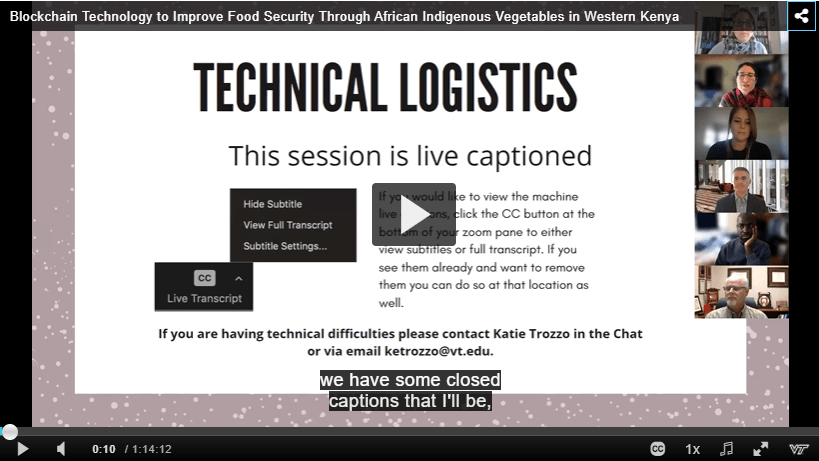
A recording of the the webinar Dr. Jessica Agnew and I gave for the Center for Food Systems and Community Transformation is now available via the image below.
Professor, Urban and Environmental Policy and Planning (UEPP), Virginia Tech; Joann Boughman Innovation Fellow at USG; Acting Director, Center for Future of Work Places and Practices (CFWPP); Head of Outreach and Engagement, Center for European and Transatlantic Studies (CEUTS)

A recording of the the webinar Dr. Jessica Agnew and I gave for the Center for Food Systems and Community Transformation is now available via the image below.
The video below presents a behind-the-scenes view of the AgChain Hackathon held at Egerton University, Kenya, from November 15 to 17. It was recorded by Nurvitria Kristofikova, a Program Director at AgUnity and core team member of our project entitled “Exploring Blockchain Technology to Improve Food Security Through African Indigenous Vegetables in Western Kenya.”
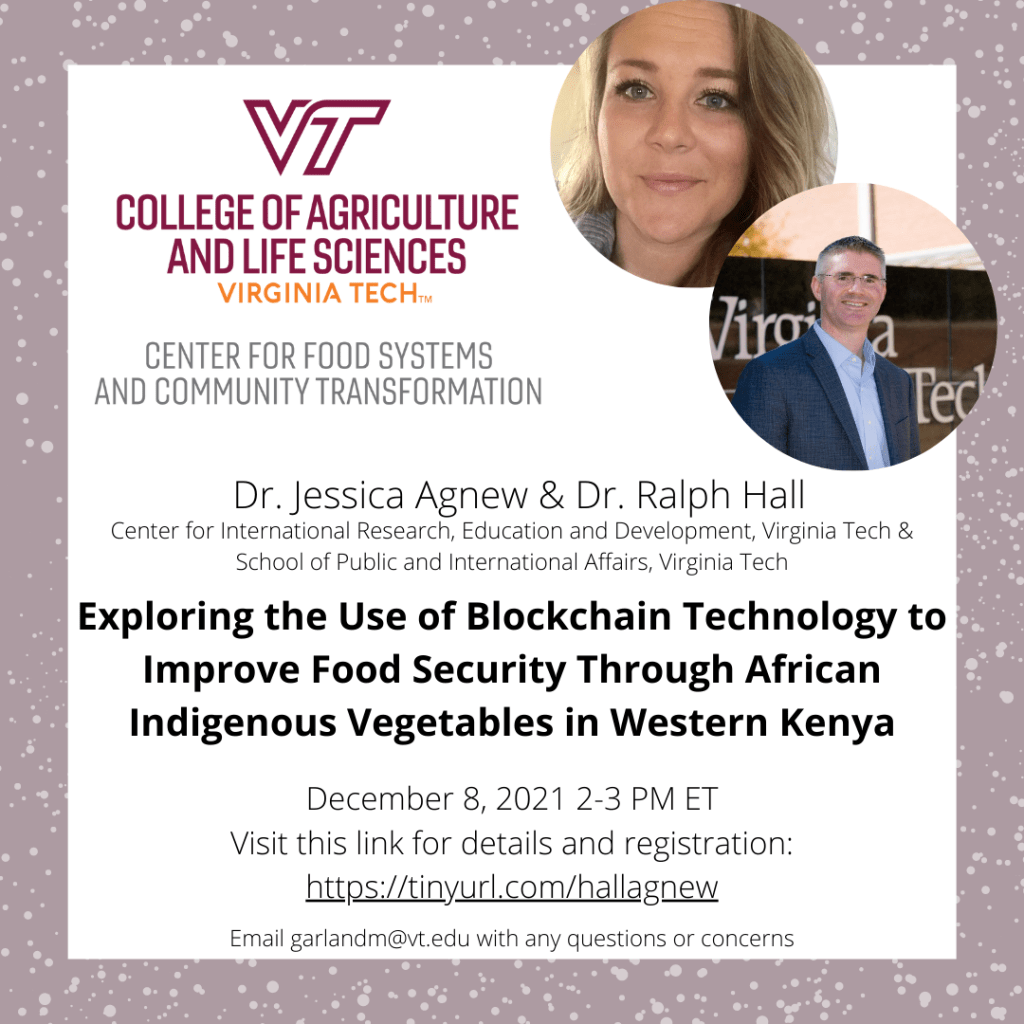
December 8, 2021
2-3 pm
Jessica Agnew, PhD, MSc, MPH
Assistant Director of Research, Operations, & Program Management
Center for International Research, Education and Development
Ralph P. Hall, PhD, S.M., S.M., MEng
Undergraduate Programs Director and Associate Professor, Urban Affairs and Planning (UAP)
Associate Director, School of Public and International Affairs (SPIA)
Virginia Tech
Visit this link to register: https://tinyurl.com/hallagnew
Blockchain technology is heralded for its ability to improve traceability, trust, and trust in agri-food value chains. For the optimist and the skeptic of blockchain, we explore the complexities of using this emerging technology to strengthen agri-food value chains to create social and nutritional impacts. This 1-hour talk will explore results and lessons from the field in Western Kenya as to how blockchain might be used as a tool to improve food and nutrition security, women’s leadership, and youth engagement within the value chains for African indigenous vegetables (AIVs).
On Monday, November 15, our AgChain Hackathon at Egerton University, Kenya, will officially begin. My welcome address for the three-day hackathon event can be watched below. During this address, I outline a number of the findings we have obtained from our USAID LASER PULSE project entitled “Exploring Blockchain Technology to Improve Food Security Through African Indigenous Vegetables in Western Kenya.” This hackathon is the second project milestone event this fall, and follows the blockchain webinar we held on October 26, 2021.
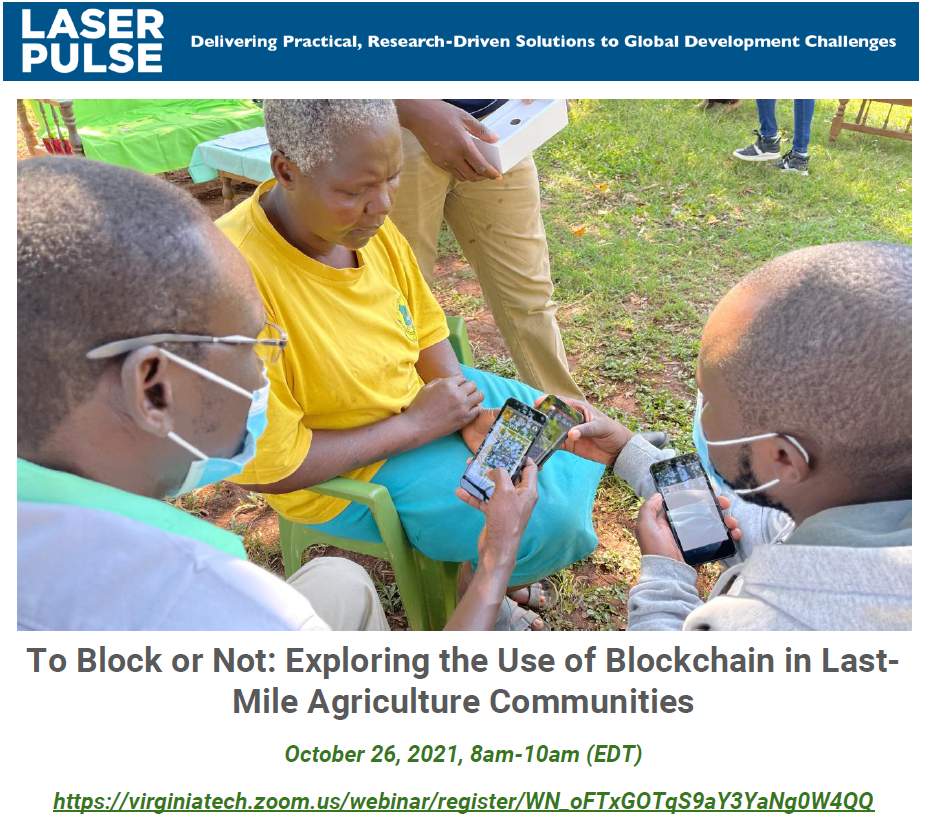
Please find below a recording of our international USAID LASER PULSE webinar entitled To Block or Not? Exploring the Use of Blockchain in Last Mile Agriculture Communities.
Webinar Description – Blockchain technology is heralded for its ability to improve traceability, trust, and trust in agri-food value chains. What is lesser known is whether it is a viable technology for those value chains that originate in last-mile agriculture communities. This webinar explores the contexts in which blockchain offers real solutions to strengthening value chains and its potential for creating social impact, like improved food security or engaging youth in agriculture, and where it does not. For the optimist and the skeptic, this two-hour webinar aims to discard the trendiness of the emerging technology and take a pragmatic view of the opportunities to use blockchain to strengthen last-mile agriculture.
Next summer, I will be co-running a study abroad program in Pisa, Italy, with colleagues Prof. Nicholas Ashford (MIT), Dr. Tiziano Distefano (University of Pisa), and Prof. Tommaso Luzzati (University of Pisa), from June 10-22, 2022.
We will be holding an information session about the program for students at VT and MIT from 10-11am on November 4, 2021. Please register here to join the session.
Sustainable Transitions in Employment, Economic Welfare, and the Environment
This unique program will provide students with a transdisciplinary perspective on sustainable development and is intended for rising seniors and graduate students interested in planning, policy, economics, business, innovation, environmental studies, and law. The program will explore the many dimensions of sustainability and how national, multinational, and international political and legal mechanisms can be used to further a transition towards sustainable development.
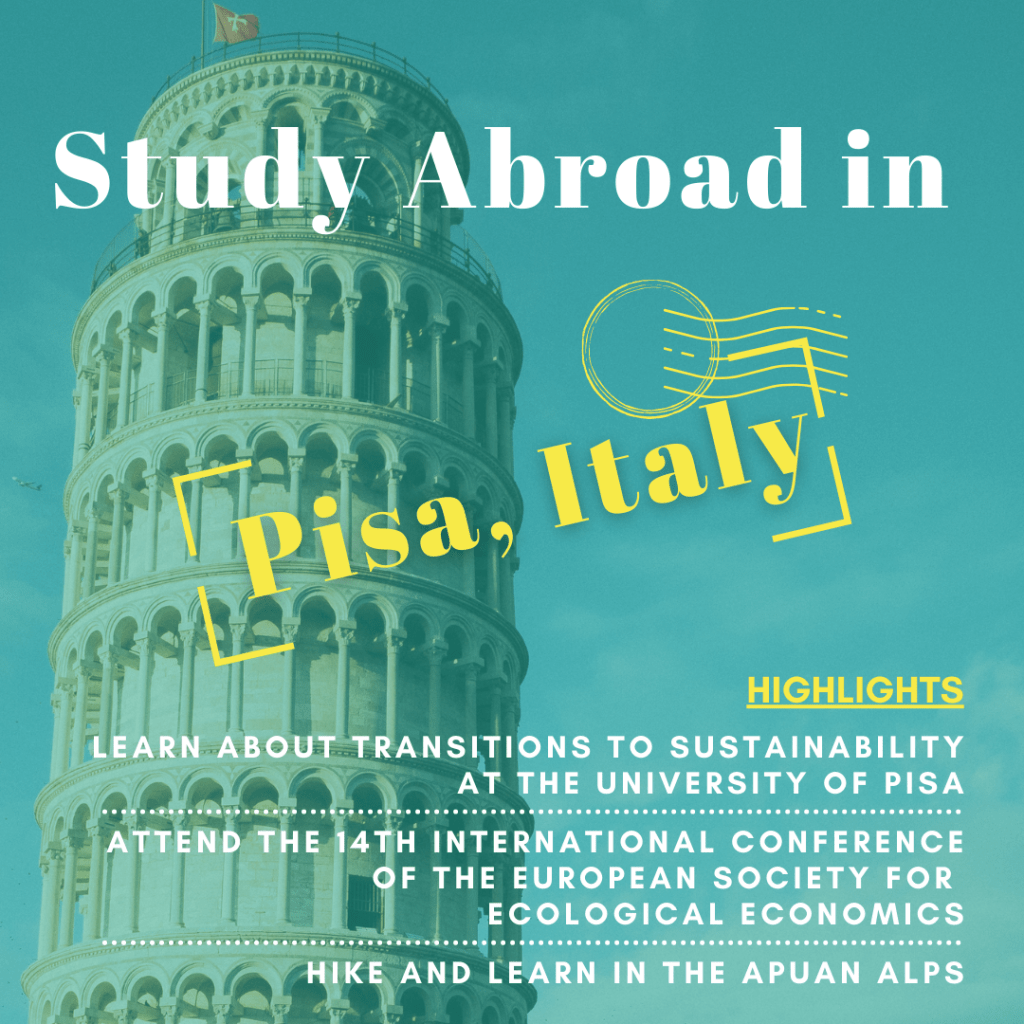
The program has three unique learning environments.
The first section of the program will consist of a summer school based at the University of Pisa, Italy, which will run in parallel with two other summer schools led by the Center for Politics, Ontologies, and Ecologies (POE) and the European Society for Ecological Economics. Given the proximity of the summer schools, joint sessions will be held where the faculty engaged with each program will share their research with students from the other programs. These sessions will enrich the content of each program and provide an opportunity for intercultural exchange between students (and faculty).
The second section of the program will consist of students attending the 14th Conference of the European Society for Ecological Economics (ESEE), which will be hosted by the University of Pisa.

During the third and final section of the program, students will travel to the Apuan Alps (close to Pisa in Italy), where they will share what they learned from the summer school and ESEE conference and discuss/debate future economic/societal transformation strategies. This final reflection will take place in the mountains, where group discussions will be held outside (weather permitting), and students will have the opportunity to hike in the Italian Alps.
Webinar: October 26, 2021, 8am-10am (EDT). Register (for free) here.
Traceability. Transparency. Trust.
Food systems built on these principles generally are known to attract higher price premiums by increasing consumer confidence and value for the products. This creates income earning opportunities for producers and upgrades the quality of agri-food value chains. Blockchain technology is heralded for its ability to improve traceability, trust, and trust in agri-food value chains. What is lesser known is whether it is a viable technology for those value chains that originate in last-mile agricultural communities.
This webinar explores the contexts in which blockchain offers real solutions to strengthening value chains and its potential for creating social impact, like improved food security or engaging youth in agriculture. For the optimist and the skeptic, this two-hour webinar aims to discard the trendiness of the emerging technology and take a pragmatic view of the opportunities to use blockchain to strengthen last-mile agriculture.
Webinar Host – Ralph Hall, Virginia Tech
Technology Panel: 8am – 9am (ETD)
Views from the Field Panel: 9am – 10am (ETD)
The fourth paper from Dr. Raj GC’s dissertation was recently published in Water International. This paper explores a myriad of ways in which a multiple-use water services (MUS) approach to rural water provision could be incorporated into Nepal’s planning and governance systems. The first 50 downloads of the paper are fee (via this link).
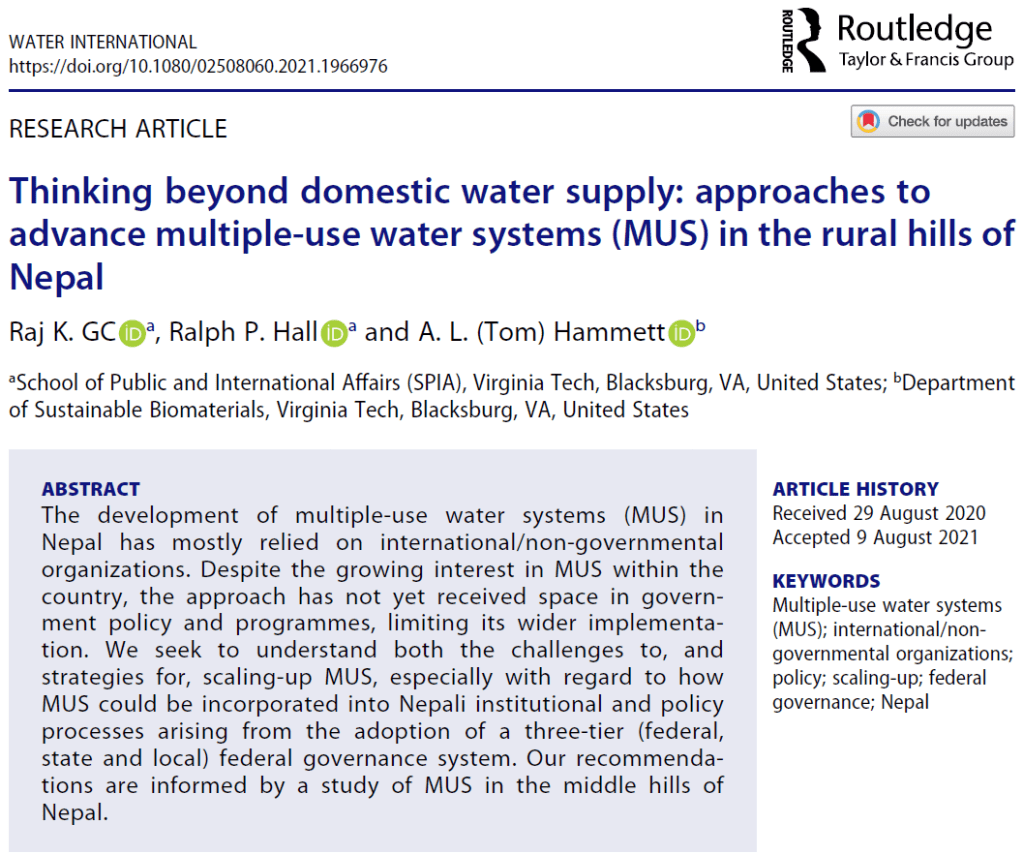
ABSTRACT
The development of multiple-use water systems (MUS) in Nepal has mostly relied on international/non-governmental organizations. Despite the growing interest in MUS within the country, the approach has not yet received space in government policy and programmes, limiting its wider implementation. We seek to understand both the challenges to, and strategies for, scaling-up MUS, especially with regard to how MUS could be incorporated into Nepali institutional and policy processes arising from the adoption of a three-tier (federal, state and local) federal governance system. Our recommendations are informed by a study of MUS in the middle hills of Nepal.
The three other papers from Dr. GC’s dissertation research can be accessed below:
GC, R.K., Ranganathan, S., Hammett, T., and Hall, R. P. (2020) What factors determine the technical performance of community-managed rural water systems in the middle hills of Nepal? Journal of Water, Sanitation and Hygiene for Development, https://doi.org/10.2166/washdev.2020.189.
GC, R.K. and Hall, R.P. (2020) The Commercialization of Smallholder Farming—A Case Study from the Rural Western Middle Hills of Nepal. Agriculture 2020, 10, 143.
GC, R. K., Ranganathan, S., and Hall, R. P. (2019) Does Rural Water System Design Matter? A Study of Productive Use of Water in Rural Nepal. Water, 11, 1978.
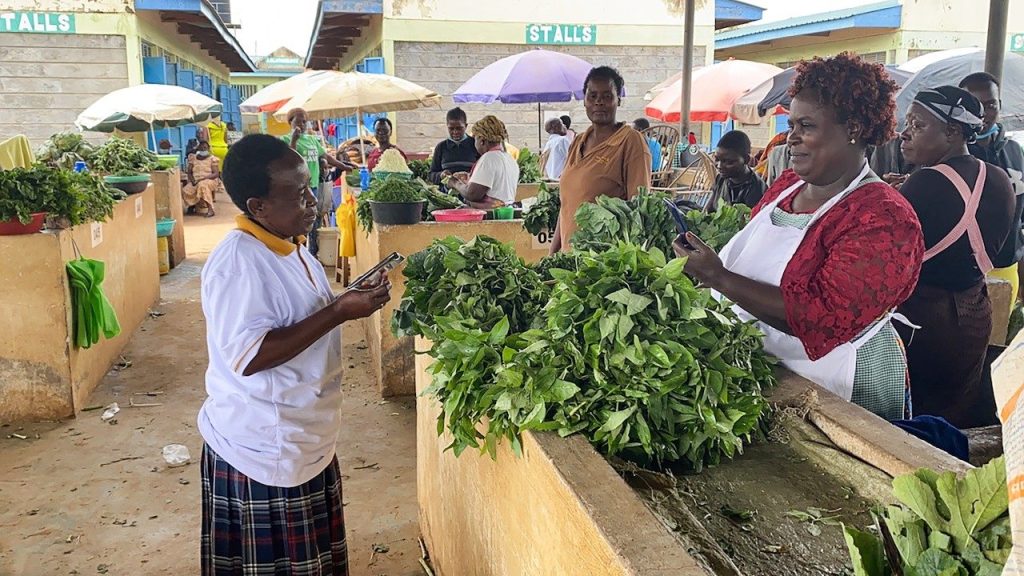
Virginia Tech recently published the article below on our USAID LASER PULSE-funded African Indigenous Vegetables (AIVs) supply chain project in Kenya.
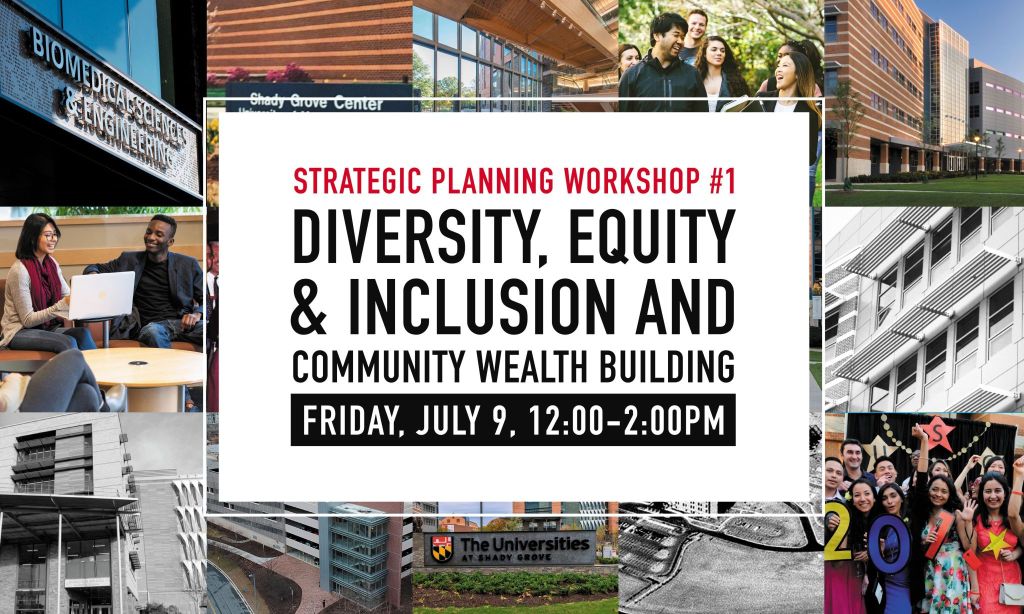
On Friday, July 9, I will be taking part in the first USG (Universities at Shady Grove) strategic planning workshop that will focus on Diversity, Equity, and Inclusion (DEI), Sustainability/Regenerability, and Community Wealth Building (CWB).
Andrew Schell (from the Chesapeake Bay Foundation) will lead the discussion on DEI, Jessica Hardy (Virginia Tech PhD student) will lead the discussion on Sustainability/Regenerability, and I will conclude the workshop with a discussion on CWB. The workshop will be hosted by Anne Khademian (Executive Director, USG), Ike Leggett (a former executive of Montgomery County, Maryland), and Kevin Beverly (President & CEO of Social & Scientific Systems).
The workshop is open to the public, but registration is required.
 Ralph P Hall