Professor, Urban and Environmental Policy and Planning (UEPP), Virginia Tech; Joann Boughman Innovation Fellow at USG; Acting Director, Center for Future of Work Places and Practices (CFWPP); Head of Outreach and Engagement, Center for European and Transatlantic Studies (CEUTS)
I’m pleased to share below a recording of Dr. Arlene Blum’s seminar entitled “Climbing your own Everest: Mountains & Molecules.” In this talk, Arlene explores her amazing career as a pioneering mountaineer and impactful chemist.
At the end of the seminar, I reminisce on how Arlene kindly supported the first class I taught while a postdoc at Stanford. It is truly remarkable to see what she has accomplished with the Green Science Policy Institute that was only an idea being developed back in 2007.
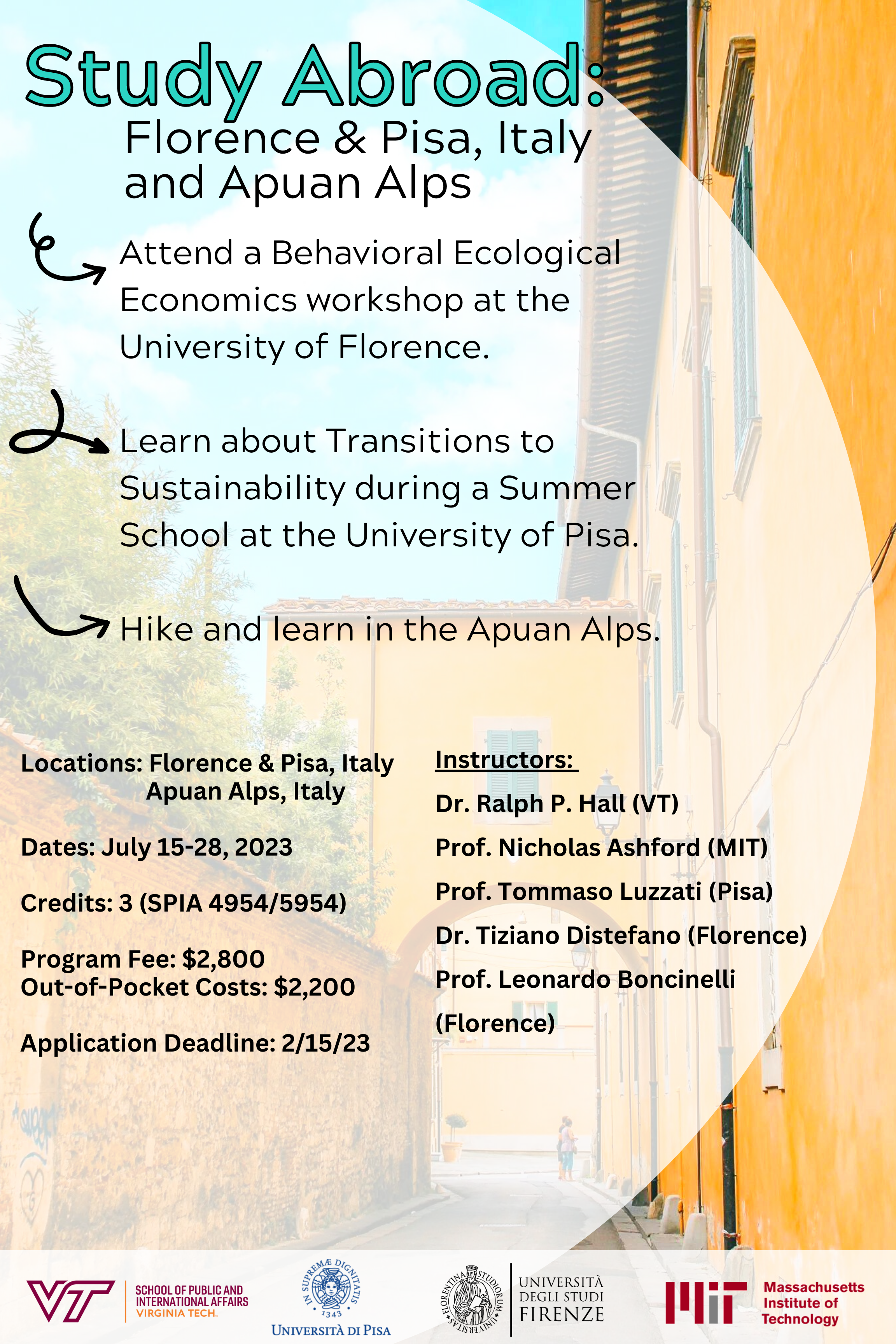
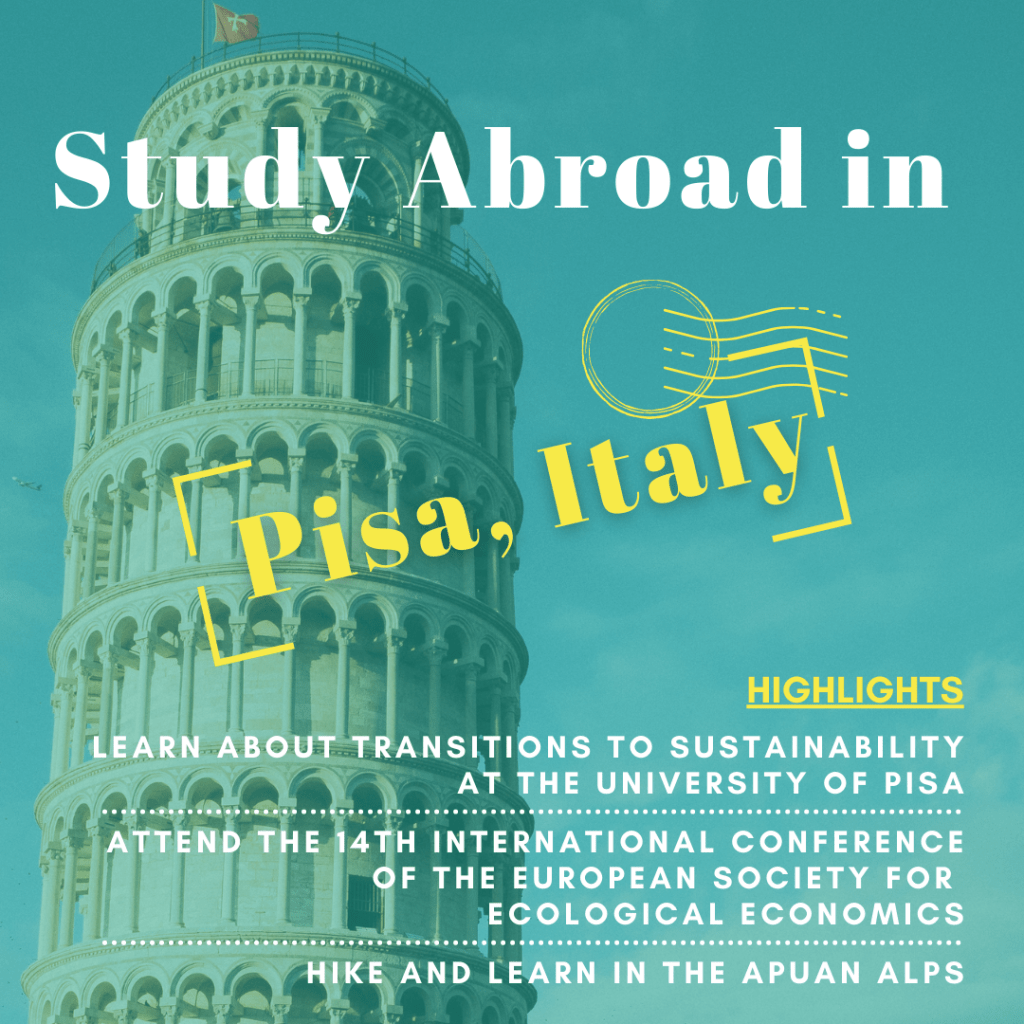
The three main components of our 2023 study abroad program in Italy are now open for any student to apply. Virginia Tech students who are accepted into the VT program will be automatically enrolled into each part of the program.
VT Students: The application portal will remain open for the next week, so please apply this week if you would like to be considered for the program. Please also make sure you apply for a GEO Scholarship (due March 15th).
Non-VT/International Students: I hope you will considered applying to one or more parts of the program via the links below. In 2022, we had over 20 countries represented in the Pisa summer school that hosted around 40 students. It was a really engaging and culturally rich experience for everyone involved in the program.
If you are a rising senior or graduate student at Virginia Tech and are looking for a unique sustainability-related study abroad experience, please find me on the Drillfield on Wednesday (September 21) to learn more about the planned 2023 Florence-Pisa program in Italy or signup for the information session that will be held from 3-4pm on Friday, October 14.
If you are unable to attend the study abroad fair or information session, please complete this simple form to be kept informed of program updates.
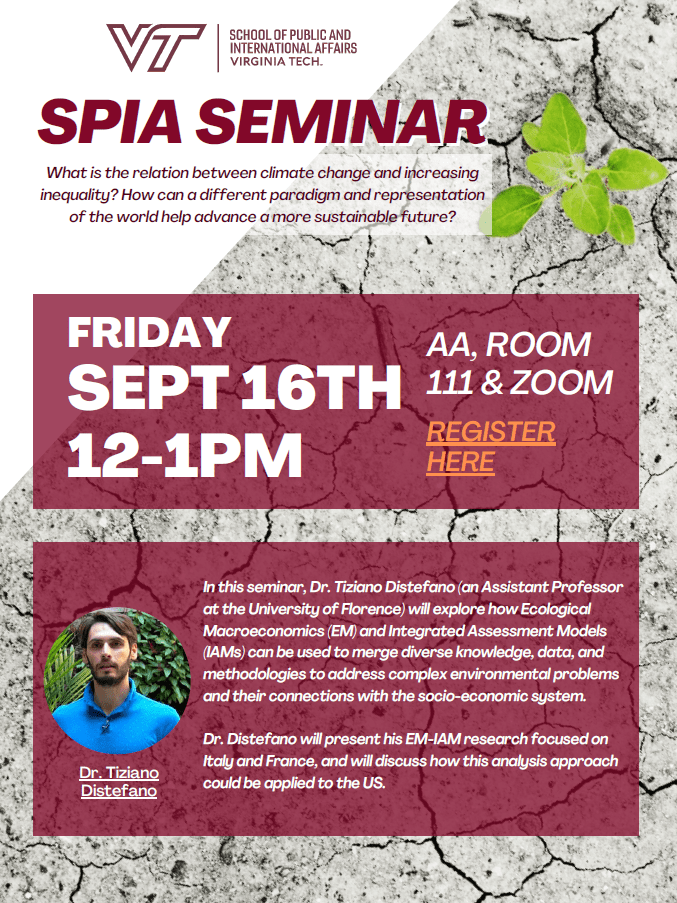
Please find below a recording of Dr. Tiziano Distefano’s SPIA Seminar that explores how the Ecological Macroeconomics (EM) and Integrated Assessment Models (IAMs) developed for Italy and France could be adapted to study the US economy.
What is the relationship between climate change and increasing inequality? How can a different paradigm and representation of the world help advance a more sustainable future?
In this seminar, Dr. Tiziano Distefano (an Assistant Professor at the University of Florence) will explore how Ecological Macroeconomics (EM) and Integrated Assessment Models (IAMs) can be used to merge diverse knowledge, data, and methodologies to address complex environmental problems and their connections with the socio-economic system. Dr. Distefano will present his EM-IAM research focused on Italy and France, and will discuss how this analysis approach could be applied to the US.
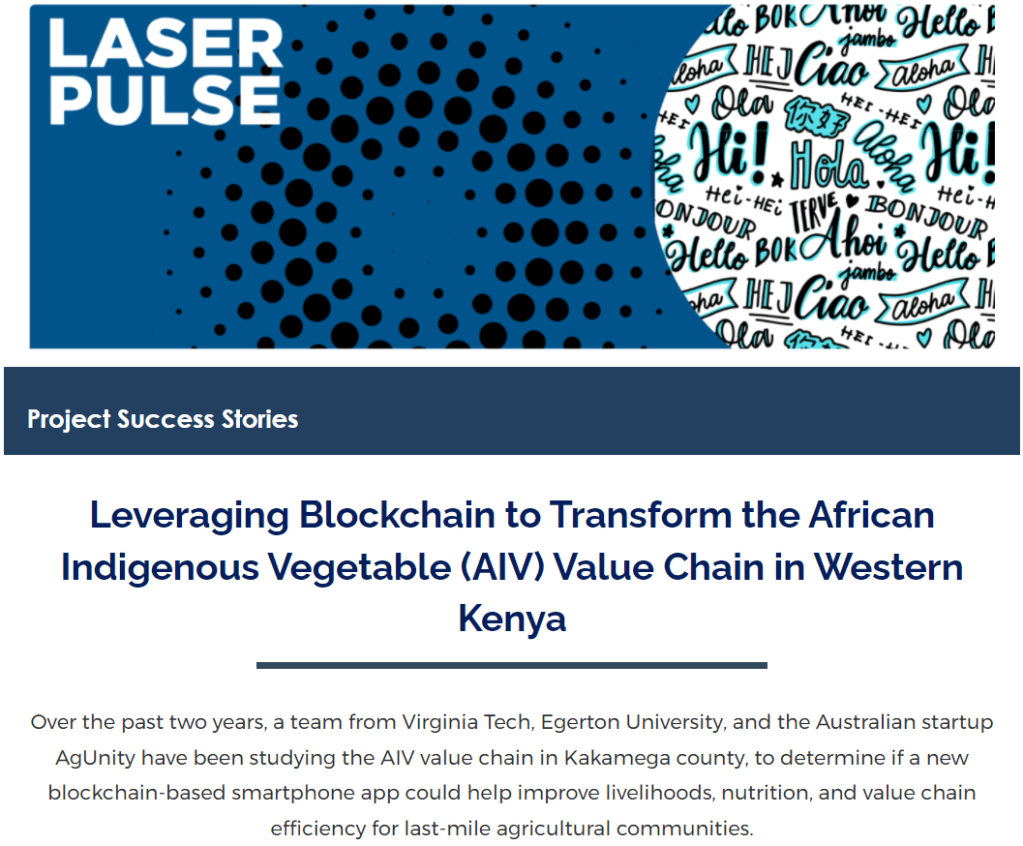
USAID LASER PULSE just released the following article on our research project in Kenya. The article includes a short video showing the AgUnity blockchain app being used by project participants along the African Indigenous Vegetable (AIV) supply chain.
We will be holding an information session about the program for students at VT and MIT from 10-11am on November 4, 2021. Please register here to join the session.
This unique program will provide students with a transdisciplinary perspective on sustainable development and is intended for rising seniors and graduate students interested in planning, policy, economics, business, innovation, environmental studies, and law. The program will explore the many dimensions of sustainability and how national, multinational, and international political and legal mechanisms can be used to further a transition towards sustainable development.
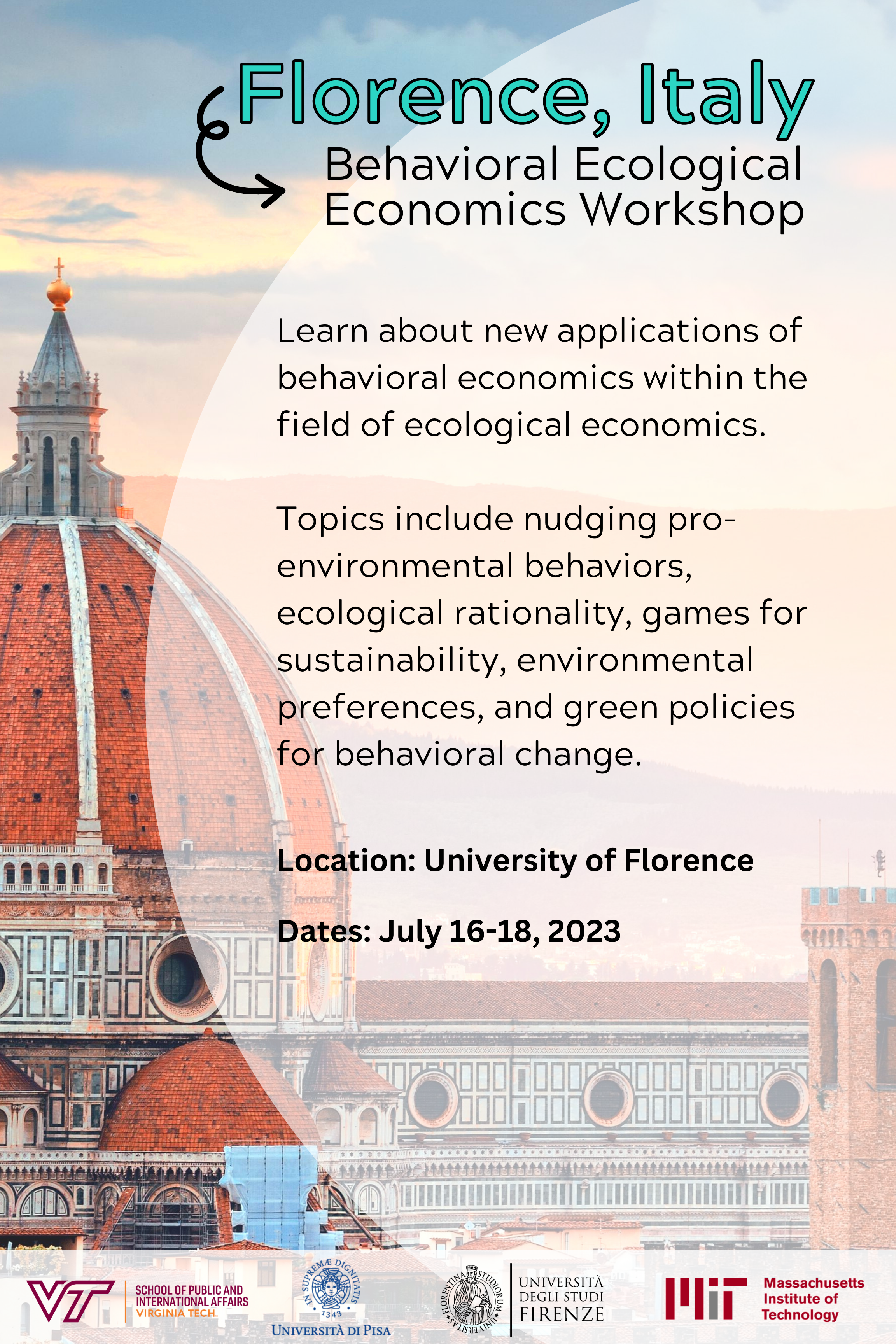
The program has three unique learning environments.
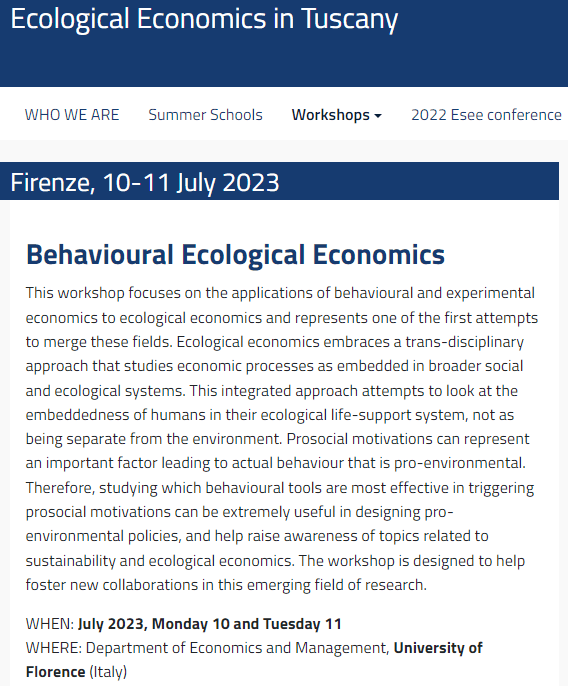
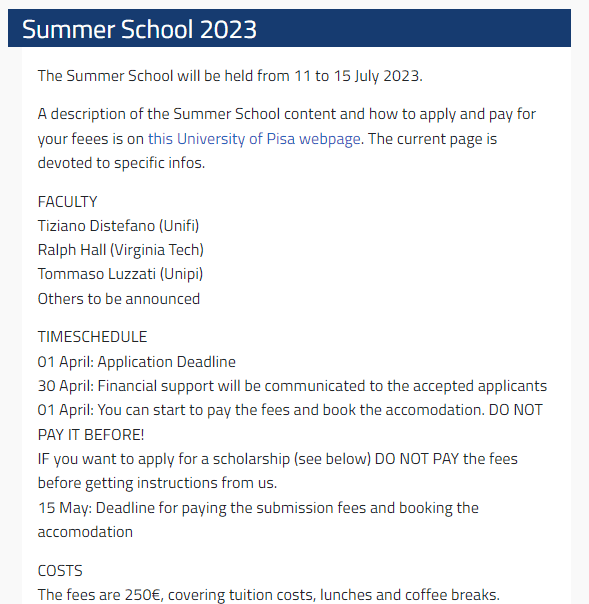
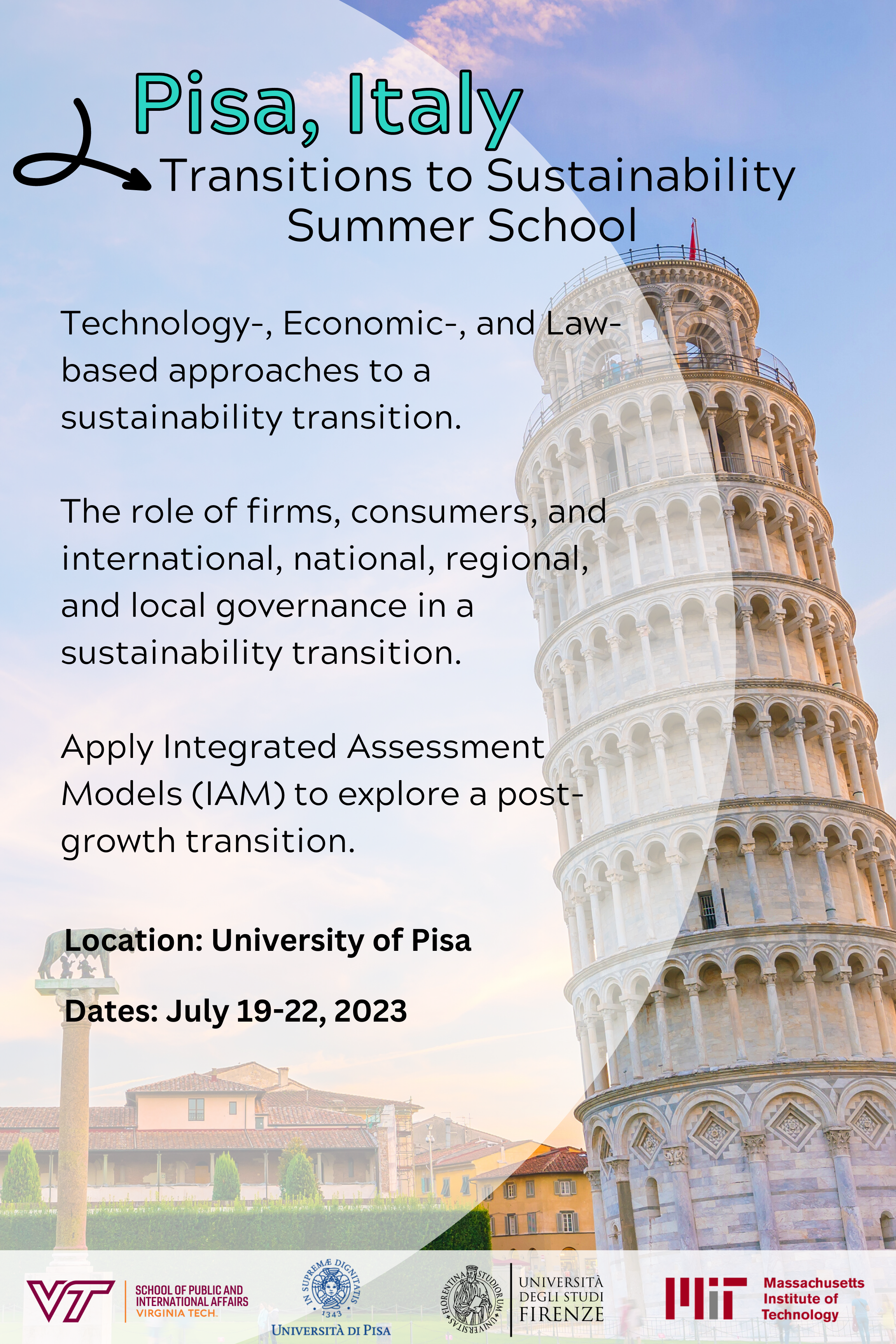
The first section of the program will consist of a summer school based at the University of Pisa, Italy, which will run in parallel with two other summer schools led by the Center for Politics, Ontologies, and Ecologies (POE) and the European Society for Ecological Economics. Given the proximity of the summer schools, joint sessions will be held where the faculty engaged with each program will share their research with students from the other programs. These sessions will enrich the content of each program and provide an opportunity for intercultural exchange between students (and faculty).
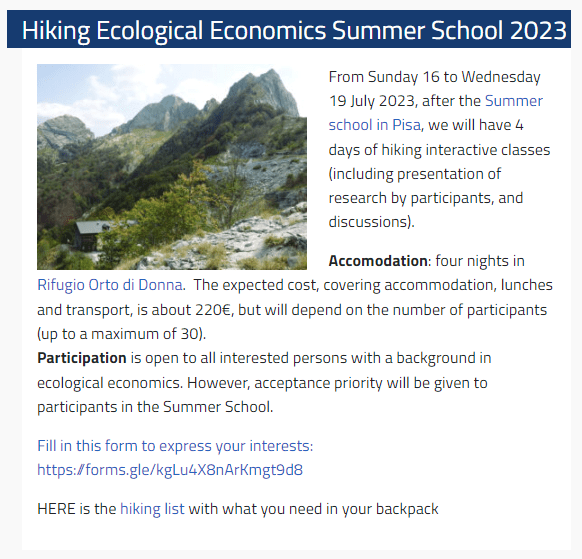
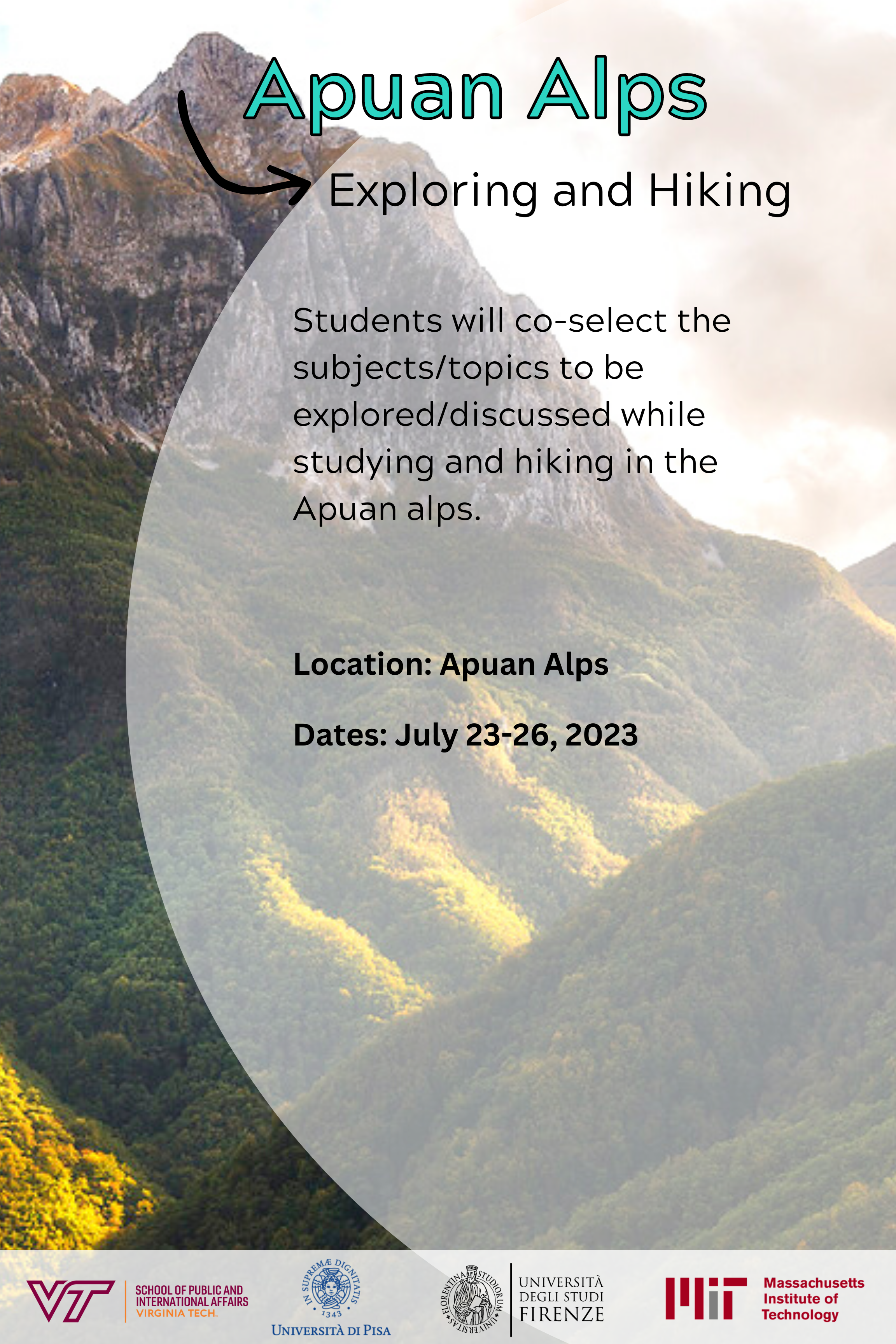
During the third and final section of the program, students will travel to the Apuan Alps (close to Pisa in Italy), where they will share what they learned from the summer school and ESEE conference and discuss/debate future economic/societal transformation strategies. This final reflection will take place in the mountains, where group discussions will be held outside (weather permitting), and students will have the opportunity to hike in the Italian Alps.
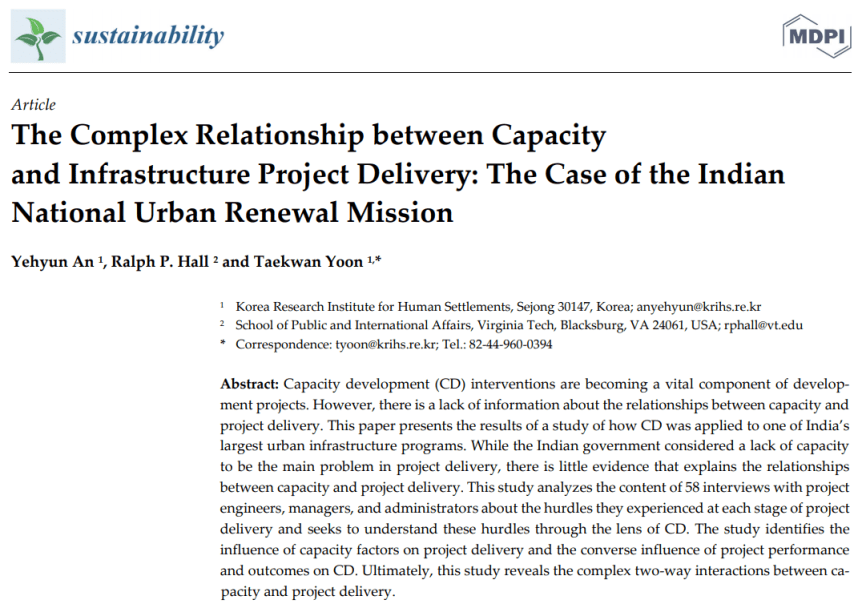
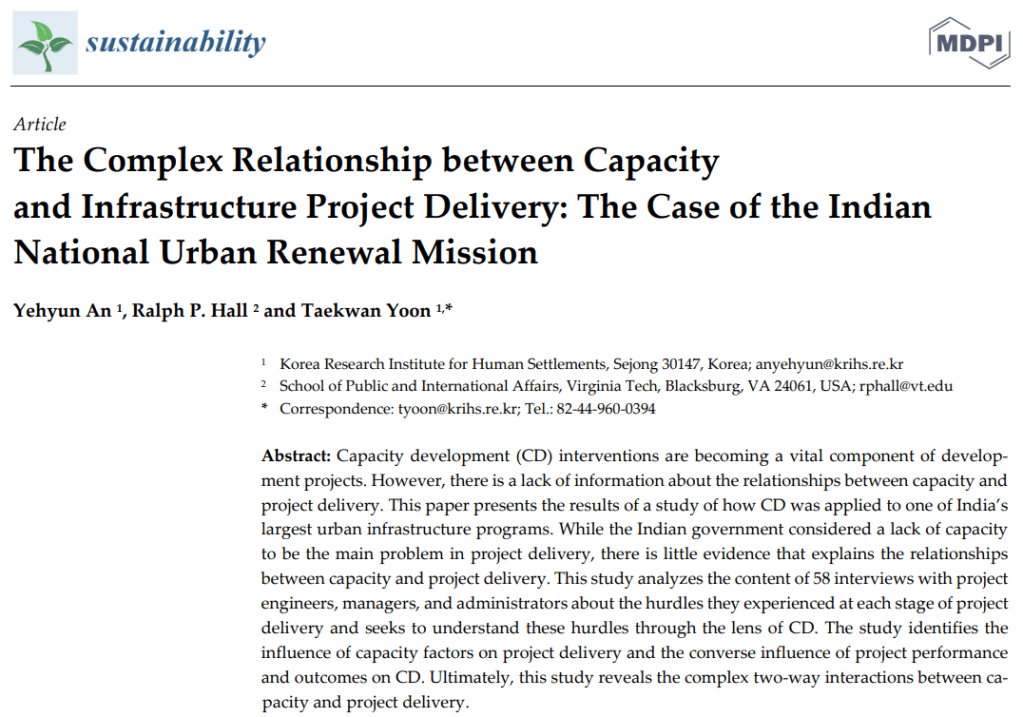
The paper focuses on how the concept of capacity development was applied to one of India’s largest urban infrastructure programs – the Jawaharlal Nehru National Urban Renewal Mission (JNNURM). While the Indian government considered a lack of capacity to be the main problem in project delivery, there is little evidence that explains the relationships between capacity and project delivery. This case study presents the findings from 58 interviews with project engineers, managers, and administrators about the hurdles they experienced at each stage of project delivery and seeks to understand these hurdles through the lens of capacity development. The study identifies the influence of capacity factors on project delivery and the converse influence of project performance and outcomes on capacity development. Ultimately, this study reveals the complex two-way interactions between capacity and project delivery.


 Ralph P Hall