Congratulations Marc Fialkoff!

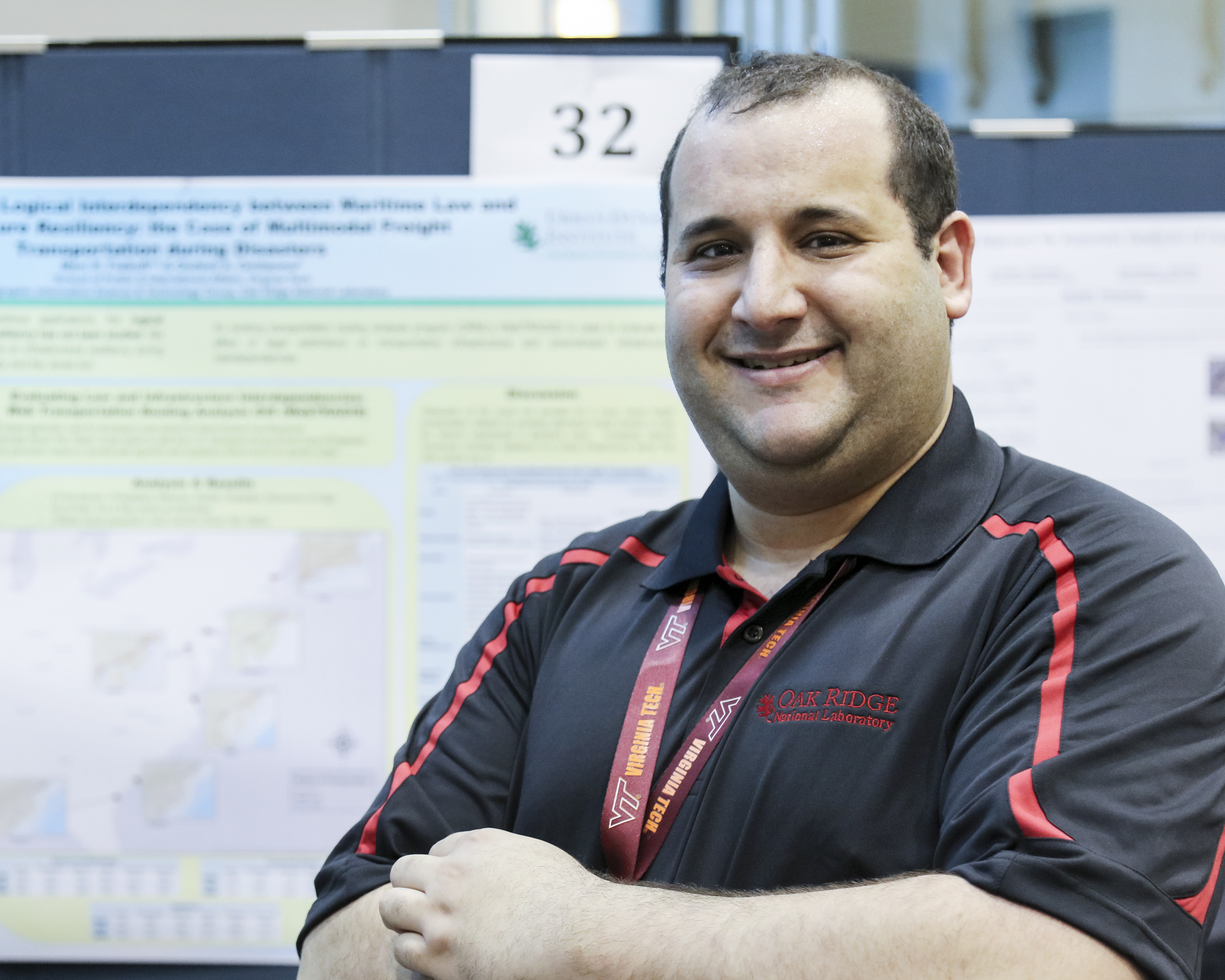
Congratulations to Marc Fialkoff who successfully defended his PhD in Planning, Governance, and Globalization on Monday. Marc’s research focused on quantifying the effect of the Jones Act restriction on freight transportation networks in the aftermath of Hurricane Sandy. His research blended civil engineering, law, network science, and planning to analyze the impact of a law on critical infrastructure. Marc’s committee represented the interdisciplinary nature of transportation policy, with committee members from Urban Affairs and Planning, Civil and Environmental Engineering, Law, and Network Science. I served as co-chair Marc’s committee with Ralph Buehler, along with committee members Kathleen Hancock, Henning Mortveit, and Jonathan Gutoff.
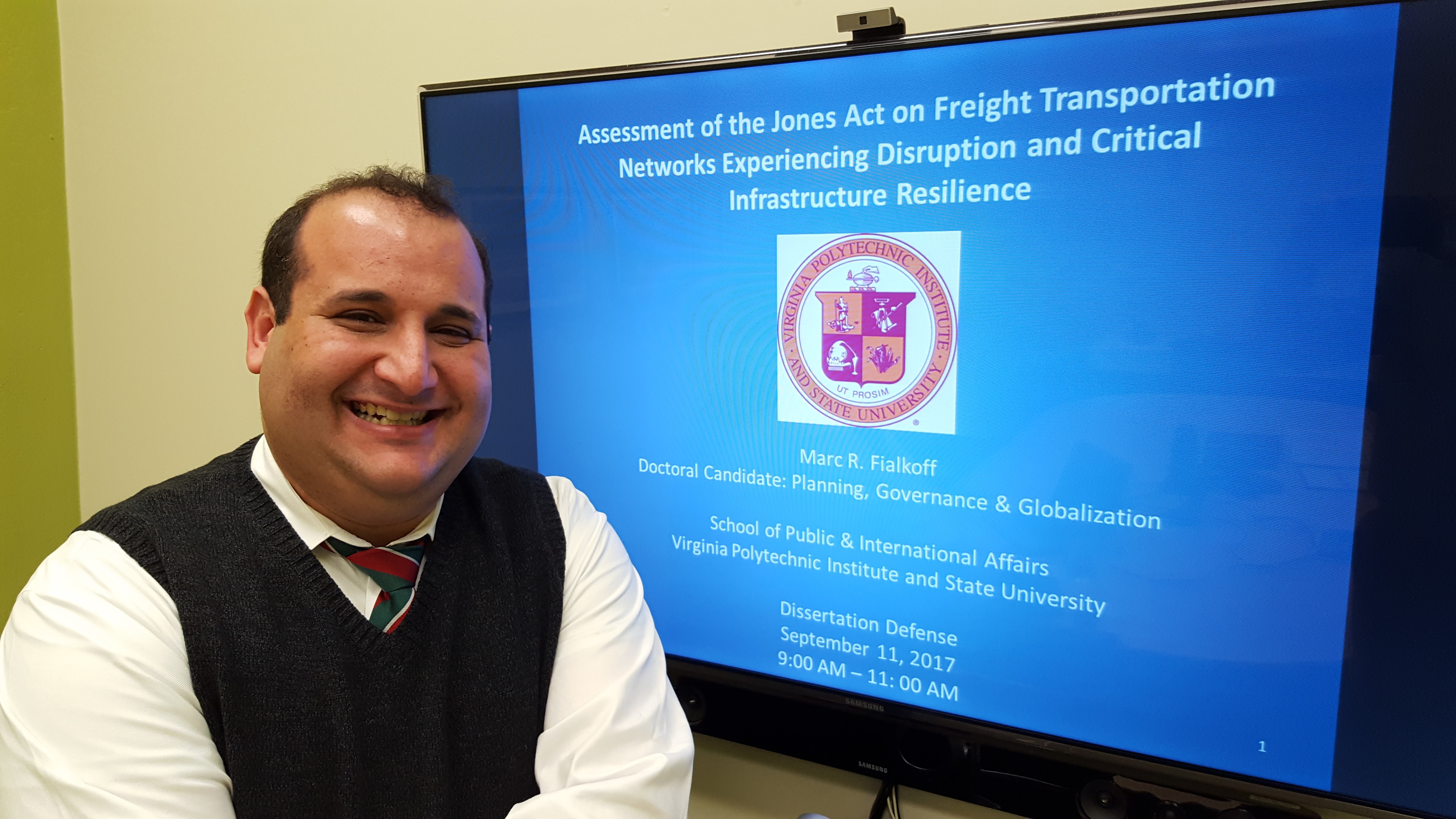
In addition to being an interdisciplinary study of law, policy, and freight transportation, Marc’s research leveraged a collaborative partnership between the School of Public and International Affairs at Virginia Tech with Oak Ridge National Laboratory (ORNL). As part of his research, Marc spent a year with the Critical Infrastructure and Climate Change team at ORNL, under the supervision of Dr. Olufemi Omitaomu, collecting data and analyzing the impacts of the law on the highway and railway networks. Using tools developed by ORNL researchers, Marc connected his background in law and planning with technical expertise to evaluate law and policy decisions on freight transportation. Most recently, Marc was selected as an Eno Fellow by the Eno Center for Transportation in recognition of his interdisciplinary approach to studying problems in transportation research.

Marc’s research is timely in the aftermath of Hurricanes Harvey and Irma to inform decision-makers as to the impact of relaxing the Jones Act and its implications on the freight transportation network. It is the first study to externalize the Jones Act as a legal lever for influencing recovery within the freight transportation system.

This slideshow requires JavaScript.

Abstract

In October 2012, Hurricane Sandy caused massive disruption and destruction to the Mid-Atlantic region of the United States. The intensity of the storm forced the Port of New York and New Jersey to close, forcing cargo diversion to the Port of Norfolk in Virginia. Because of the Jones Act restriction on foreign vessels moving between U.S. ports, the restriction on short sea shipping was viewed as a barrier to recovery.

Much of the critical infrastructure resilience and security literature focuses on the “hardening” of physical infrastructure, but not the relationship between law, policy, and critical infrastructure. Traditional views of transportation systems do not adequately address questions of governance and emergent behaviors such as resilience. In contrast, recent development of a System of Systems framework provides a conceptual framework to study the relationship of law and policy systems to the transportation systems they govern.

Applying a System of Systems framework, this research analyzed the effect of relaxing the Jones Act on freight transportation networks experiencing a disruptive event. Using WebTRAGIS (Transportation Routing Analysis GIS), the results of the research demonstrate that relaxing the Jones Act had a marginal reduction on highway truck traffic and no change in rail traffic volume in the aftermath of a disruption. The research also analyzed the Jones Act waiver process and the barriers posed by the legal process involved in administration and review for Jones Act waivers. Recommendations on improving the waiver process include greater agency coordination and formal rulemaking to ensure certainty with the waiver process.

This research is the first in studying the impact of the Jones Act on a multimodal freight transportation network. Likewise, the use of the System of Systems framework to conceptualize the law and a critical infrastructure system such as transportation provides future opportunities for studying different sets of laws and policies on infrastructure. This can provide policymakers and planners with a more robust opportunity to understand the impact of law and policy on the infrastructure systems they govern.

Sustainable Transportation Book Exceeds 19k Downloads

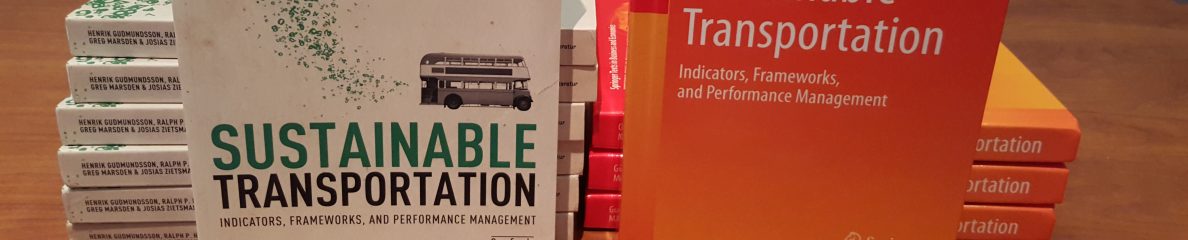
I recently received a report from Springer that provided the following information about the Sustainable Transportation book I co-authored with Henrik Gudmundsson, Greg Marsden, and Joe Zietsman. It’s great to see the interest in the book and to learn that it was one of the top 25% most downloaded eBooks in its category in 2016.

CUGH Global Health Conference

This weekend, Drs. Penny and Andy Muelenaer will be presenting the poster below at the 8th Annual CUGH Global Health Conference entitled Healthy People, Healthy Ecosystems: Implementation, Leadership, & Sustainability in Global Health. The conference will be held at the Washington Hilton Hotel, Dupont Circle.

The poster captures captures some of the work of Virginia Tech’s TEAM Malawi.

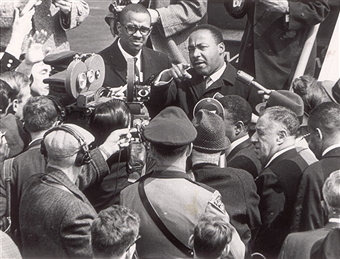
Dr. Virgil Wood Talks About His Life and Working with Dr. Martin Luther King, Jr.

Last week, Dr. Virgil Wood was interviewed by Rebecca Powell-Doherty and Ben Grove on Andy Morikawa’s Trustees Without Borders show. During the conversation, Dr. Wood talked about his life and work with Dr. Martin Luther King, Jr., Louis Kelso, and many other leading American figures. The interview can be accessed by clicking on the image below.

This slideshow requires JavaScript.

The Future of Work and Income

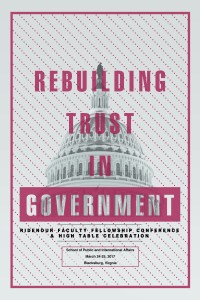
On March 24-25, the School of Public and International Affairs will be holding its Ridenour Faculty Fellowship Conference & High Table Celebration, at the Virginia Tech Inn. The title of the conference is Faith in the System: Rebuilding Trust in Government in a Time a Complex Governing Challenges.

During the conference, I will moderate a panel discussion (at 2:45pm on Friday, March 24) on The Future of Work and Income in an Era of Economic Inequality.

The panelists include Dr. Virgil A. Wood (Pastor Emeritus, Pond Street Baptist Church; Former Dean, Northeastern University; Former ten-year working associate of Dr. Martin Luther King, Jr.), Dr. Joyce Rothschild (Professor, School of Public and International Affairs, Virginia Tech), and Dr. Christian Matheis (Visiting Assistant Professor, Government and International Affairs, Virginia Tech).

Dr. Virgil Wood beside Dr. Martin Luther King, Jr. (Source: Getty Images)

During the panel discussion we will explore how the forces of globalization and rapid technological change, along with an overall decline in pay and wages, have resulted in the perception of a stagnant post-recession economic recovery. Emphasis on economic inequality was persistent in the 2016 presidential election along with promises to bring back jobs and industries that once supported the American Dream. The panel members will examine these major socio-economic and political shifts, and discuss what could be done to reduce economic inequality and reestablish trust in government.

The conference sessions are free, but participants are asked to register.

Congratulations Marc Fialkoff

Congratulations Marc Fialkoff (PGG Doctoral Candidate) for being selected as a 2017 Eno Transportation Fellow. The Eno Center for Transportation is non-profit foundation whose core mission is the study of emerging issues in transportation policy and the cultivation of future leaders in the field.

Marc is the first student in the School of Public and International Affairs at Virginia Tech to be selected as an Eno Fellow. As a Fellow, Marc will travel to Washington D.C. in early June to participate in the Eno Center Future Leaders Development Conference.

As a doctoral candidate and a lawyer, Marc’s research is at the intersection of law, transportation policy, civil engineering, and network science. His research focus on freight transportation resilience was awarded a HERE Dissertation Support Grant by Oak Ridge National Laboratory in 2016, where he carried out his research into the effect of the Jones Act on freight transportation movements after Hurricane Sandy. His research has been published in the Critical Infrastructure Report and the International Journal for Critical Infrastructure Protection.

Marc’s committee represents the interdisciplinary nature of transportation policy, with committee members from Urban Affairs and Planning, Civil and Environmental Engineering, Law, and Network Science. I currently co-chair Marc’s committee with Ralph Buehler, along with committee members Kathleen Hancock, Henning Mortveit, and Jonathan Gutoff.

New Paper in World Development

Our new paper entitled “Pathways to Better Project Delivery: the Link between Capacity Factors and Urban Infrastructure Projects in India,” has been published in World Development. This paper presents part of the research undertaken by Yehyun (Hannah) An as part of her award winning PhD dissertation.

Yehyun’s research explores the concept of capacity development (CD) in the context of a large urban infrastructure program in India – the Jawaharlal Nehru National Urban Renewal Mission (JNNURM). Her research utilized a unique combination of qualitative and quantitative methods and I believe it is the first application of fuzzy-set Qualitative Comparative Analysis (fsQCA) in the field of CD.  We believe this papers makes an important contribution to both CD theory and practice.

New Paper in Sustainability

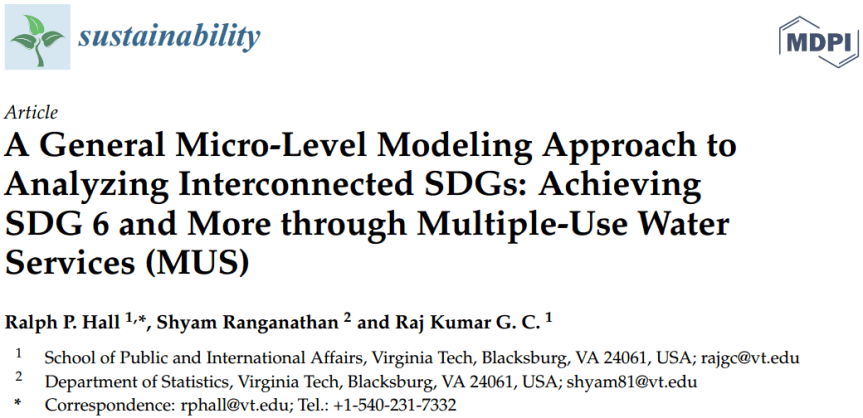
A new paper by Shyam Ranganathan, Raj GC, and I was recently published in Sustainability. The paper presents a way to advance an interconnected set of SDGs and targets through a multiple-use water services (MUS) approach to rural water delivery.

2017-02-21_13-38-20

Abstract: The 2030 agenda presents an integrated set of Sustainable Development Goals (SDGs) and targets that will shape development activities for the coming decade. The challenge now facing development organizations and governments is how to operationalize this interconnected set of goals and targets through effective projects and programs. This paper presents a micro-level modeling approach that can quantitatively assess the impacts associated with rural water interventions that are tailored to specific communities. The analysis focuses on how a multiple-use water services (MUS) approach to SDG 6 could reinforce a wide range of other SDGs and targets. The multilevel modeling framework provides a generalizable template that can be used in multiple sectors. In this paper, we apply the methodology to a dataset on rural water services from Mozambique to show that community-specific equivalents of macro-level variables used in the literature such as Cost of Illness (COI) avoided can provide a better indication of the impacts of a specific intervention. The proposed modeling framework presents a new frontier for designing projects in any sector that address the specific needs of communities, while also leveraging the knowledge gained from previous projects in any country. The approach also presents a way for agencies and organizations to design projects or programs that bridge sectors/disciplines (water, irrigation, health, energy, economic development, etc.) to advance an interconnected set of SDGs and targets.

Citation: Hall, R.P.; Ranganathan, S.; G. C., R.K. A General Micro-Level Modeling Approach to Analyzing Interconnected SDGs: Achieving SDG 6 and More through Multiple-Use Water Services (MUS). Sustainability 2017, 9(2), 314.

Congratulations Behshad Ghadimi!

Congratulations to Behshad Ghadimi who successfully defended his PhD in Civil Engineering today. Behshad’s researched focused on the impact of project delivery methods on stakeholder issues and involvement practices in megaprojects. I served on Behshad’s PhD committee with Michael Garvin (Committee Chair, shown on the left below), Sunil Sinha, and John Taylor. The abstract to Behshad’s dissertation is provided below.

2017-02-15_1632

Abstract

As the scale and scope of infrastructure projects have increased, so too has the array of stakeholders either involved or impacted. Such projects often take years to come together and evolve with time through the actions of project sponsors and the engagement of various stakeholders. Stakeholders through engagement and input can help legitimize and improve large-scale project initiatives. Stakeholders can also marshal opposition that can delay or block these projects. Consequently, the significance of stakeholder involvement is critical in megaprojects.

Governments have increasingly utilized public-private partnerships (PPPs) for megaproject delivery. This method introduces characteristics that distinguish PPP megaprojects from others such as: private control, profiteering, foreign profits, and long-term concessions. This study investigates whether differences exist between PPP and non-PPP megaprojects with respect to stakeholder involvement strategies and stakeholder issues raised in such projects.

The research employs a longitudinal multiple case study approach that examines four tolled fixed crossing megaprojects; two of them are delivered as PPPs and two are delivered as design-build (i.e., non-PPP). The approach follows the design of prior studies in this area by De Schepper, Dooms, and Haezendonck (2014) and Winn (2001). Pre and post milestone event analysis captures trends and shifts in involvement strategies and stakeholder issues. Subsequently, stakeholder issue tables (organized by issue themes) and stakeholder mechanism tables (organized by mechanism type and information flow) are utilized for across case synthesis and comparison to identify similarities and differences among the cases.

Analysis of stakeholder involvements across cases shows that NEPA establishes a baseline for involvement, but its requirements are not sufficient for megaprojects; a more comprehensive strategy is necessary. Further, although participatory involvements may enhance input and legitimize projects, these mechanisms must be carefully managed in terms of process and criteria for evaluating stakeholder input. Examination of stakeholder issues indicates that issues that are common to non-PPP and PPP projects are more prevalent than PPP specific issues. In particular, issues related to tolling are dominant; moreover, toll affordability is extremely sensitive, and its severity is predictable based on affected area demographics and past toll escalation practices.

The study provides insights about how megaprojects are shaped through actions of project sponsors as well as impacted and interested stakeholders. It also demonstrates how these projects become artifacts of aspiration for politically powerful figures. Lastly, it identifies the main stakeholder issues and suggests a set of guidelines to assist future practitioners in developing better stakeholder involvement strategies, which should both enhance and legitimize megaprojects.

New Paper – Pit Latrine Fecal Sludge Resistance

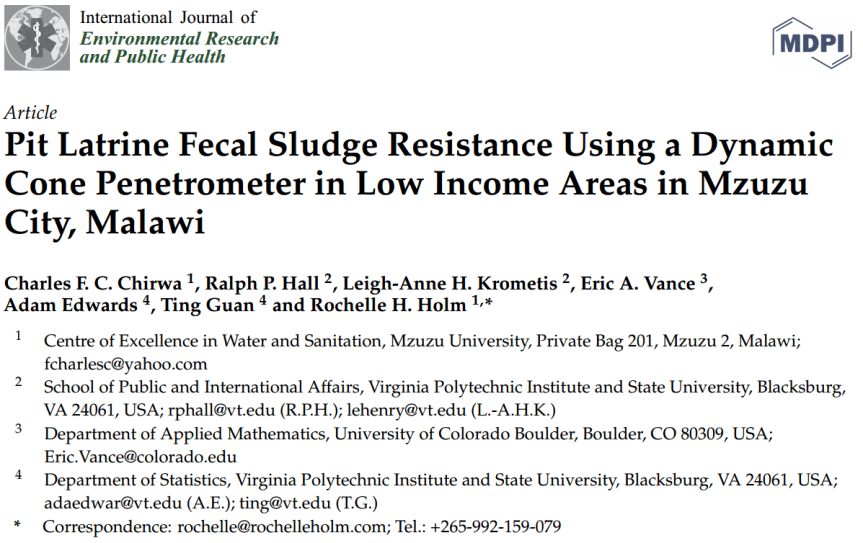
In 2016, I was pleased to welcome Charles Chirwa to Virginia Tech for a period several weeks. During his time at the university, we began to analyze the data he collected on the consistency of sludge in 300 pit latrines in Mzuzu, Malawi. We were joined in this task by my colleagues Leigh-Anne KrometisEric Vance, Adam Edwards, and Ting Guan.

At the end of his stay, I posted a tweet in which I stated that “we plan to publish a WASH paper on his research.” After returning to Mzuzu, Charles continued to work on the paper with his primary advisor, Rochelle Holm, and his extended research team in the US. This week his paper was published in the International Journal of Environmental Research and Public Health.

I wanted to congratulate Charles on this accomplishment, which involved hundreds of hours of diligent and carefully executed fieldwork and months of data cleaning and processing to find the best way to present his data. His research provides important data and insights into strategies that could advance pit latrine emptying in resource poor communities in Africa.

2017-02-03_2110