Water Supply and Sanitation in Developing Countries

UAP 5324 / BSE 4394, 2013 Spring Semester
Instructor: Dr. Ralph Hall
Meets: Tuesdays 12:30pm to 3:15pm
Location: Architecture Annex 111

Course Description

In this course, we will examine the planning process for the provision of water supply and sanitation (W&S) services in developing countries. The course is structured to provide both an engineering and policy perspective on the subject. Thus, the readings, class discussions, and assignments will require students to think as both an engineer and planner/analyst. The course will begin with a review of the state of water and sanitation services in different parts of the world and will raise the question of what constitutes access to water. Following this introduction, we will study the design of important W&S technologies. We will then examine the broader environmental and public health considerations in water W&S planning. Armed with an understanding of critical W&S issues and technologies, in the final section of the course we will examine key ideas/topics such as multiple-use water services, demand-oriented planning, service pricing, decentralization vs. centralization of W&S services, community participation in the planning process, and post-construction support.

Learning Objectives

Having successfully completed this course you will be able to:

1. Describe the current level of access to, and the quality of, water supply and sanitation services in one or more developing regions.

2. Outline the planning process for the provision of water supply and sanitation services in the developing region(s) studied.

3. Define the various roles of local, national, and international agencies and donors in the provision of water supply and sanitation services in developing regions.

4. Use planning-based tools to evaluate existing and proposed water supply and sanitation services in the developing region(s) studied.

5. Design policies and/or infrastructure to address identified problems with the provision/adequacy of existing water supply and sanitation services in the developing region(s) studied.

Syllabus

International Development Planning Studio

UAP 5764, 2013 Spring Semester
Instructor: Dr. Ralph Hall
Meets: Thursdays 12:30pm to 3:15pm
Location: Architecture Annex 111

Studio Overview

Concepts and practices in the field of international development have changed dramatically over the past few decades and even the past few years. This studio course is designed to prepare students with the most current approaches to the practice of international development as implemented by leading actors today. Students will learn the traditional project planning tools used by multi-lateral and financial institutions as well as alternative processes. They will be equipped with a variety of skills necessary for working on development projects in the real world.

Throughout the studio, elements of project development, planning, management, implementation, and monitoring and evaluation will be covered from the perspective of the prevalent development sectors. Emphasis will be placed on synthesizing and practicing skills through the preparation of a proposal for an international development project/program. During the studio, students will work on, present, and critique different elements of their project proposals. To complement the theoretical discussions, several studios will be led by experienced practitioners and academics in the field of international development.

Studio Objectives

Upon completion of the studio, students will be able to:

  1. develop a complete proposal for an international development project/program – which will include a problem analysis, a needs assessment/stakeholder analysis, a gender analysis/discussion, a clear set of goals/objectives (supported by a logframe analysis), an assessment of resources and organizational ability, a proposed work plan and timeframe, a budget, a monitoring and evaluation plan, and a plan for the successful implementation of the project; and
  2. undertake a financial analysis of a proposed development project.

Syllabus

Bern Meetings – July 2-3, 2012

VT/UVA students and I standing outside of the the U.S. Embassy in Bern

To conclude the first module of the 2012 Sustainable Europe summer course, the students and I traveled to the city of Bern to discuss the notion of sustainable development with senior government officials and a researcher at the University of Bern. Our first meeting with U.S. Ambassador Donald Beyer, Susan Elbow (Deputy Chief of Mission), and Alex Daniels (Press and Cultural Attaché) provided the students with an excellent opportunity to learn about the close diplomatic and economic relationships that exist between the U.S. and Switzerland. This is the second time Ambassador Beyer has welcomed VT/UVA students taking the summer program and I believe this meeting/conversation is one of the highlights of the course. I encourage you to explore each of the students’ blogs to read more about the questions they asked during this meeting.

VT/UVA students and I with US Ambassador Donald Beyer and Susan Elbow
VT/UVA students with members of the Swiss Federal Government

Our second meeting with Stefan Ruchti (Federal Department of Foreign Affairs), Daniel Wachter (Head of the Sustainable Development Section, Federal Office for Spatial Development), Daniel Dubas (Federal Office for Spatial Development), and Lorenz Kurtz (Federal Department of Foreign Affairs) was held at the impressive Bernerhof building. The topic of the meeting was the Swiss Government’s Sustainable Development Strategy. Having spent more than a decade thinking deeply about sustainable development, I was particularly interested in hearing Daniel Wachter’s presentation on how sustainable development is being operationalized in Switzerland. During the meeting, the students had an opportunity to apply the knowledge they had developed during the first module of the course by engaging Stefan, Daniel, Daniel, and Lorenz in a conversation about strategies to promote sustainable development. This conversation proved to be a valuable way to connect the theories/concepts the students had researched to the real-world challenges of creating a national sustainable development strategy.

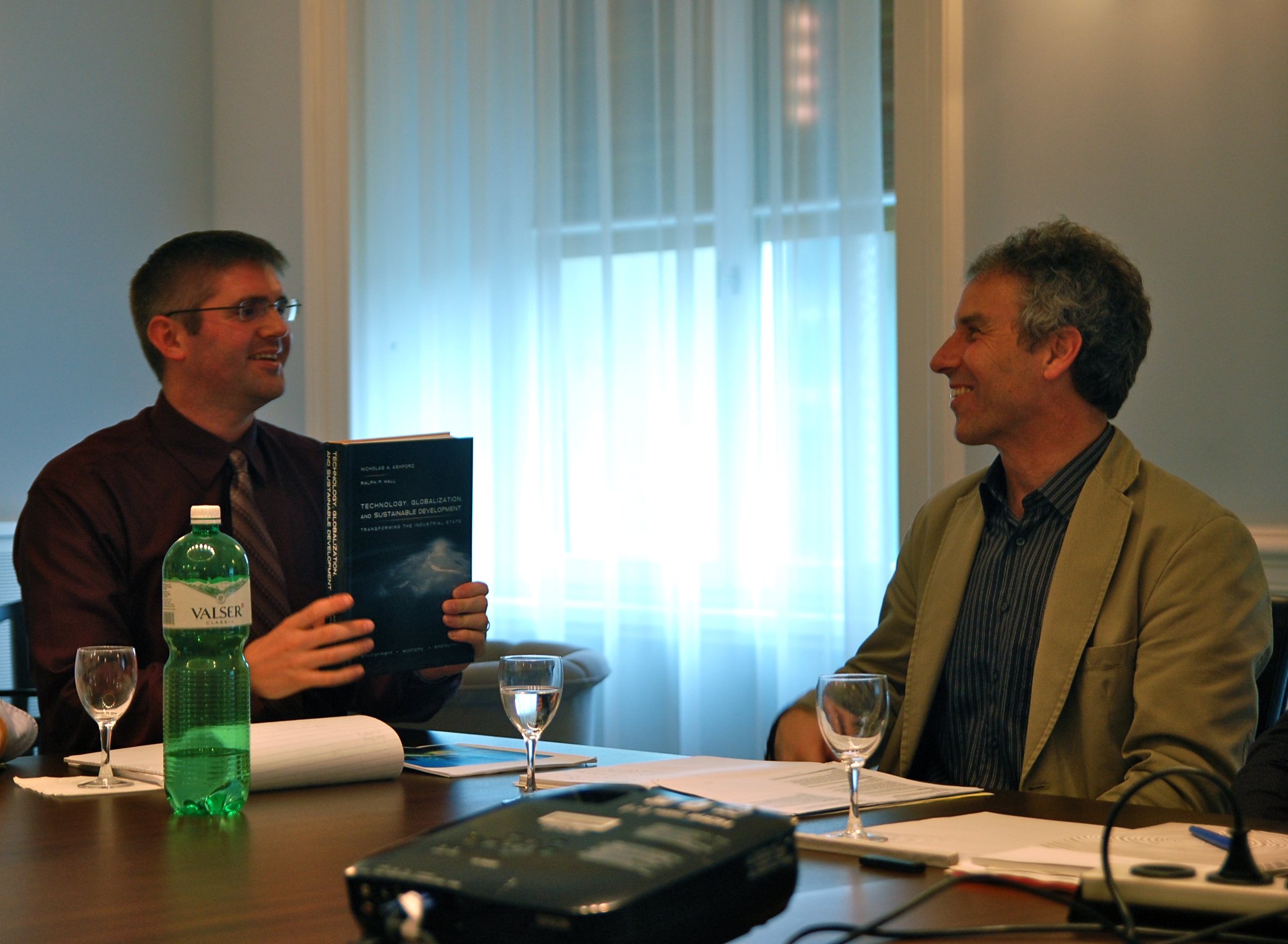
A photo of me presenting Stefan Ruchti and his colleagues with a copy of my textbook

Our final meeting was held at the University of Bern, where Fabian Streiff (a PhD candidate in Economic Geography) provided a detailed overview of the photovoltaic industry in Europe and Switzerland and explored the potential expansion of this industry domestically in the context of the Swiss Cleantech Strategy. Following this meeting, we toured the University of Bern and I had the opportunity to speak with Ellen Krause (Executive Director of the International Office, University of Bern) and Zoë Ghielmetti (Executive Director of International and National Relations, University of Bern) about the new student exchange agreement established between Virginia Tech and the University of Bern. This agreement enables students from each institution to study at the partner institution while receiving academic credit at their home institution.

VT Study Abroad Expo (Feb 21)

On Tuesday, Feb. 21, from 11am to 12pm, I will be attending the VT Study Abroad Expo in the Graduate Life Center (GLC) Multipurpose Room. If you are a VT student and have any questions about the 2012 Sustainable Europe summer course, this expo would be a great opportunity to ask them.

The deadline for applying for the 2012 summer course is Friday, February 24, 2012. Please make sure you submit an on-line application before this date if you would like to be considered for the summer program.

Events (Nov 16/17)

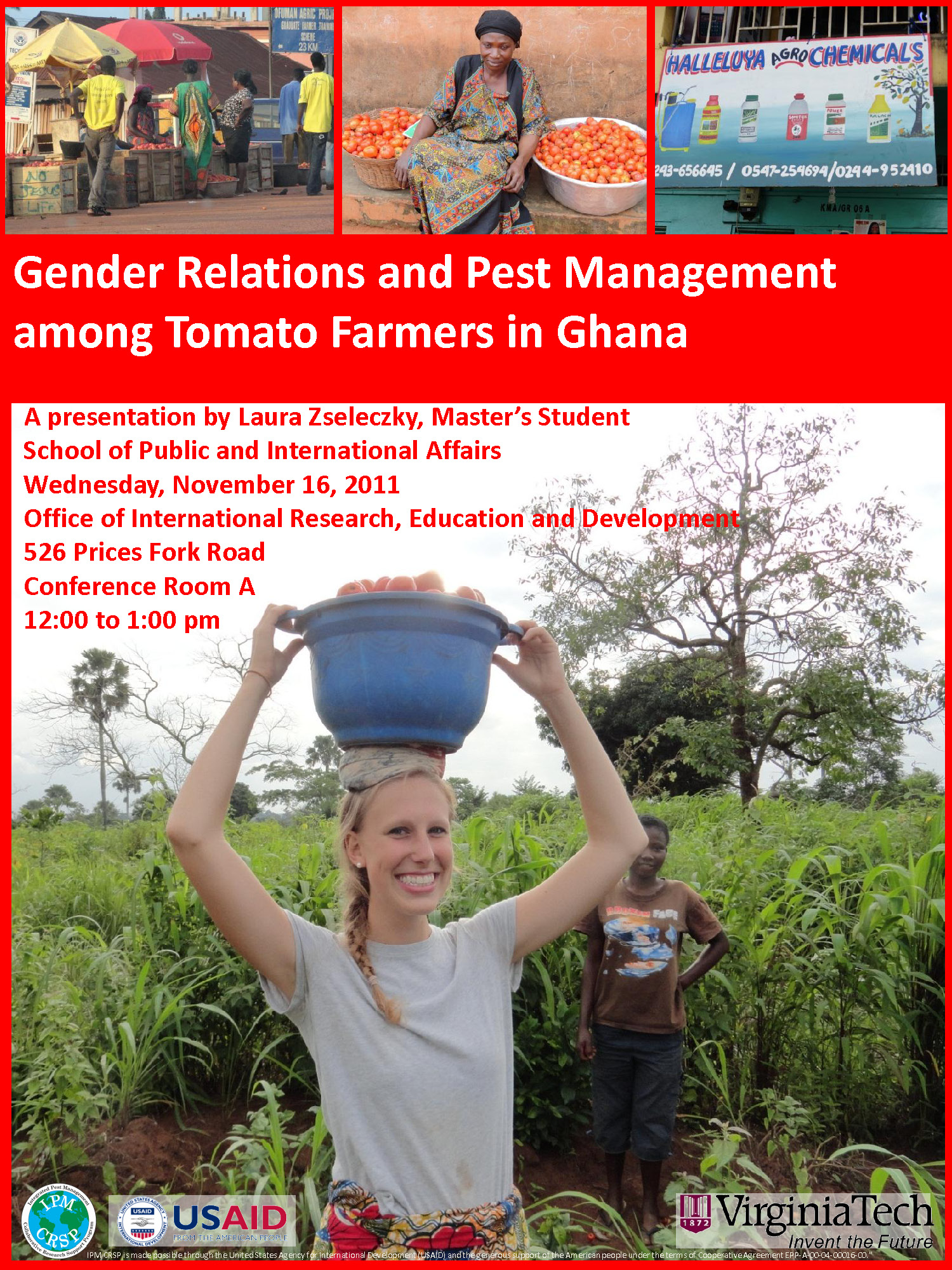
On November 16, at 12pm, Laura Zseleczky will be presenting her research on gender relations and pest management among tomato farmers in Ghana at VT’s Office of International Research, Education, and Development (see flyer on the right).

On November 17, at 11am, Derek Hyra (VT), Frank Dukes (UVA), and I will be holding an information session about the 2012 Sustainable Europe summer course in Switzerland. The information session will be broadcast from the following VT locations:

  • Blacksburg (Ralph Hall): Room 200 in the Architecture Annex.
  • Alexandria (Derek Hyra): Prince Street conference room.

Information Session: Sustainable Europe (2012)

On Friday, October 7, from 11:30am to 12:30pm we will be holding an information session to discuss the 2012 Sustainable Europe summer course in Switzerland.

The information session will be broadcast from the following VT locations:

  • Blacksburg (Ralph Hall): Room 200 in the Architecture Annex.
  • Alexandria (Derek Hyra): Prince Street conference room.

If you would like to read about the 2011 Sustainable Europe summer course, please visit the student blog and select the “2011 Summer Course” category: http://europestudies.wordpress.com/.

We look forward to meeting you and answering any questions you might have about this unique opportunity.

2012 Summer Course in Switzerland

Sustainable Europe: An International Summer Program for Students from North America

We recently decided to offer a new version of the Sustainable Europe summer course at the Villa Maderi in Riva San Vitale, Switzerland (from June 26 to July 20, 2012).

This course will be a joint offering between Virginia Tech and the University of Virginia. The course will cover the following three subject areas and is open to VT/UVA sophomores, juniors, seniors, and graduate students (with a minimum GPA of 2.5):

Part 1 (Dr. Ralph Hall, VT): “History and Theory of Contemporary Sustainable Development: How is Switzerland Translating Theory into Practice?”

Part 2 (Dr. Derek Hyra, VT): “Sustainable and Equitable Neighborhood Development: How are European Housing and Community Development Policies related to the Creation of Socially Integrated, Mixed-Income Communities?”

Part 3 (Dr. Frank Dukes, UVA): “Globalization, Immigration, and Post-Conflict Rebuilding: How are European Institutional Frameworks used for Collaborative Public Engagement and Planning?”

VT students can apply to the course through the Education Abroad Office/OIRED. UVA students should contact Dr. Frank Dukes for further information on the UVA course admissions process.

Fall 2011 (UAP 5424)

Technology, Globalization, and Sustainable Development

UAP 5424, CRN 95917

Instructor: Dr. Ralph Hall (rphall@vt.edu)

Meets: Thursdays 12:30 to 3:15pm

Location: Architecture Annex 111

This graduate seminar will provide students with a transdisciplinary perspective on sustainable development. It is intended for students interested in planning, policy, economics, business, innovation, environmental studies, and law. The seminar will explore the many dimensions of sustainability and how national, multinational, and international political and legal mechanisms can be used to further sustainable development.

More specifically, we will consider the inter-relationship of global economic changes, employment, worker health and safety, and environment in the context of theories of development, trade, technical and organizational innovation, and employment. Mechanisms for resolving the apparent conflicts between these elements will be explored.

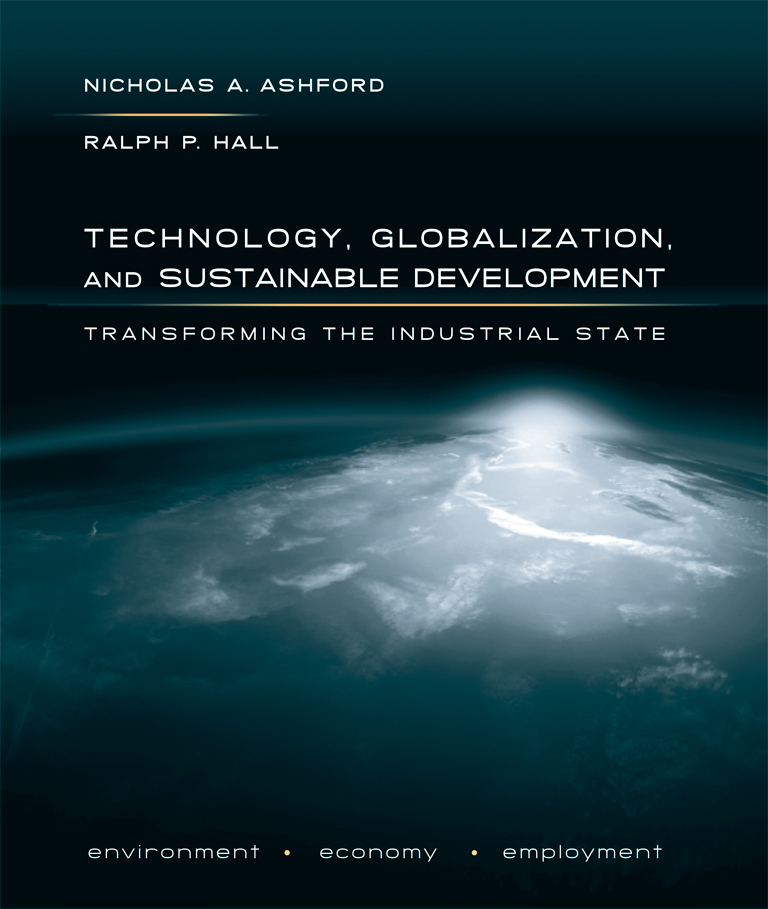
This seminar will use a new textbook entitled Technology, Globalization, and Sustainable Development that draws upon both U.S. and international literature. It is intended to stimulate discussion and critical thinking of the key writings in sustainable development. Students will be evaluated on the basis of their mastery of the materials through (1) written assignments and (2) class participation and attendance. There will be no final examination.