Experience WASH in Malawi (Study Abroad)

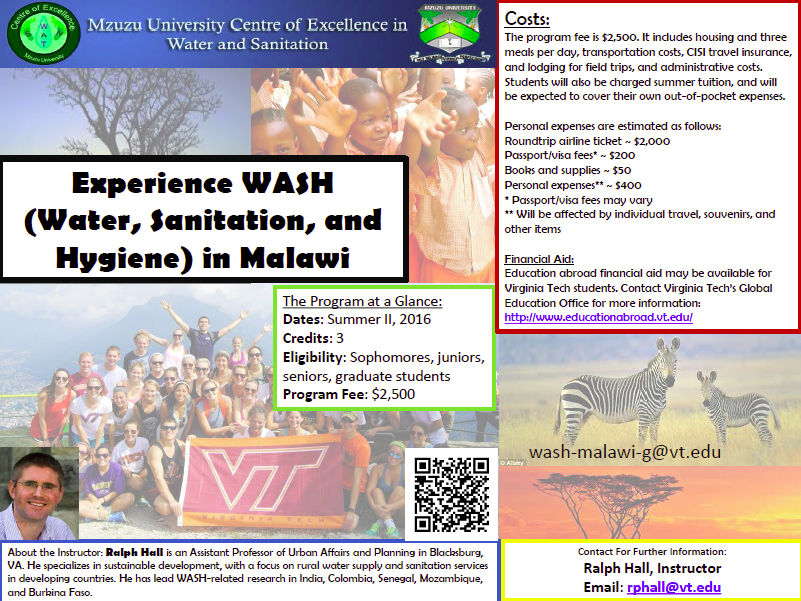
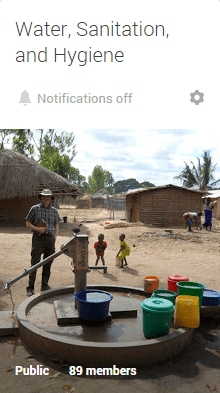
If you are a Virginia Tech undergraduate or graduate, please come to the Drillfield today to learn about a new WASH (water, sanitation, and hygiene) course I will be offering during Summer II, 2016, in partnership with the Mzuzu University Centre of Excellence in Water and Sanitation.static_qr_code_without_logo

To keep up to date on course news, please join the Google group.

Course Flyer

Flyer

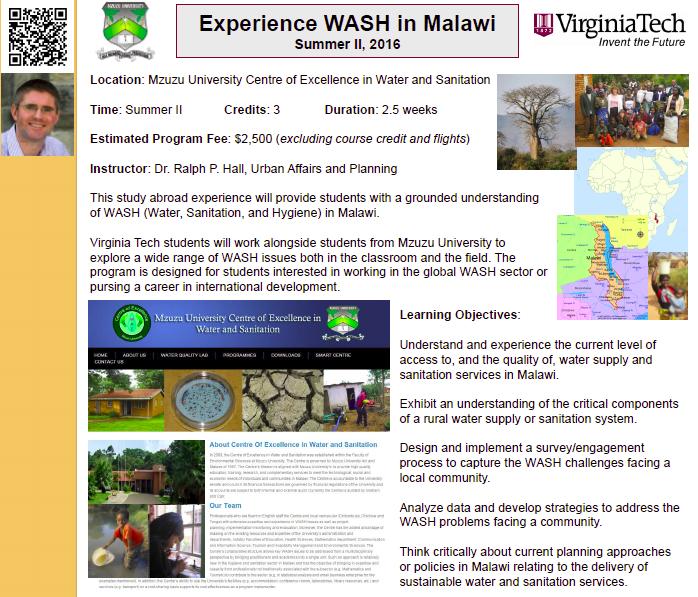
Course Information
Info_poster

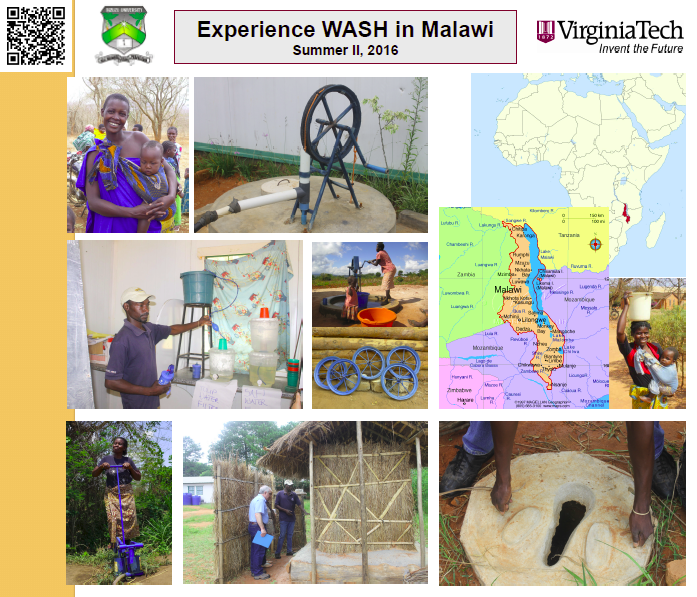
Images from MalawiPoster_images

2015 ID Studio Presentations

This year, 13 students took part in my International Development Planning Studio and developed 13 high-quality project proposals. The studio was supported a range of international development experts at Virginia Tech, who worked closely with the students to challenge and refine their ideas and help them develop the wide-range of skills needed to create an international development project proposal. I’d especially like to thank Bill Anderson, John BrowderEmily Van Houweling, Susan Marmagas, Kurt Richter, Kerry Redican, Keith MooreJames ForemanSophie Wenzel, and Shantal Hover for the expertise they brought to the studio.

18I have listed below the titles of the student proposals to provide an indication of the range of subjects that the students explored this semester.

  • Increasing Livelihood Opportunities and Productivity for Tuvalu’s Outer Islanders
  • Foundation of a Sanitary Pads Manufacturer in Makoko, Nigeria
  • The DTaP Project: Minimizing the incidence of Bordetella pertussis in Sokoto, Nigeria, through a vaccination and infectious disease education intervention
  • Addressing the High Incidence and Case-Fatality of Human Rabies in the Guntur District of Andhra Pradesh, India
  • Safe and Affordable Drinking Water in Santa María del Carbón, Honduras
  • Statelessness: Improving access to citizenship for stateless Dominicans of Haitian descent living in the Dominican Republic
  • Veron Mobile Clinic Project, Veron, Dominican Republic
  • Development Proposal to Reduce Iodine Deficiency in Nampula Province, Mozambique
  • HIV Prevention among Women in Addis Ababa, Ethiopia
  • Proposal for Addressing Poverty in the Department of Alta Verapaz, Guatemala
  • Scaling up sanitation demand in iganga district: A proposal for improved sanitation and hygiene
  • Improving the Access and Quality of Education in rural areas of China
  • Defensive Driver Education Program to Reduce Road Deaths in Georgetown, Guyana

The images below were taken during the last two studios when the students formally presented and defended their proposals to a panel of international development experts.

This slideshow requires JavaScript.

Innovation in Teaching Using Google Apps

This afternoon, I had the pleasure of talking with the PGG doctoral students about life as a faculty member and how I approach the design of my courses. In this post, I thought I’d capture some of the ideas we discussed about my overall approach to teaching.

My teaching philosophy is largely a product of my own learning and research experience. I believe students should be encouraged to think—and approach problems—in an integrative and transdisciplinary manner. I believe that teaching innovation occurs through a process of creative destruction, where new ideas and ways of learning continually challenge, replace, or enhance the old. The challenge, though, is knowing when something is working and why. Thus, evaluating how I can improve my teaching and mentoring of students is a central part of my philosophy.

In 2013, I was invited to become a Google Glass Explorer, which had a profound impact on how I approach my teaching and interact with students. Prior to Glass, my engagement with students was structured, perhaps ‘constrained,’ by the VT Scholar [course management] system and by my scheduled class time with students. I believe the ability to ‘recycle’ my courses in Scholar had the effect of dampening my enthusiasm to radically revise each course. I became aware of this after making the transition to delivering all of my courses using various combinations of VT Google Apps. The ease at which an entire course can be created in Google Drive and changed while in progress is liberating. Students can also take control of the course platform and share information either via a public or private Google+ Community or in a shared Google Drive folder. This process enables students to take ownership of their learning and become teachers in the process. This enables me to focus less on identifying and mastering content, and more on helping students interpret and locate new information, ideas, and theories in their own learning frameworks or value systems.

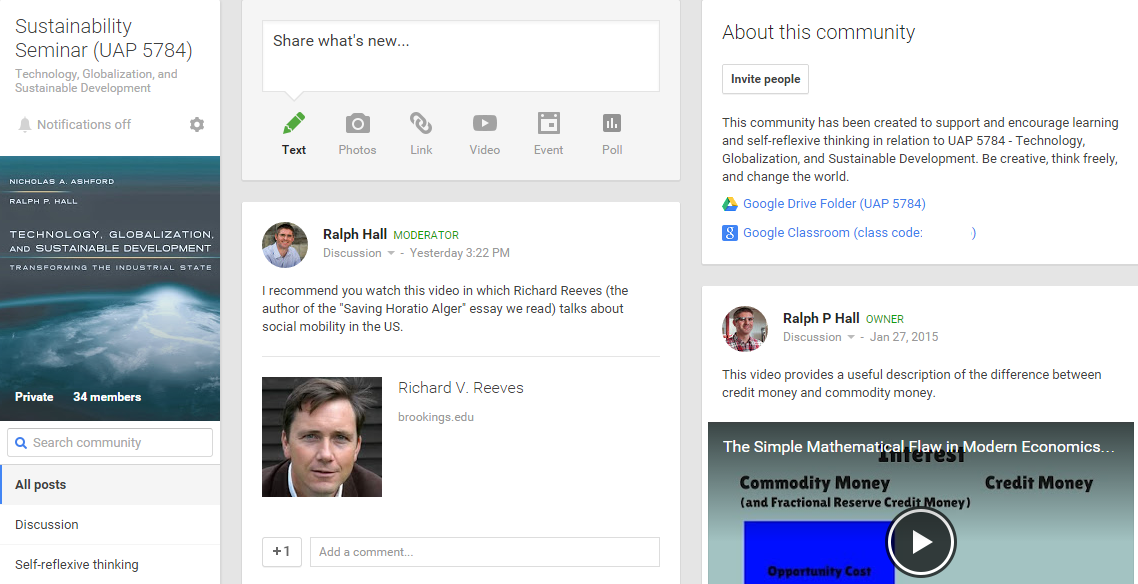
I now build each of my courses around a shared Google Drive folder and a public or private Google+ Community. I’d recommend using a private community so that links to course-related Apps can be embedded in the community (see the top right corner of the image below). All assignments are managed via Google Classroom. Course communication happens primarily in a Google+ Community or via messages I send from my Google+ account to a Google Circle created for each course. [Note to Google – it would be useful if I could also send these message directly from my VT gmail account.] The Google Circles are important since they enable me to quickly identify specific students when in YouTube so I can send them private assignment-feedback videos. Whereas I used to record these videos using Google Glass, I recently made the transition to Snagit, which enables me to capture my computer screen while providing audio feedback on a student’s assignment. After recording a video (1 to 5 minutes in length), I directly upload it to YouTube from Snagit, making sure the video has a clear label and is set to ‘private.’ From YouTube, I privately share the feedback video with each student. After viewing the video, students are able to send me private comments on my feedback (in Google+/YouTube), which creates a two way dialogue rather than a one way conveyance of information. Since January 2014, I have recorded well over 100 assignment-feedback videos that have been sent to students in six different courses. I am currently working with Mary English to evaluate the impact of this feedback and we plan to publish the results of this research later this year.
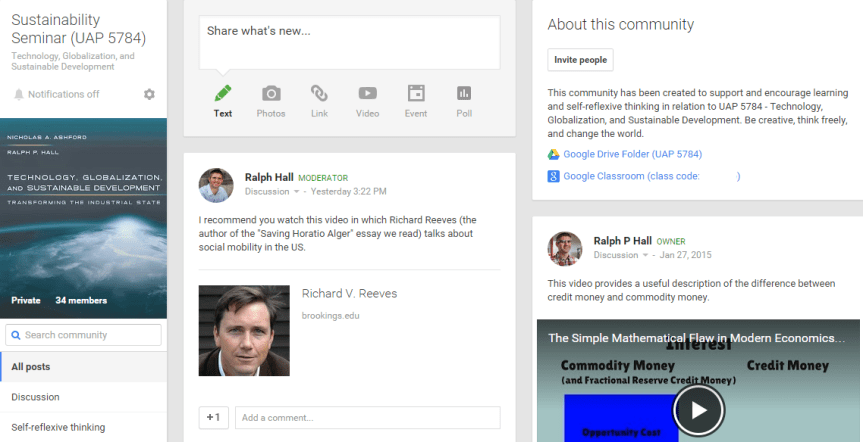
Google-Community

A benefit of the Google Apps platform is that it enables the sharing of information from any device at any time of day. I believe learning can occur at any moment, such as when riding the bus or a bike, taking a walk, or even sitting in one of my colleague’s classes! Having a platform that enables students to engage from wherever they are is important. The Google+ community is the medium where students can link the theories/ideas we discuss in the classroom to real-world events. This process deepens their understanding of the material and may result in better long-term retention due to the networked nature of the conversation and information.

As should be evident from the above description, the suite of Google Apps I’m using has ‘freed’ my approach to teaching that is now more fluid and flexible. However, now that I have complete control over my courses, I also need to manage the enrolment/disenrollment of students from each course. While this process can be a little challenging, once the Apps have been mastered the process is relatively straightforward. The autonomy of the platform has enabled me to explore the idea of letting students be a lifelong member of a course, which I am trying in my sustainability class. My hope is that as students progress through their professional careers, they will re-engage with the course when they have something to contribute or if they want to refresh or update their knowledge. This approach to delivering a course could advance a learning model that is truly lifelong.

In summary, my experience with using Google Apps has led to one significant realization. The systems we use to support our teaching can either enable or inhibit innovation in teaching. Those systems that can be easily integrated and adapted are likely to survive, whereas those that constrain creatively are likely to stifle innovation in teaching. While Google Apps are not perfect, their flexibility and ease of use means that it is more difficult to become locked-in to a system or way of delivering a course. I have full autonomy over how I administer, structure, and approach my courses, which I believe is the key to teaching innovation.

Studio Reading Exercise

For my studio today, I challenged the students to prepare a review of 11 international development-related reports and papers (listed below). The combination of these documents led to some interesting discussions about the purpose of development assistance (from public, non-governmental, and private entities) and the emerging trends that are occurring within the sector. In the list below, I have included some of the questions the students raised after reviewing each reading. Please feel free to respond to any of these questions if you have an interest in this subject matter.

Studio Reading Exercise

1. World Bank (2015) World Development Report: Mind, Society, and Behavior.

  • What areas of international development do think stand to benefit from a greater consideration of psychological and social behavioral drivers?
  • Do you think development efforts focusing on human behavior and decision making will be more effective at a global, national, community, or person-to-person scale?

2. World Bank (2014) World Development Report: Risk and Opportunity.

  • Would the creation of a transnational risk board be more effective at the international or regional level?

3. Oxfam (2011) The Politics of Partnership: How donors manage risk while letting recipients lead their own development.

  • How feasible are partnerships involving the management of risk? Could they end up doing more harm than good?

4. Brinkerhoff, D. W. (2010) Developing Capacity in Fragile States.

  • With limited resources, is it possible to balance short term stability with long term development in a fragile state?
  • In fragile states with pressure to provide a quick response, how can interventions reach people without undermining the government?

5. Global Health Strategies initiatives (GHSi) (2012) How the BRICS are reshaping global health and development.

  • Although this paper focused on health related issues, the proposal to create a “multilateral bank that would be exclusively funded by developing nations and finance projects in those countries” was mentioned. This proposal has been explored further since this paper was published, and it has been said that the BRICS bank could rival the World Bank. What types of impacts could a BRICS bank have?

6. Kharas, H. and Rogerson, A. (2012) Horizon 2025. Creative destruction in the aid industry.

  • If you were directing an aid agency, what strategies would you use to remain nimble/adaptable? How would you monitor your relevance or vulnerability as global needs and the aid landscape changes over time? What are the benchmarks or red flags that might convey your relevance or stagnancy as an institution?
  • This paper is based on finance driving and shaping international development. To what extent do you agree that this is true?

7. European Commission (2011) Aid Effectiveness 2011. Progress in Implementing the Paris Declaration.

  • What are the key challenges to delivering effective aid? How might these challenges be met to improve aid effectiveness?
  • How would the design of national development strategies for aid effectiveness affect other development objectives and goals?

8. OECD (2014) Making Development Co-operation More Effective – 2014 Progress Report

  • Different countries have different cultures and values. Thus, different priorities can be set concerning development co-operation principles. How can we approach these differences constructively in the monitoring process?
  • The Busan Partnership Agreement is a voluntary commitment. Would a more compulsory agreement be a more effective way to meet the specified targets?

9. Zimmermann, F. and Smith, K. (2011) More Actors, More Money, More Ideas for International Development Co‐operation.

  • How can we prevent aid fragmentation between DAC and non-DAC aid recipients?

10. USAID (2013) USAID’S Legacy in Agricultural Development: 50 Years of Progress.

  • In addition to measuring income and higher productivity, how else could we assess the long-term effectiveness of agriculture development? 

11. USAID (2014) 50 Years of Global Health: Saving Lives and Building Futures.

  • What are some of the failures in international development? Do you think the changes are as positive as those documents in the report?

Spring 2015 – International Development Planning Studio

UAP 5764
Instructor: Ralph P. Hall
Meets: Wednesday, 1:25pm to 4:00pm
Location: Architecture Annex 111

Studio Overview

Concepts and practices in the field of international development have changed dramatically over the past few decades. This studio course is designed to prepare students with the most current approaches to the practice of international development as implemented by leading actors today. Students will learn the traditional project planning tools used by multilateral and financial institutions as well as alternative approaches/tools. They will be equipped with a variety of skills necessary for working on development projects in the real world.

Throughout the studio, elements of project development, planning, management, implementation, and monitoring and evaluation will be covered from the perspective of the prevalent development sectors. Emphasis will be placed on synthesizing and practicing skills through the preparation of a proposal for an international development project/program. During the studio, students will work on, present, and critique different elements of their project proposals. To complement the theoretical discussions, several studios will be led by experienced practitioners and academics in the field of international development.

This slideshow requires JavaScript.

Studio Objectives

Upon completion of the studio, students will be able to:

  1. develop a complete proposal for an international development project/program – which will include a problem analysis, a needs assessment/stakeholder analysis, a gender analysis/discussion, a clear set of goals/objectives (supported by a logframe analysis), an assessment of resources and organizational ability, a proposed work plan and timeframe, a budget, a monitoring and evaluation plan, and a plan for the successful implementation of the project; and
  2. undertake a financial analysis of a proposed development project.

Spring 2015 – Water Supply and Sanitation in Developing Countries

UAP 5324 / BSE 4394
Instructor: Ralph P. Hall
Meets: Tuesdays and Thursdays, 9:30am to 10:45am
Location: MCB 219

2014-11-22_1525Course Description

In this course, we will examine the planning process for the provision of water supply and sanitation (W&S) services in developing countries. The course is structured to provide both an engineering and policy perspective on the subject. Thus, the readings, class discussions, and assignments will require students to think as both an engineer and planner/analyst. The course will begin with a review of the state of water and sanitation services in different parts of the world and will raise the question of what constitutes access to water. Following this introduction, we will study the design of important W&S technologies. We will then examine the broader environmental and public health considerations in W&S planning. Armed with an understanding of critical W&S issues and technologies, in the final section of the course we will examine key ideas/topics such as multiple-use water services, demand-oriented planning, service pricing, decentralization vs. centralization of W&S services, community participation in the planning process, and post-construction support.

Learning Objectives

Having successfully completed this course you will be able to:

1. Describe the current level of access to, and the quality of, water supply and sanitation services in one or more developing regions.

2. Outline the planning process for the provision of water supply and sanitation services in the developing region(s) studied.

3. Define the various roles of local, national, and international agencies and donors in the provision of water supply and sanitation services in developing regions.

4. Use planning-based tools to evaluate existing and proposed water supply and sanitation services in the developing region(s) studied.

5. Design policies and/or infrastructure to address identified problems with the provision/adequacy of existing water supply and sanitation services in the developing region(s) studied.

Join the Class Google+ Community

Second Meeting of the DAC

This morning we held the second meeting of the Dean’s Advisory Committee (DAC) for the University Libraries. The committee was asked the following questions which led to an engaging conversation that touched on the opportunities and challenges facing colleges, departments, programs, research institutions, faculty, and students:

  • What will research and teaching look like in ten years?
  • Is there anything you wish you could change about your research practices and the way you teach?
  • What barriers or obstacles prevent you from teaching differently and approaching research differently?
  • What core research, teaching, and learning skills, literacies, abilities, or mindsets could faculty and students develop at Virginia Tech? (How do we prepare students for jobs that don’t exist yet?)

6

Since I have been using Google Glass and Apps to advance the way I teach and undertake research, I have been confronted with a number of these types of questions over the past year. From this experience, I believe the future of teaching will be heavily influenced by “teaching analytics” that will enable faculty (and students) to identify how, where, and when student learning occurs. I also believe these data will enable faculty to become better teachers by identifying those techniques that effectively engage students.

As a relatively junior faculty member, I would also like to see the creation of “teaching coaches” who mentor faculty in the art of pedagogy. These coaches could be identified through VT’s awards for teaching or through projects funded by TLOS (Technology-enhanced Learning and Online Strategies and be compensated (either financially or through a reduction in duties) for their mentoring work. The creation of an environment where faculty can experiment with new techniques, approaches, platforms, etc. is likely to be critical to advancing teaching and learning.

This slideshow requires JavaScript.

Defining Infrastructure

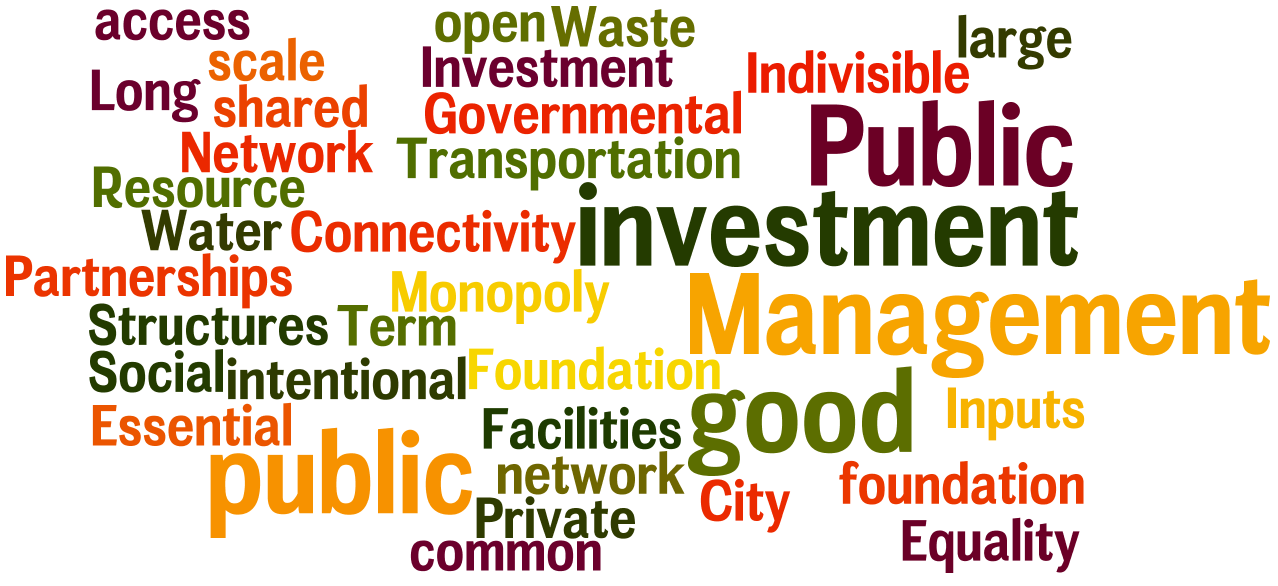
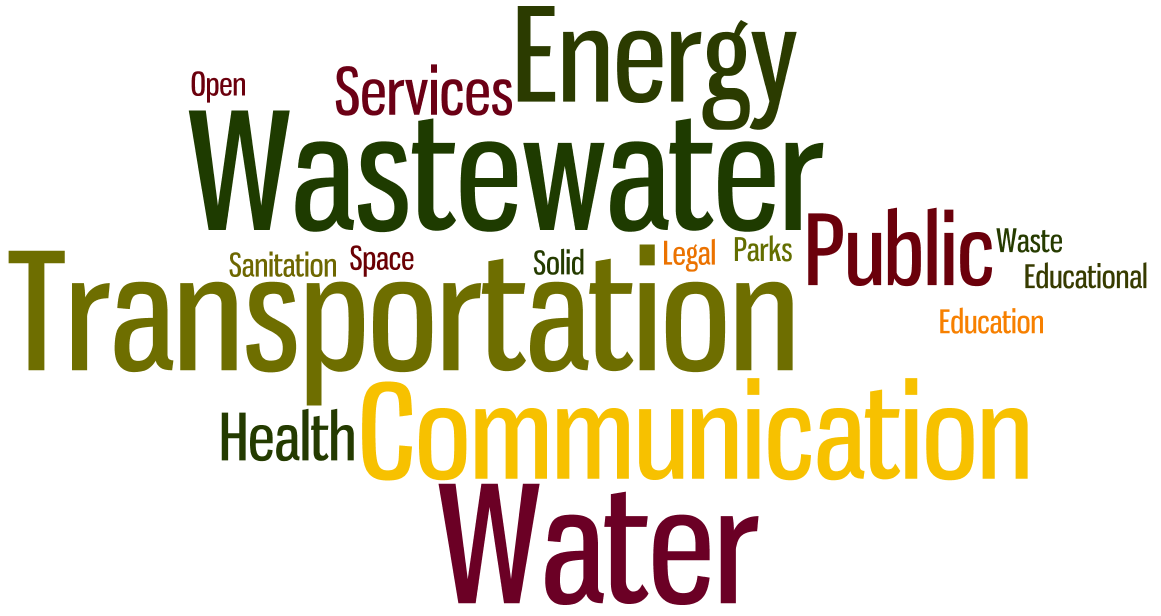
During our urban infrastructure planning class this morning, we asked teams of students to select five words to describe infrastructure systems and list what they considered to be the main infrastructure systems. The two Wordles below capture their responses.

Words that describing frastructure
Words describing infrastructure
Major infrastructure systems
The major infrastructure systems


UAP 5784 – Technology, Globalization, and Sustainable Development

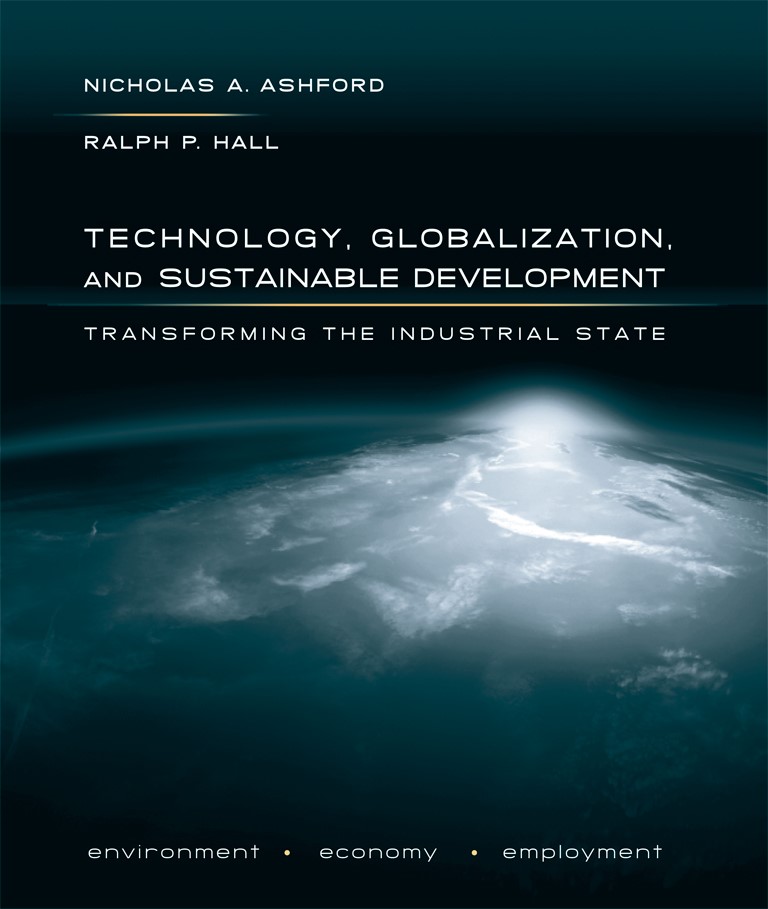
This fall semester I will be offering a graduate seminar focused on Technology, Globalization, and Sustainable Development (UAP 5784; 3 Credits)

Book Review: “This astonishing book is a terrific summary of informa¬tion for those seeking feasible alternatives to the pursuit of infinite growth.” Dennis Meadows, co-author of The Limits to Growth

The seminar will meet on Fridays from 12:30pm to 3:15pm, in the Architecture Annex, room 111.

The seminar is designed to provide students with a transdisciplinary perspective on sustainable development. It is intended for students interested in planning, policy, economics, business, innovation, environmental studies, and law. The seminar will explore the many dimensions of sustainability and how national, multinational, and international political and legal mechanisms can be used to further sustainable development.

During the seminar we will consider the inter-relationship of global economic changes, inequality, employment, worker health and safety, and environment in the context of theories of development, trade, technical and organizational innovation, and employment. Mechanisms for resolving the apparent conflicts between these elements will be explored.

This new book will be available in August/September, 2014.
This new book will be available 2014/2015.

The seminar is intended to stimulate discussion and critical thinking on the key writings in sustainable development. Students will be evaluated on the basis of their mastery of the materials through (1) written assignments and (2) class participation and attendance. The seminar has two required texts (see images) that will be supplemented by topical readings tailored to student interests.

During the semester, I will use Google Glass and other video capture devices/software to provide students with enhanced feedback on their assignments and performance in the seminar.

Global Planning and Int. Dev. Studies

Certificate Flyer2If you are a VT graduate student and have an interest in international development, I highly recommend the Graduate Certificate in Global Planning and International Development Studies.

This fall, I will be co-teaching a class on Advance Urban Infrastructure Planning that can be counted as an elective for the certificate. Jocelyn Widmer will also be offering this fall the first required class for the certificate – International Development Policy and Planning (UAP 5764G).

Next Spring, I will be offering the second required certificate course – the International Development Planning Studio (UAP5764).