“Experience” WASH in Malawi

Having reached the halfway point of our time in Malawi, the students are now fully immersed in their WASH-related research projects. When we designed the course, we decided to make research a central part of the student experience. Having spent a day with each of the research groups this week I can now see how important this experiential component of the course is for building a deep understanding of the WASH challenges facing communities in Malawi. The research projects are logistically and technically challenging, which means students need to work well as a team, learn new skills and knowledge, be proactive, and manage the enviable problems that come with real-world research. This week has also been characterized by the Mzuni students rising to the occasion and taking lead roles in the research projects. Their understanding of local communities and organizations and their mastery of local dialects has proven to be critical for each project. It has also been great to see the U.S. and Malawian students unite around a common research goal and work hard to advance the data collection process.
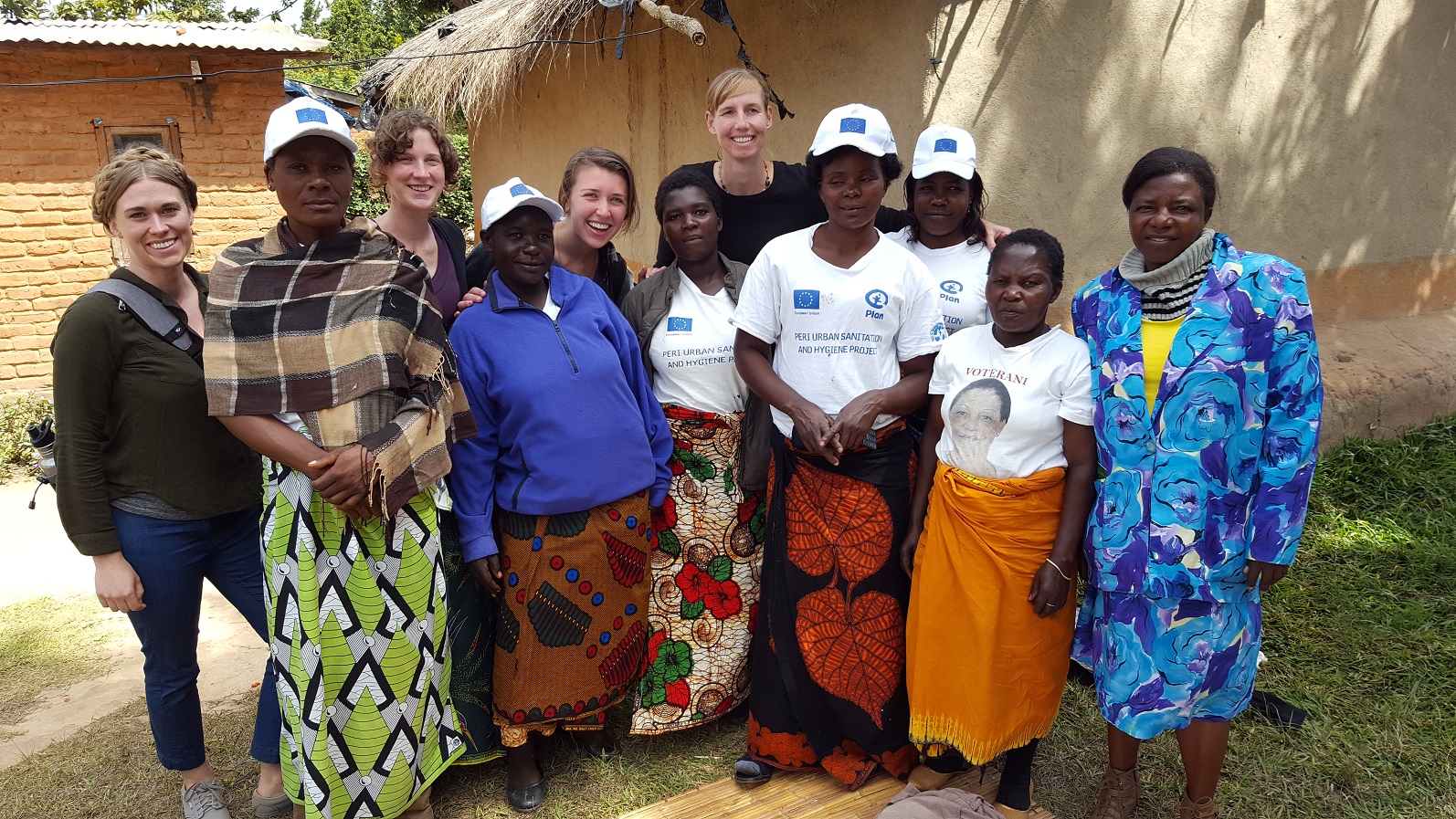
14Over the past few days the three groups have become known as the Sanitation, Mapping, and Fish teams in relation to their research projects. I have briefly described each project below and have provided a few pictures from the work of each group.

A hygiene and sanitation assessment of public sites. The Sanitation team is testing public latrines in schools, public transportation sites, medical facilities, and markets for E. coli contamination and administering short interviews to assess the sanitary conditions and use of the public facilities. The team plans to assess ten public sites this week and process up to 150 samples taken from various pre-determined locations in and around a sanitation facility. As is typical in a low resource setting, these facilities can be unclean and in a dire state of repair. But this was not always the case. The study of these facilities is providing students with a clear sense of the public sanitation needs across the city. It is also requiring them to visit locations they would never have seen if we only spoke about public sanitation in a classroom setting.

This slideshow requires JavaScript.

Mapping the water and sanitation services in a community. The Mapping team is undertaking participatory mapping to understand the water and sanitation services in a community near Mzuzu University. The students are leading these mapping exercises and collecting GPS data that will be analyzed and integrated into one or more maps. These maps can then be used to identify the “gaps” between water needs and existing services to help the community engage in the planning of future water services. During their first day of surveying, it was clear that the data collection instruments were too detailed and needed to be revised/shortened. This experience reinforced the importance of piloting instruments before the full data collection effort begins, a valuable lesson for the students to learn.

This slideshow requires JavaScript.

Risk of fish contamination from the boat to the market (Nkhata Bay to Mzuzu). The Fish team is undertaking an assessment of the fish supply chain from Nkhata Bay to Mzuzu. This is perhaps the most logistically demanding project, which begins around 3am as the fishermen leave Nkhata Bay and ends at Mzuzu market some 50km away where the fish caught that morning are being sold. The students are testing the fish, the fish handlers’ hands, transport vehicles, and fish containers for E. coli, and are undertaking interviews with fish handlers along the fishing, transportation, and marketing chain. This project is characterized by intense periods of activity and periods of waiting – such as when fishermen are fishing on the lake. Perhaps, the busiest phase of the research is when the fishermen return to shore and the middle men/women rush to purchase the fisherman’s catch. The students wisely developed relationships with the fishermen to ensure that they can sample their fish when they return to shore and before the fish start their trip to Mzuzu market.

This slideshow requires JavaScript.

While we intended the WASH course to be experiential, I underestimated the importance of this aspect of the course, which is where much of the learning seems to be happening. The course provides a great example of the “hands on, minds on” principle that Virginia Tech is working to integrate across the institution. My hope is that we (VT) can develop a way – through initiatives such as Beyond Boundaries, Destination Areas, and InclusiveVT – to make this type of off campus experience open to all students attending the university. There are clearly financial and resource implications to realizing this vision, but the value to students is certainly worth the effort.
WASH Course in Malawi – Week 1

We have now complete the first week of our joint WASH study abroad course in Malawi. After starting in Lilongwe, we travelled to Mzuzu where we will be based for the remainder of the course. 20160715_201346The students are settled in Joy’s Place and seem to be enjoying the relaxed environment and great food they serve. Interesting, we all underestimated how cold it can be at night, but a nice warm cup of hot chocolate seems to help.

The course is based at the Mzuzu University Centre of Excellence in Water and Sanitation and the Mzuzu SMART Centre, which have all the facilities we need and are surrounded by low-cost water and sanitation technologies that are being designed and tested by staff at the centres. This immersive environment is the perfect place to be learning about WASH in Malawi. We are also fortunate to have the technical staff on hand to answer any questions we have about these technologies.

This slideshow requires JavaScript.

The focus of this first week has been on introducing students to the water and sanitation situation in Malawi and the three research projects they will be undertaking over the next 1.5 weeks. The research will begin tomorrow and I will post a few pictures from each of the research teams over the next week. Our objective is for the students to present their findings to key stakeholders on July 28, after which they will be tasked to develop an academic journal article to document their findings. We have challenged the students to take on real and important research, and they have risen to this challenge by diving into their projects with energy, enthusiasm, and the focused needed to collect high quality data. I have also been very impressed by the way the students from the three universities are working as one cohesive group, which we hope will promote cultural exchange and build friendships that will last beyond the course.

This slideshow requires JavaScript.

Since we are based at Mzuzu University (Mzuni), we also invited several Mzuni faculty to provide guest lectures related to their areas of expertise, and had a CLTS training session provided by World Vision who have an extensive range of projects underway in Malawi.

This slideshow requires JavaScript.

The WASH Course Begins in Lilongwe

On July 10, 15 students from Virginia Tech and Denver University (DU) arrived in Lilongwe, Malawi, to join students from Mzuzu University (Mzuni) for a joint WASH (Water, Sanitation, and Hygiene) course. I am currently teaching this course with Dr. Rochelle Holm (Mzuni), Dr. Mavuto Tembo (Mzuni), and Dr. Emily Van Houweling (DU).

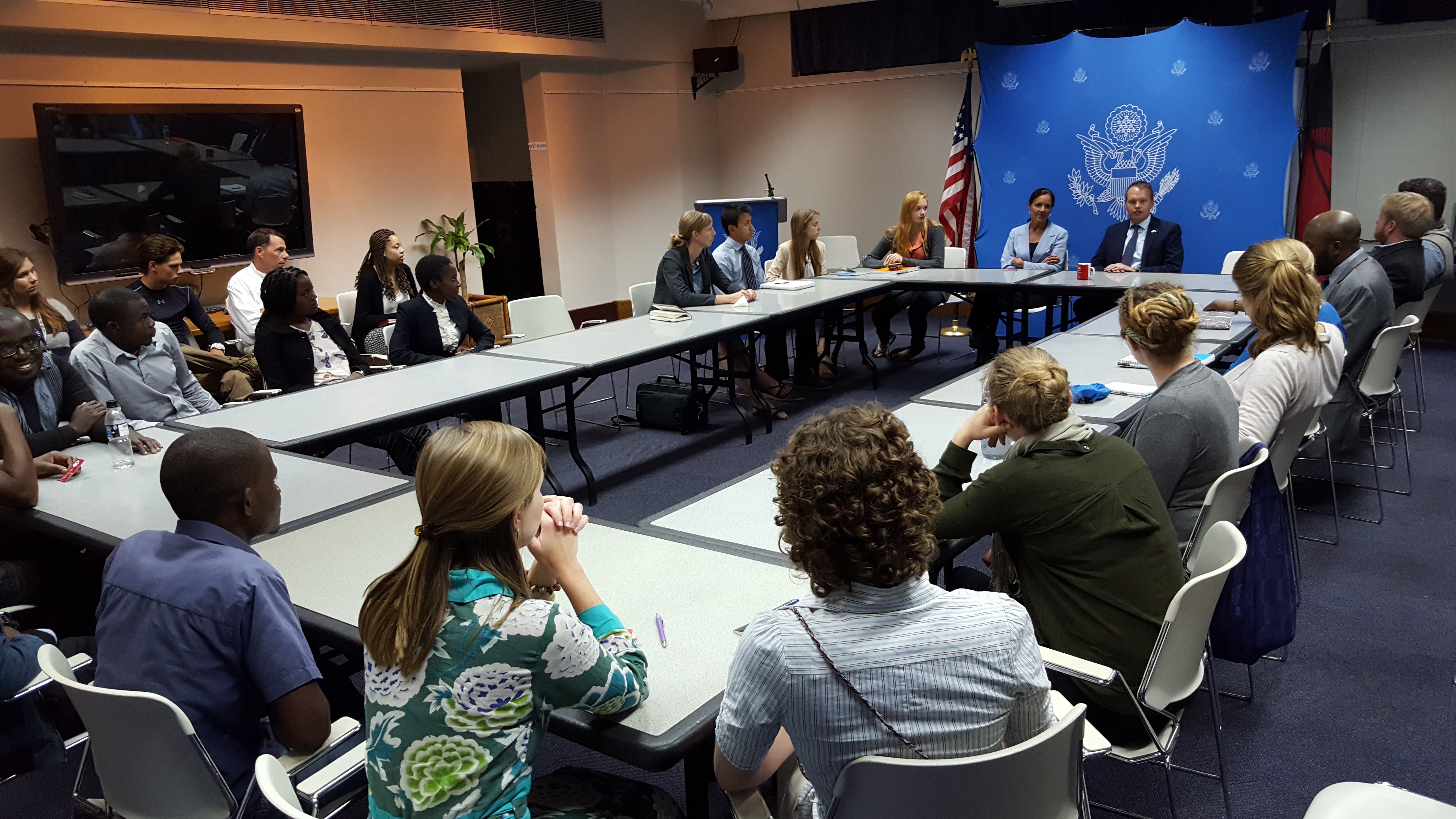
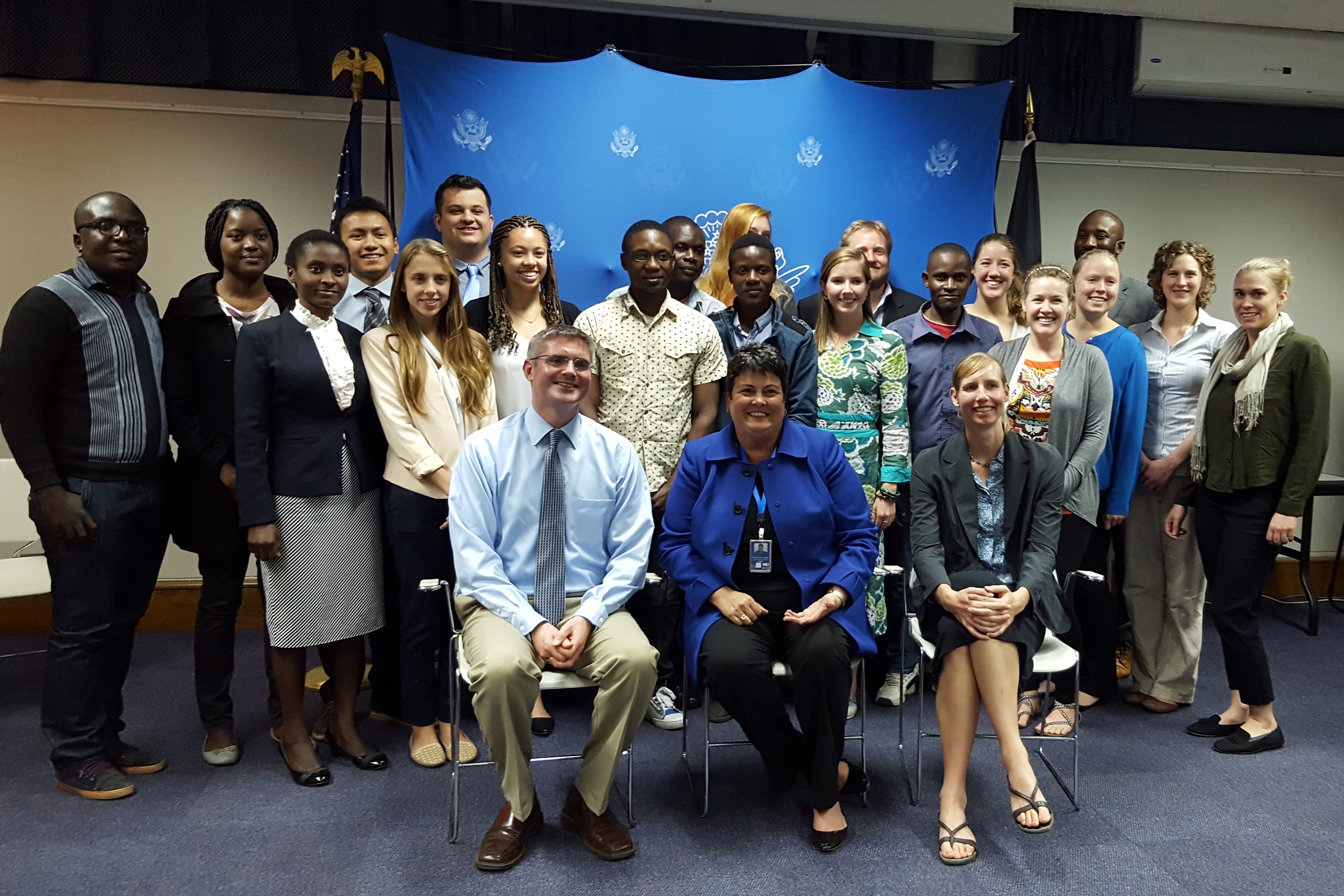
For the first two days of the course we held meetings with key officials in the capital, Lilongwe, beginning with U.S. Ambassador Palmer who described the strong U.S.-Malawi relationship. Ambassador Palmer outlined the various programs the U.S. government supports to spur economic development and help the 6.5 million Malawians at risk from flooding and drought. She also emphasized the unique opportunities that exist for U.S. companies to invest in Malawi. It was interesting to learn that Malawi (one of the poorest countries in the world) is one of a few countries that receives support from all the main U.S. foreign assistance programs.

Palmer

Following our meeting with the Ambassador, students had the opportunity to meet with Edward Monster, the Public Affairs Officer for the U.S. Embassy in Malawi and Carol Spahn, the Country Director for Peace Corps Malawi (below). During this conversation, students were able to learn about foreign service from the perspective of the U.S. Department of State and Peace Corps. It was interesting to hear that students can now select which country they would like to serve in for Peace Corps.

20160711_150032

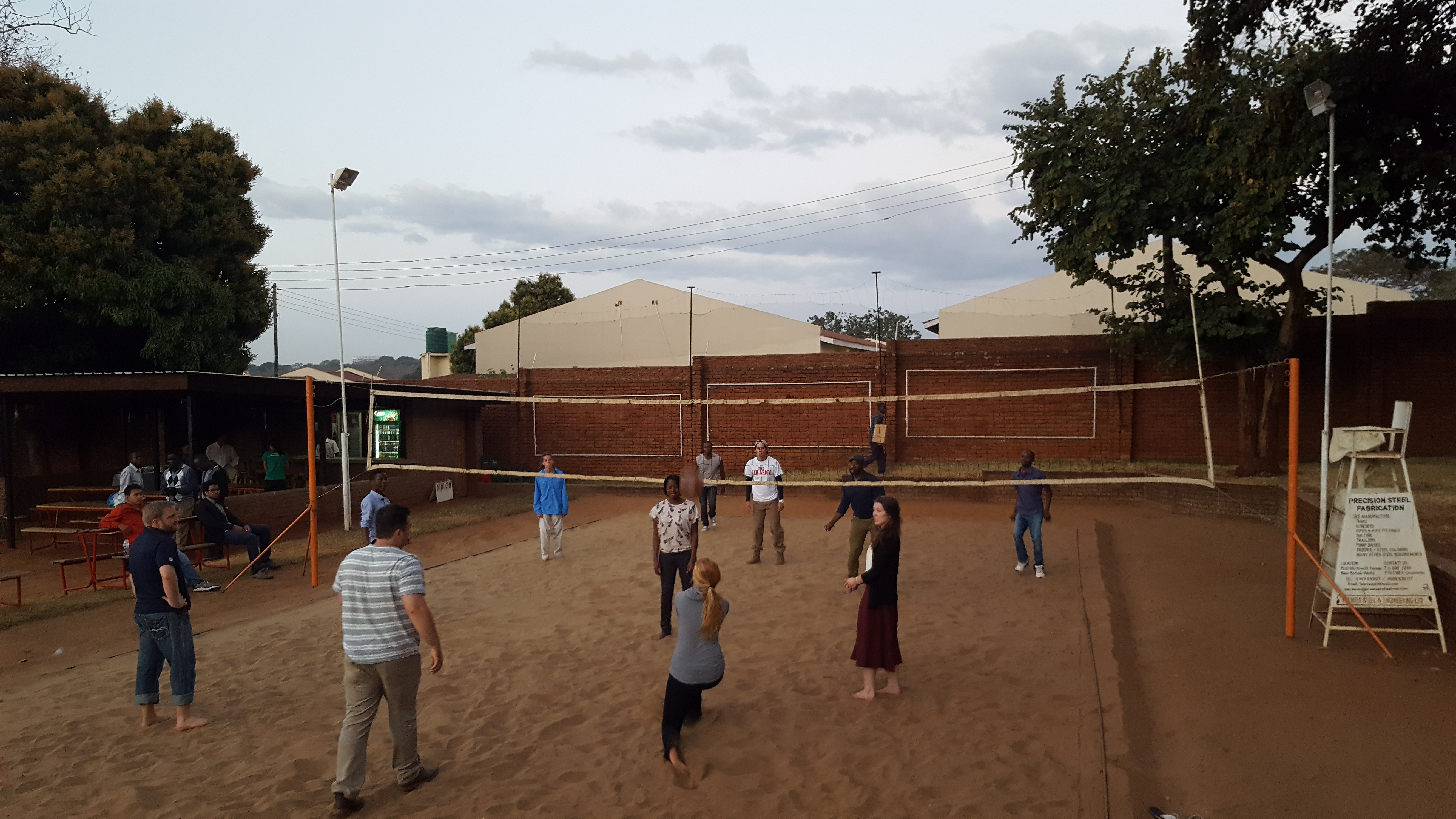
In the afternoon and evening on the first day, we held some get-to-know-you activities and relaxed a little with some games of volleyball at a local facility.

20160711_173700

The following day, students had the opportunity to speak with Asayire Kapira (WES Network), Thanasius Sitolo (the Department of Water Supply and Sanitation), and Lucy Mungoni (USAID Malawi) about the WASH situation and WASH actors in Malawi. Following these meetings, the group left Lilongwe for a five hour drive to Mzuzu where we will hold the rest of the course.

This slideshow requires JavaScript.

2016 International Development Studio Presentations

Today marked the end of the 2016 International Development Planning Studio. This year we continued to advance the quality of the proposals being developed by students, in large part due to the support of a number of international development experts at Virginia Tech. These experts worked closely with the students to help shape their ideas and refine their application of specific tools such as logical framework analysis. This semester, I also used a formative assessment framework to help guide the structure of the studio, which I will discuss in a future post.

20160427_133647

I have listed below the titles of the student proposals to provide an indication of the range of subjects covered this semester.

  • Implementation of Sexual Health Programs within Iran
  • HIV Prevention Program in Bujumbura, Burundi
  • Reducing Child Mortality in Burkina Faso Through Breastfeeding Education
  • Preventing Adolescent Pregnancy in Abidjan (Côte d’Ivoire)
  • Planning a Bus Rapid Transit System in New Delhi, India
  • Gudri and Tantnagar Open Defecation Pilot Project
  • Mobile Clinic and Educational Bus Bucharest, Romania
  • Domestic Violence Support and Awareness in Guyana

In the final two studios, students formally presented and defended their proposals to a panel of international development experts. I would like to thank the following individuals for serving on these proposal review panels: Sophie Wenzel, Hannah Menefee, Maria Elisa ChristieJohn BrowderBill AndersonJames Foreman, and Van Crowder. I greatly their time and the important contributions they make to student learning.

This slideshow requires JavaScript.

Info Session for New CoLab Course

On May 4, 2016, at 7pm, my colleague Dr. Maggie Cowell will be giving an information session about an exciting new course she will be offering this fall. The course will bring together Hollins University and Virginia Tech students to design a student-driven research project with CoLab and CityWorks XPO in Roanoke.

To join the information session at 7pm on May 4, click on this link.

2016-04-29_1106

Providing Video Feedback on Assignments

On Wednesday, February 10, at 10am, I will be giving a Practice Session at the 2016 Conference on Higher Education Pedagogy on Providing Video Feedback on Assignments. I have posted below the material I will be using during this 50-minute session.

During the session I will discuss how to [1] create a video-feedback platform using SnagIt, Google+, Google Circles, and YouTube, [2] structure the process of providing video feedback, and [3] what to include in the feedback video. I plan to share what I have learned from experimenting with Google Apps and screen capture software, and from recording over 300 assignment feedback videos.

Click on the image below to access the first Google Doc that will be used during the practice session. This document provides instructions on what participants will need to do to be able to engage in the session.

2016-02-09_0930

The second Google Doc below provides guidance on how to set up a Google Apps platform for a course.

2016-02-09_0931

The slides below provide some initial results from my research into providing video feedback on assignments.

Experience WASH in Malawi – Info Sessions

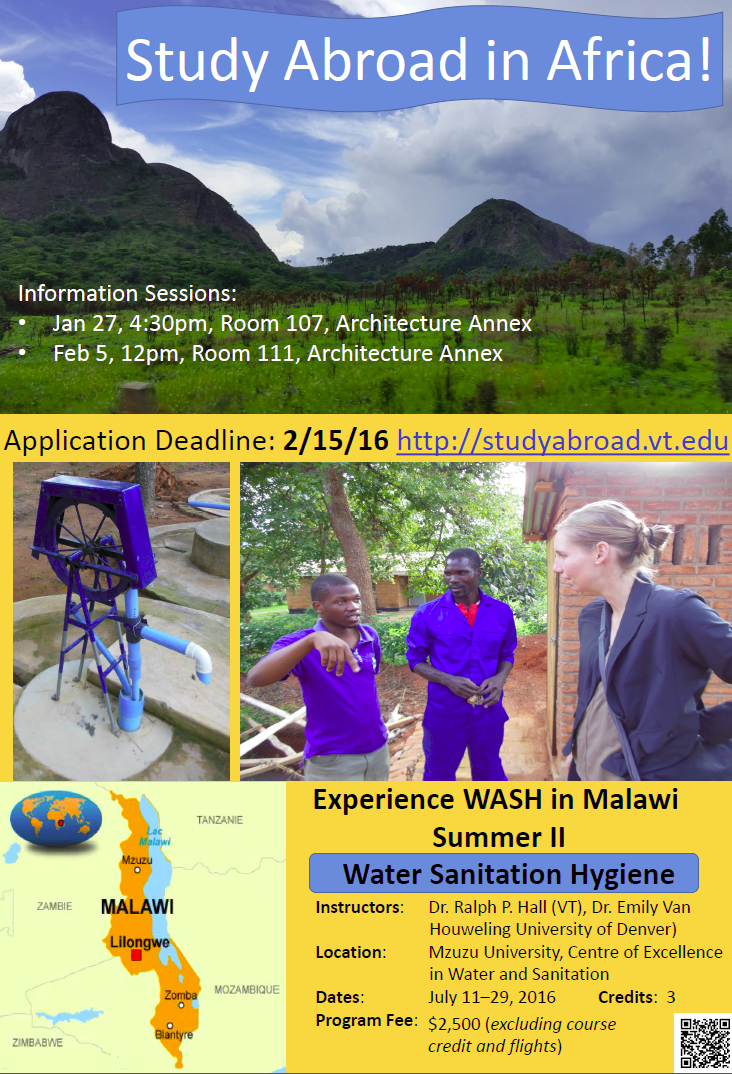
If you are interested in attending the Experience WASH in Malawi study abroad course, I will be holding two information sessions about the course at the following times:

  • Wednesday, Jan 27, 4:30pm, Room 107, Architecture Annex
  • Friday, Feb 5, 12pm, Room 111, Architecture Annex

If you are not located at the Blacksburg campus, a WebEx connection to each session can be provided upon request.

Draft syllabusApply here.

Internships

Following the completion of the course, interested students will have an opportunity to undertake an internship with different development organizations in Malawi. These organizations include Ngurwu (a community-based organization that provides education and development assistance in many different areas), World Vision, Merion Medical Mission (an organization that installs shallow wells), and the Church of Central Africa Presbyterian (CCAP) (an organization that could offer internships in health, education, and development). We will work with students to help ensure a good fit between their interests and the needs of the organizations.

2016-01-21_1204

#HokiesHelpMzuni – Devastating Library Fire

On Friday, December 18, Dr. Emily Van Houweling and I travelled to the Lilongwe International Airport, Malawi, to board our return flight to the U.S. after an extremely productive visit to Mzuzu University. We had spent a week meeting with faculty and university administrators to develop the logistics and content for a joint WASH course in Malawi, which we are offering to students at Virginia Tech, the University of Denver, and Mzuzu University in July 2016. On our drive to the airport we learned some tragic news. The Mzuzu University Library – which contained some 45,000 books and other resources – was completely lost to a fire during the early morning. The library had also housed several critical computer servers, taking the university’s web page and other key services offline.

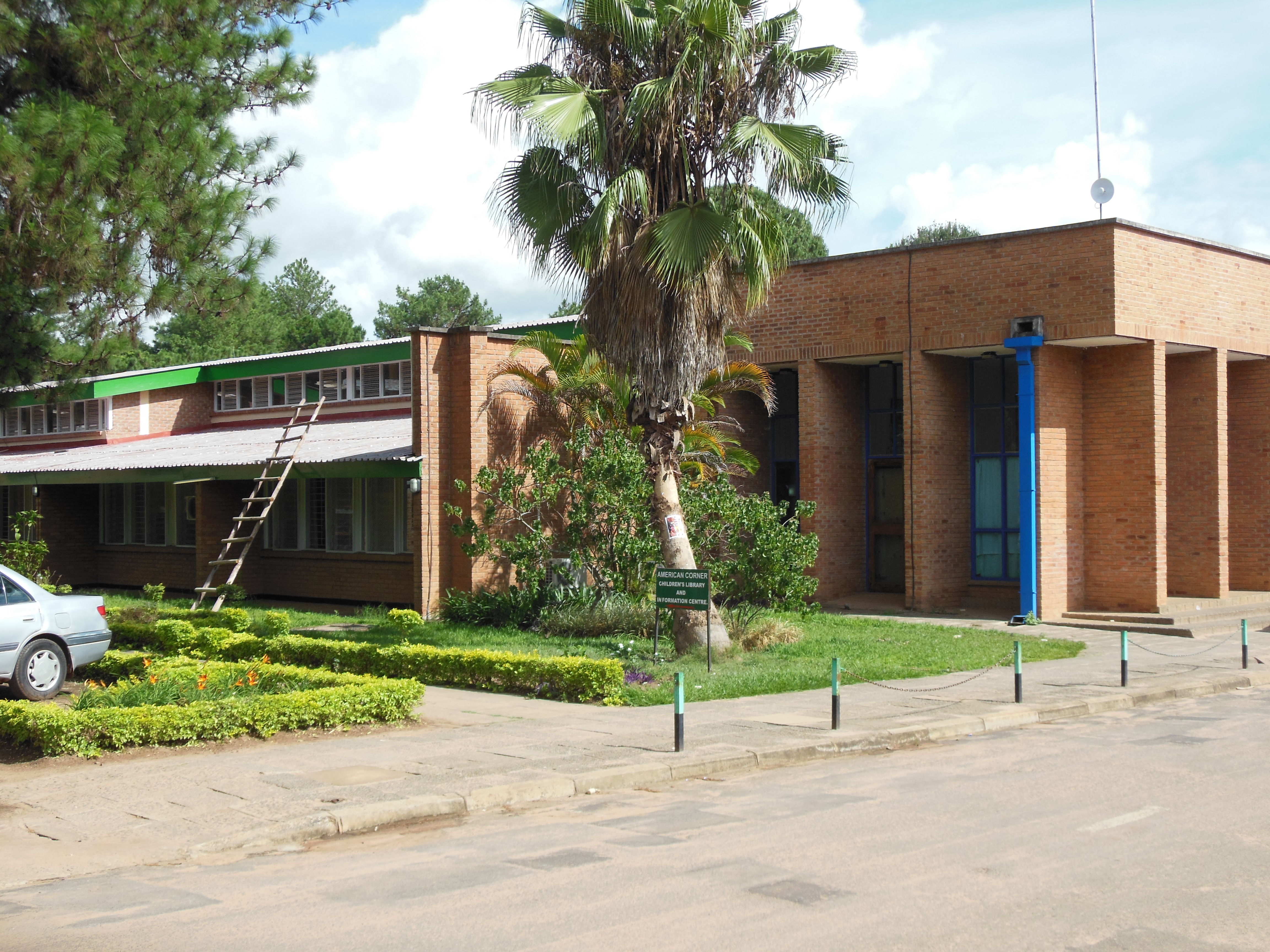
I took the picture of the library below on Thursday, December 17, around 12 hours before the fire. The picture was taken during a final walk of the campus before we began the five hour drive from Mzuzu to Lilongwe.DSCN4498

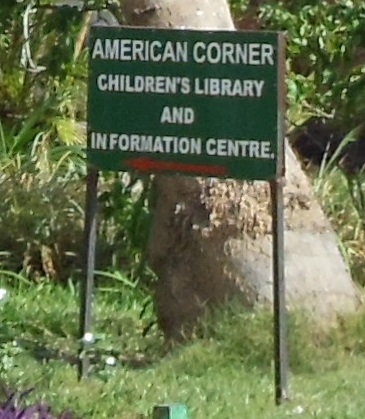
4The importance of the Mzuzu University Library and its computer servers to the functioning and future development of the university cannot be overstated. The library is the primary source of information for students, from small children, who regularly visit the children’s library (see the image on the right), to graduates. In addition, during our meetings over the past week we learned how the university was planning to roll out a 15 mbps internet network, which represents a threefold increase in the current speed of the network. I suspect the fire will significantly delay this initiative, which will impact Mzuzu University’s plans to launch an expanded online learning strategy.

This slideshow requires JavaScript.

In the spirit of advancing a Global Land-Grant Institution and Ut Prosim, I challenge Virginia Tech’s students, faculty, and staff to consider creative ways in which we can support Mzuzu University’s effort to rebuild its library, servers, and research capacity. Please share your ideas via Twitter using the hashtag #HokiesHelpMzuni.

Emily and I plan to return to Mzuzu in July, 2016 for the joint WASH course. Over the coming months we will work with Dr. Rochelle Holm, the Director of the Mzuzu University Centre of Excellence in Water and Sanitation, to identify strategies to help rebuild WASH-related resources in the library. Similar strategies will be needed in all of the university’s core areas of competency, which include mathematics, chemistry, biological sciences, physics, history, languages and literature, geography and earth sciences, religious studies, forestry, fisheries, education/distance learning, energy and renewable technologies, water resources management and development, sanitation, health sciences, nursing and midwifery, optometry, ICT, tourism and hospitality, and land management and surveying.

In addition to sharing ideas via Twitter, I’d be happy to talk with anyone who would like to discuss their ideas in person. The TEAM Malawi group of faculty and students on campus will also develop a coordinated response. For those students planning to take the joint WASH course, this turn of events will impact how we prepare for our time in Malawi. The experience of working with international partners to achieve a real and important objective will present many opportunities for learning and service.

Experience WASH in Malawi – Info Sessions

On Monday, November 16, I will be holding two information sessions (at 9:30am and 3pm) on the “Experience WASH in Malawi” study abroad course I will be offering during the summer of 2016. The information sessions will be held in room 111 of the Architecture Annex (and via polycom in room 220, Prince Street, Alexandria, VA).

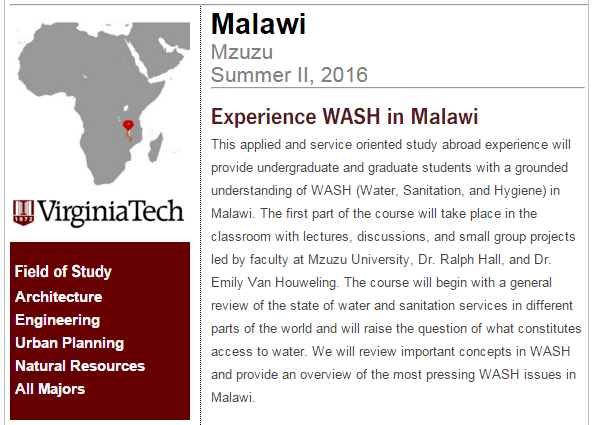
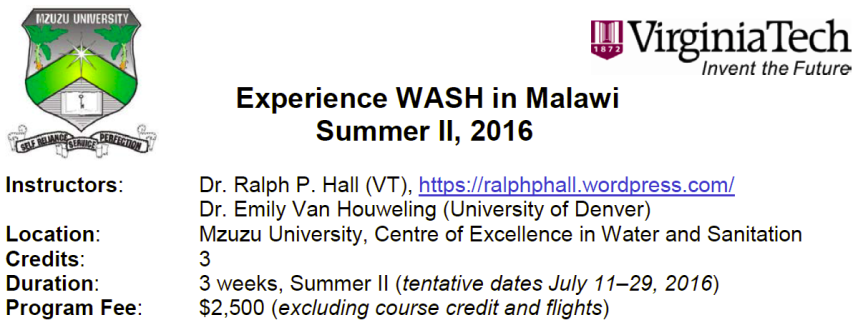
This applied and service oriented study abroad experience will provide undergraduate and graduate students with a grounded understanding of WASH (Water, Sanitation, and Hygiene) in Malawi. The first part of the course will take place in the classroom with lectures, discussions, and small group projects led by faculty at Mzuzu University, Dr. Emily Van Houweling, and I. The course will begin with a general review of the state of water and sanitation services in different parts of the world and will raise the question of what constitutes access to water. We will review important concepts in WASH and provide an overview of the most pressing WASH issues in Malawi. Following this introduction, students will study the design of relevant WASH technologies and educational programs from the perspective of public health, cultural appropriateness, and sustainability. Armed with an understanding of critical WASH issues and technologies, students will then undertake community-based fieldwork on a WASH-related problem in partnership with the Mzuzu University Centre of Excellence in Water and Sanitation.

2015-11-04_2110

A unique aspect of the course is that Virginia Tech and University of Denver students will work alongside students from Mzuzu University to explore a wide range of WASH issues both in the classroom and the field. This pairing of students will promote cultural exchange and enable discussions about ethics and power in the field of international development. The joint teaching model, combined student cohort, and experiential approach to learning will provide students from the U.S. and Malawi with a rich educational and cultural experience.

The course is designed for students interested in working in the global WASH sector or pursuing a career in international development.