With the semester just over a week away, I wanted to describe the platform I plan to use this semester to support my seminar on technology, globalization, and sustainable development (UAP 5784).
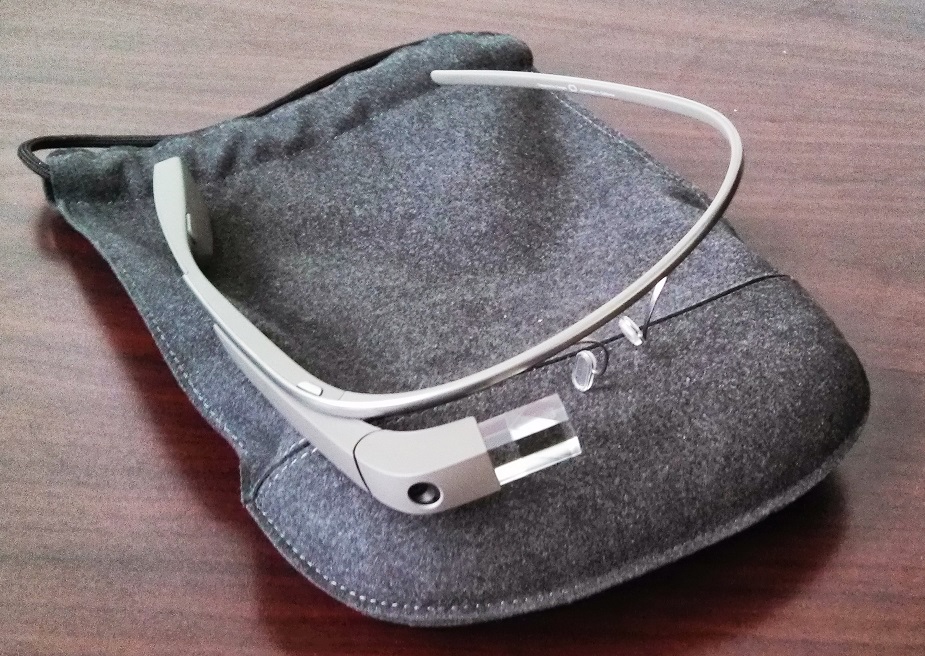
Whereas I normally use VT Scholar to manage all course-related activities, this semester I will use Google Apps to promote a more seamless exchange of ideas among the seminar participants. The other factor driving this change is I plan to use Google Glass to share important ideas/thoughts/insights with students that I have outside of the classroom. One dimension that makes this change possible is that Virginia Tech recently made the transition to Google Apps, which means that most students will be proficient with basic Google services such as Google Drive for sharing documents.
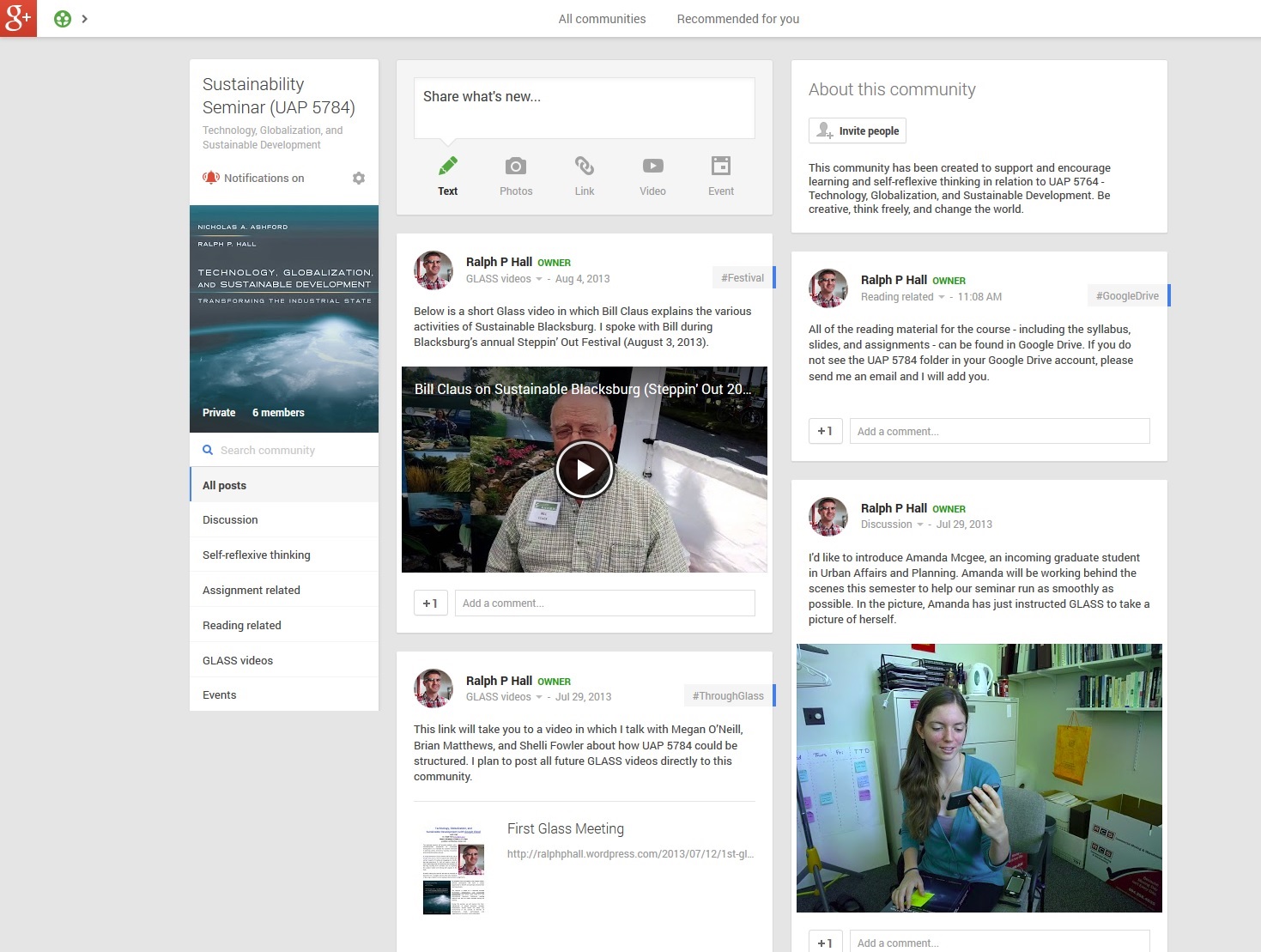
Google+ Community
The epicenter for the seminar will be a UAP 5784 community I have created in Google+. Since I wanted to create a space in which students would feel comfortable sharing their ideas, this community is private and only accessible to those taking the seminar. I have provided a screen shot of this community below, which shows a few posts I have made to the community. At this point, no students have been invited to join the community. This action will happen during the first seminar as we begin to explore the platform. As the semester proceeds, I hope this community will become a vibrant place where students can discuss and expand on the material we are covering.
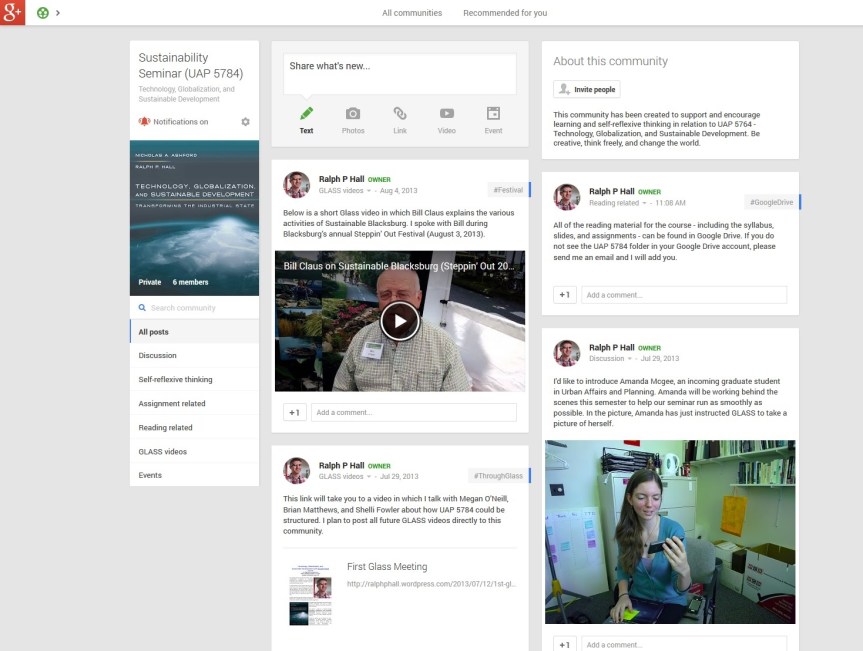
The seminar will have two distinct parts. The first will consist of a group discussion of the assigned reading material. Students will be asked to read and “work up” the reading material with comments and questions before each seminar and be ready to engage in a discussion of the core ideas and themes that emerge from the texts. In the second part of the seminar, we will take a more reflexive look at how the students engaged with the reading material. During this discussion, I plan to develop a conversation around the material being discussed in the on-line community. Before each seminar, students will be asked to prepare a short post to the community in which they can discuss anything of relevance to the seminar. The post could consist of written, visual (e.g., photos, artwork, etc.), audio, and/or video media. Students could record a video (using a webcam) in which they describe their ideas and post it directly to the community for others to view. The process is simple so it will be interesting to see whether students prefer to write or record their posts. Each student will also be expected to comment on at least one post by a fellow seminarian. While student posts could document the questions they have about the reading material, I hope that the space will be used creatively. For example, students could discuss any additional material they consulted to better understand a specific subject. In addition, I will encourage students to try to document their key moments of learning in relation to the reading material, discussions, and/or assignments.
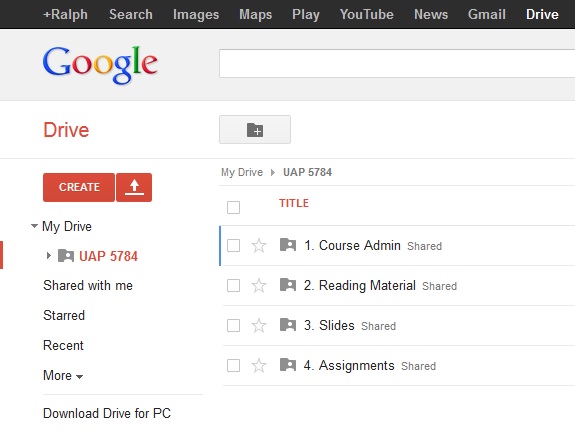
Google Drive
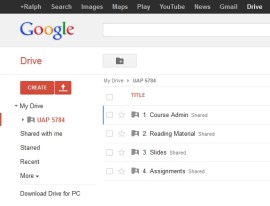 Since it is not possible to post files to a Google+ Community, I plan to utilize Google Drive to share documents and PowerPoint/Prezi presentations directly with students. Once each student has been added to the UAP 5784 folder in my Google Drive, they will be able to view all of the files saved in the folder. I currently have four sub-folders in the main folder labeled course admin, reading material, slides, and assignments. One nice aspect of the Google Drive set up is I no longer have to upload files to VT Scholar, which always proved to be a time-consuming process.
In addition to using Google Drive to provide students with access to key documents, I plan to set up an individual folder for each student in the seminar. Students will be asked to save their assignments in these folders and provide me with rights to edit their documents. I plan to review, edit, and comment on each assignment on-line and record a video using Glass in which I will provide each student with feedback on their work while viewing it on my computer. I hope this more comprehensive feedback will demystify my written comments and provide students with a much better sense of how they could improve their work. This aspect of the seminar, which is made possible by Glass, is perhaps the most exciting part of this new platform. I’m keen to see how students react to this type of feedback and hope to see a discussion about whether it is valuable on the UAP 5784 Google+ Community.
Google Circle and Hangouts
While I will create an email listserv for the seminar, I also plan to communicate with students using a Google Circle. At this moment in time, it is not possible to share a Glass video directly with a Google+ community. As a Glass Explorer, I was able to ask a “Glass Guide” (i.e., a member of the Glass development team) whether there was any way to do this. I received the following reply: “Currently you cannot share with a Community page, I’ll add this as a feature request.” Thus, this feature may be coming soon, but it’s not yet available. As a way around this problem, I can create a Google Circle that consists of all of the students in the seminar and post my Glass videos directly to this group. I may want to do this if I have an idea I would like to share and am away from my computer. I also received the following advice from the Glass Guide on how to share my UAP 5784 circle with the students so they won’t have to recreate the circle themselves.
“It is possible to share a Circle with your class, so they’ll not have to create Circles themselves. You can do this by visiting Google Plus and from the ‘Home’ tab in the top left corner clicking on ‘People’. Then click ‘Your circles’ and select the circle you’d like to share. Click ‘Actions’ > ‘Share’ this circle and click ‘Share’.
Your students would then receive a request on Google Plus to add that Circle and give them the opportunity to name it. Then you’ll be able to share to that Circle directly from Glass.”
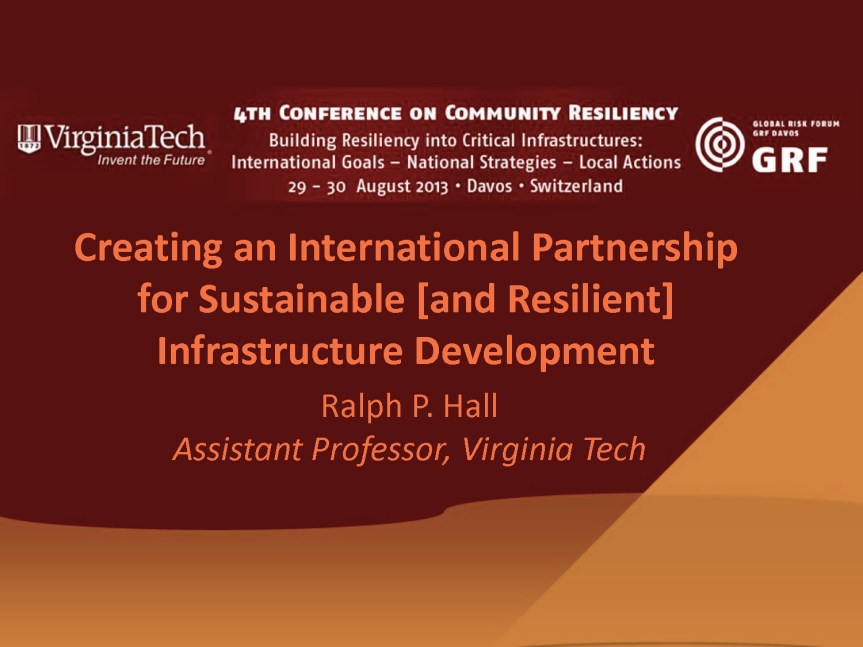
The other aspect of creating a Google Circle for the seminar is that I will be able to initiate a Google Hangout with students directly from Glass. This will enable me to bring the students into conversations I might have with experts in a certain field or have them join me while I present at a conference. I hope to do this at the 4th Conference on Community Resilience in Davos, where I will provide my students with a bird’s eye view of my panel session on Approaches to Infrastructure Resiliency in Different National 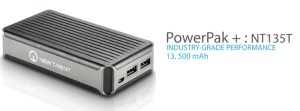 Contexts. [As an aside, I have purchased a NewTrent PowerPak + (NT135T) to charge my Glass device while it is under heavy use – such as hosting a Google Hangout. This mobile charger can fit in my pocket and connect to Glass via the micro USB cable. I hope the charger will enable me to go for an entire day without the need to find a power outlet to recharge Glass.]
As the semester proceeds, I will provide the occasional update on how this “Google platform” is working and whether the students find this new approach to be of value.

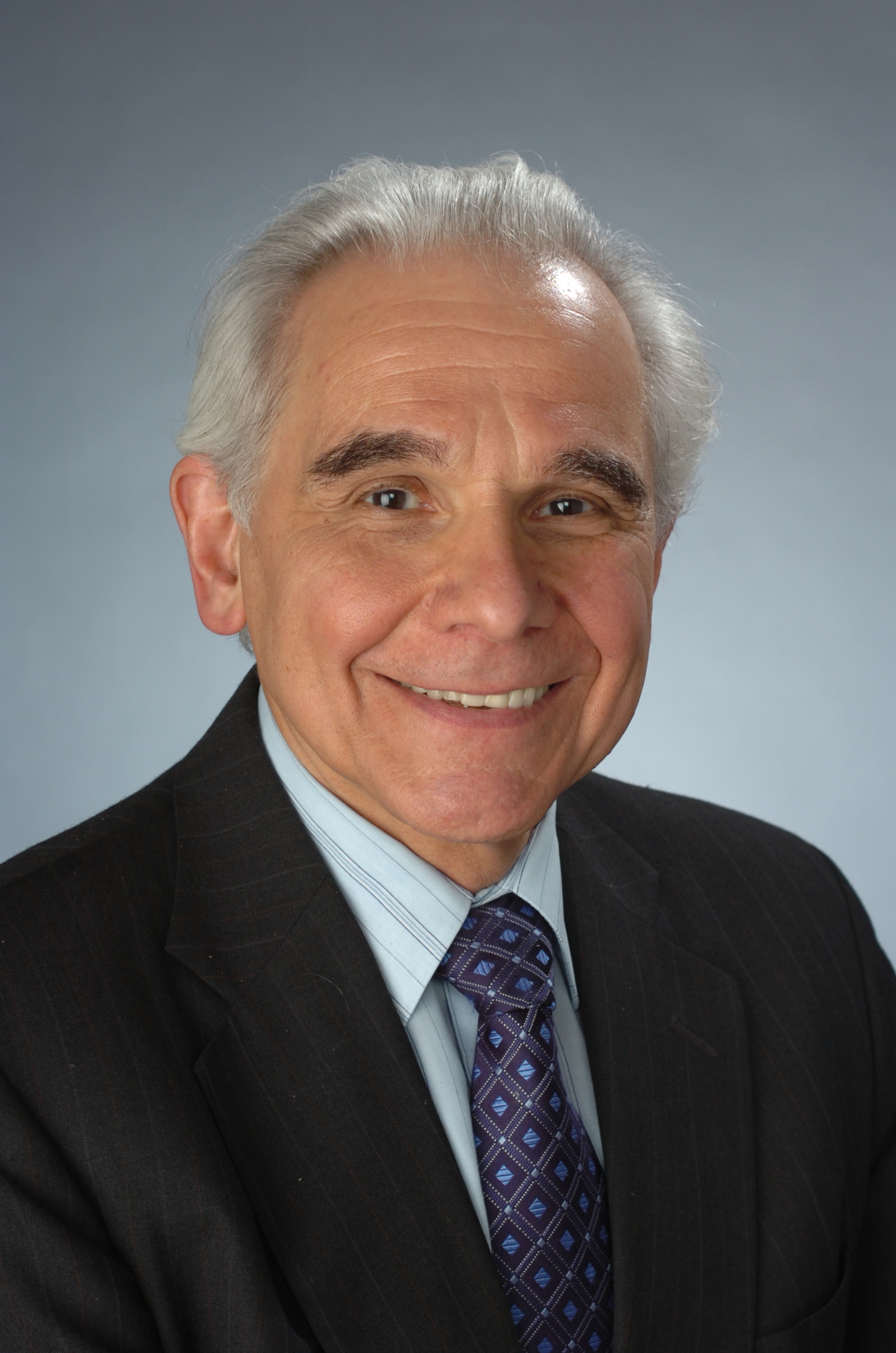 I’m pleased to announce that Prof. Robert Ashford will be visiting Virginia Tech in November, during which he will take part in a series of events related to the concept of Binary Economics. The first of these events will be a SPIA seminar on November 6, during which Robert will make the case for “democratizing capital acquisition” by broadening competitive market opportunities to acquire capital with the earnings of capital – see the flyer below for more information about this talk.
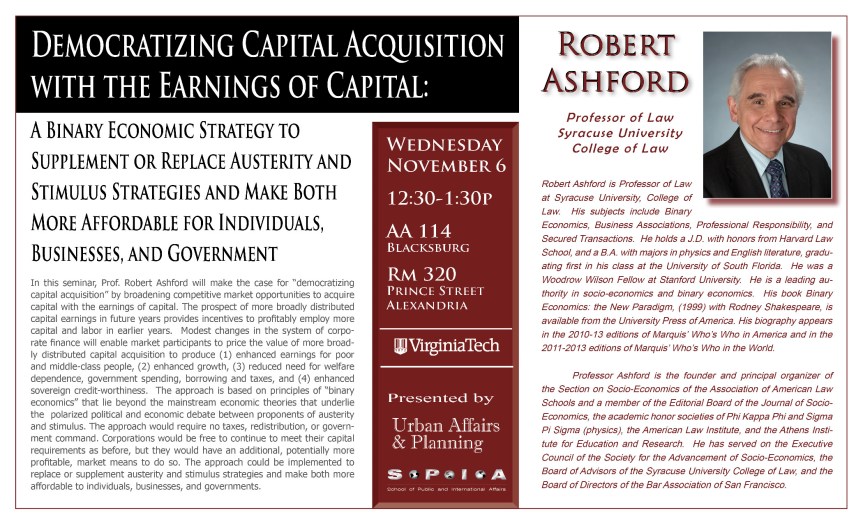 I first became aware of binary economics when searching for alternative, transformational models of development. The importance of identifying new development pathways has only intensified following the recent global financial crisis that has deepened economic inequality both within and between nations. Robert’s ideas relating to binary economic growth hold great potential to transform and reignite the economy. My interest in this subject, and reason for bringing Robert to VT with the assistance of an AdvanceVT grant, stems from the need to ensure that any surge in economic growth does not also create a surge in negative environmental and social externalities. My hope is that we can find ways to stimulate binary growth while transforming industrial systems towards inherently sustainable practices.


 Ralph P Hall