I’m looking forward to reconnecting with members and friends of the Sustainable Transportation Committee (ADD40) at the TRB 93rd Annual Meeting in January. During the conference we will hold the inaugural Sustainability Research Subcommittee, ADD40(2), meeting on Tuesday, 14 January, 1:30pm – 3:15pm (Hilton, Kalorama).
As you may know, in ADD40’s Triennial Strategic Plan we made the decision to promote and support research that integrates the three dimensions of sustainability. One important step in achieving this goal will be the extent to which we can develop collaborative research relationships with other TRB standing committees that have an interest in sustainability. Our objective is to try and broaden the scope of TRB research to ensure a more balanced treatment of environmental, social, and economic concerns.
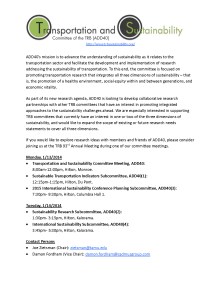 The TRB Annual Meeting presents a unique opportunity for members and friends of ADD40 to reach out to other relevant standing committees and begin the process of reviewing sustainability-related research needs statements and/or developing new statements. To assist with this task, we have developed the adjacent flyer that can be used to inform other committees about our mission and interest in developing collaborative research projects.
During the main ADD40 committee meeting from 8am-12pm on Monday, 13 January (Hilton, Monroe), everyone in attendance will have the opportunity to brief the committee on which TRB standing committees they plan to reach out to during the annual meeting. This will enable the committee to identify the coverage we have at the annual meeting and will provide those in attendance with an opportunity to identify others who may have a shared interest in working with a specific committee.
During the research subcommittee meeting ADD40(2), I look forward to learning about the collaborations that are already underway or are planned and beginning the process of developing several new research thrusts that ADD40 will lead. If you have any ideas for transportation research projects that integrate all three dimensions of sustainability, please either send me an email (rphall@vt.edu) prior to the annual meeting or join us on Tuesday, 14 January.

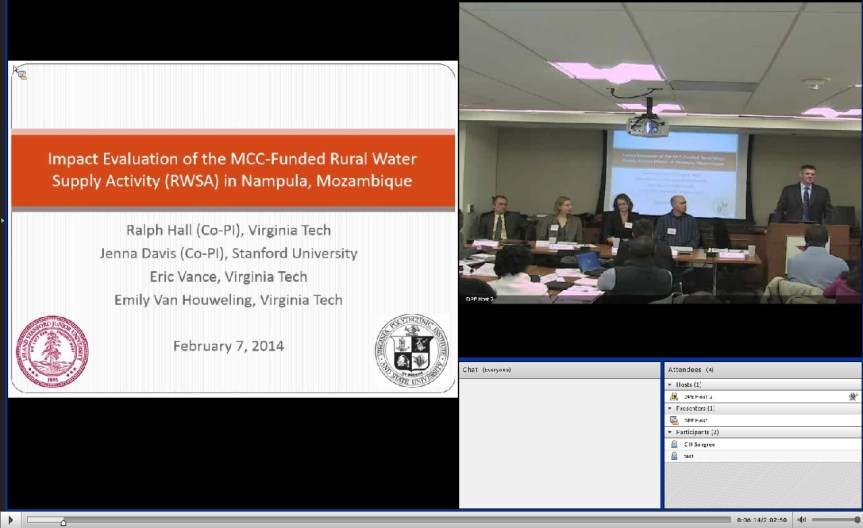
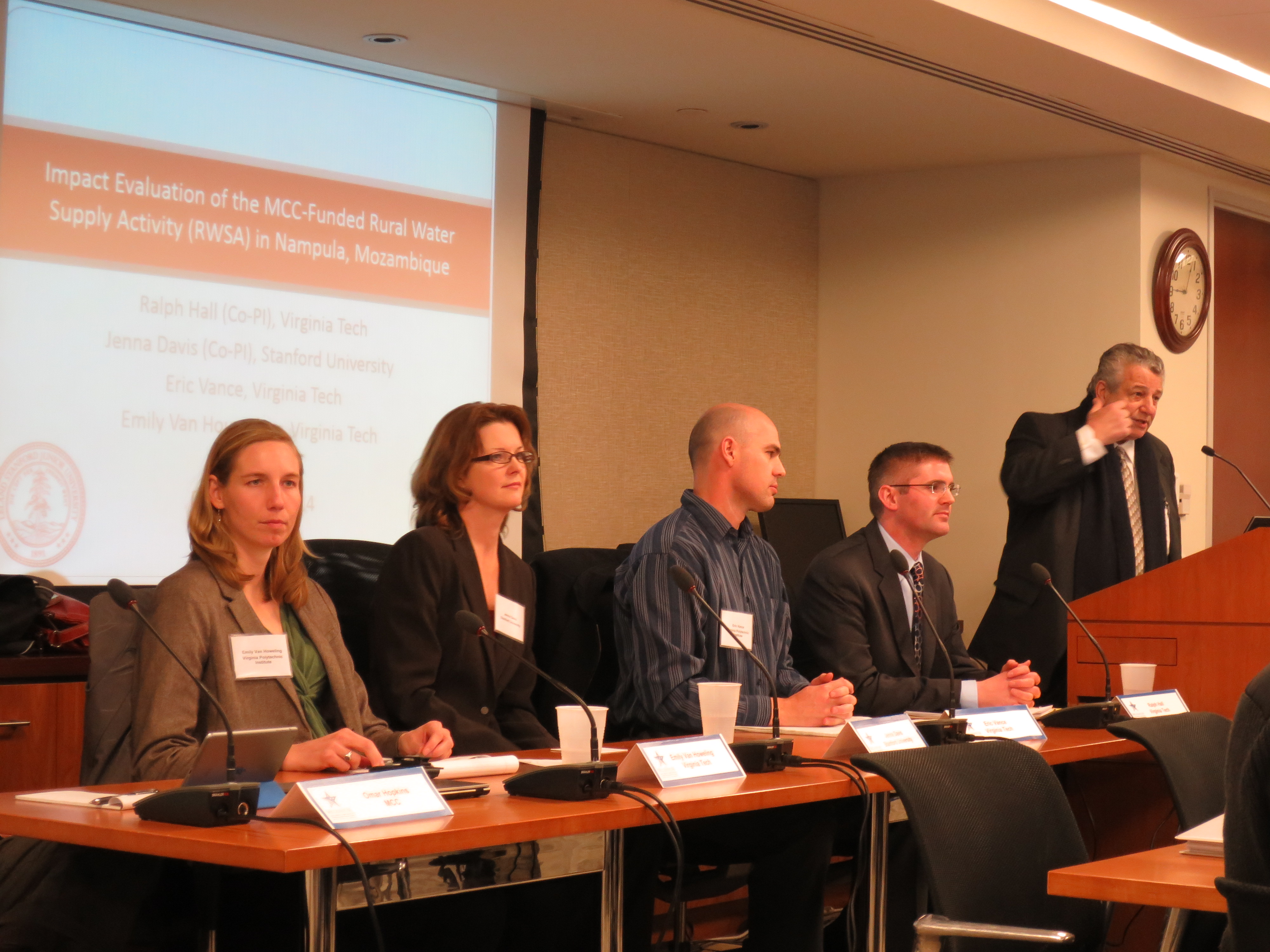 On February 7, I was joined by colleagues from Virginia Tech and Stanford University to present the results from our impact evaluation of the Millennium Challenge Corporation-funded Rural Water Supply Activity (RWSA) in Mozambique at the MCC’s 2014 Monitoring and Evaluation (M&E) and Economic Analysis (EA) College. The M&E/AE College was attended by monitoring and evaluation and economic analysis experts from many of the countries with which the MCC has an active Compact.