
Book Chapters
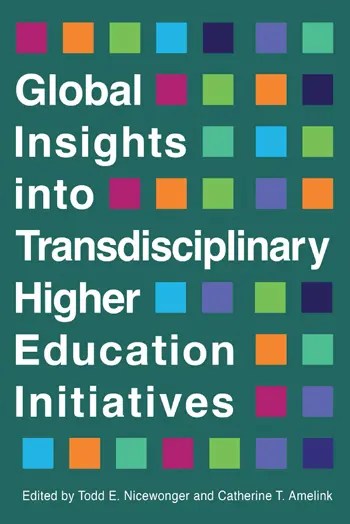
Velez, A.-L., Hall, R. P., Lewis, S. N., Underwood, Z., & Williams, D. (2025). Effective Transdisciplinary Teaching Teams: Professorial Perspectives on Collaboration & the Circular Model for Collegiate Co-Teaching. In Global Insights into Transdisciplinary Higher Education Initiatives. Virginia Tech Publishing. https://doi.org/10.21061/transdisciplinary-education
Our chapter contribution to this book explores our experience developing the Virginia Tech SuperStudio. The SuperStudio learning environment is a co-taught, parallel course structure organized around a shared policy theme that integrates design studio pedagogy, public affairs perspectives, and capstone learning outcomes to address transdisciplinary “wicked problems.” Students meet three days a week in mixed-topic teams to develop collaborative documents or prototypes, while faculty from diverse disciplinary backgrounds participate fully in joint planning, teaching, and assessment. The course aligns with Virginia Tech’s institutional commitment to transdisciplinarity articulated through the Beyond Boundaries initiative and its T-shaped learning model, which emphasizes both disciplinary depth and interdisciplinary skills. Long-standing institutional investments in interdisciplinary programs and faculty initiatives, combined with flexible expectations around transdisciplinary practice, have enabled experimentation and sustained support for the SuperStudio model. The teaching team employs a fully collaborative, interactive co-teaching approach grounded in trust, communication, and shared responsibility, creating a learning experience that exceeds what any single instructor could provide.
Journal Articles
Velez, A.-L., Hall, R. P., & Lewis, S. N. (2021). Designing transdisciplinarity: Exploring institutional drivers and barriers to collaborative transdisciplinary teaching. Journal of Public Affairs Education, 1–18. https://doi.org/10.1080/15236803.2021.1992196
Keywords: Transdisciplinary, problem-based learning, alternative pedagogy, team-teaching, public affairs.
Abstract: Employers increasingly desire new graduates to work across boundaries, in teams, and with developed soft skills, especially in public affairs. Likewise, students increasingly seek academic experiences for learning, practicing, and honing transferable, competency-based skills. This suggests instructors should explore alternative pedagogy engaging problem definition and transdisciplinary teamwork. We describe institutional drivers and barriers to collaborative transdisciplinarity in undergraduate teaching and the structure and processes involved in developing a co-taught studio-based capstone involving public affairs students and varied other unrelated majors. We describe the structure through which the “SuperStudio” (1) combines topic concentrations with a shared policy context allowing students to apply disciplinary knowledge to define transdisciplinary problems and (2) fosters collaborative teaching and strategic exploration of overarching issues like problem framing, equity, and effective communication. We then offer lessons learned regarding the drivers and barriers to such efforts, and advice from institutional decision-makers on designing such courses at other institutions.
Hall, R. P. (2014). Teaching Using Google Glass and Apps. Journal of Interactive Technology and Pedagogy. https://jitp.commons.gc.cuny.edu/teaching-using-google-glass-and-apps/
Keywords: Google apps, Google Drive, Google Glass, Google+, Google+ Community, video feedback.
Abstract: Can the use of devices such as Glass add pedagogical value? As a wearable computer, the Glass screen can be used to provide an educator with key or supplemental information during a talk, lecture, or discussion. It is also being used by instructors to demonstrate specific skills, interview experts, and allow students to view distant sites (such as CERN in Switzerland).
In this article, I argue that the value of Glass may not lie with the device per se, but in using the device in conjunction with Google Apps to create an integrated platform where information and ideas can be exchanged in a public or private setting. For example, the platform enables the sharing of private assignment-feedback videos with students as well as videos in which I highlight key points from new reading material for seminar participants.
 Ralph P Hall