I’m looking forward to receiving Glass 2.0. After some research, it looks like my prescription lenses will fit the updated version. The frame is essentially the same. 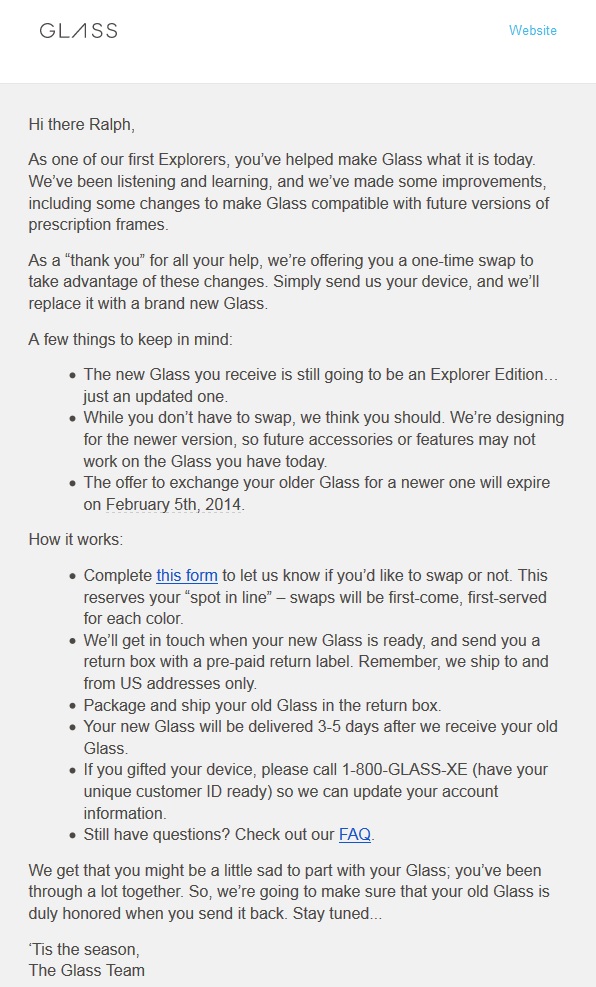 I decided to stay with #TeamShale.
Category: Google Glass
VT Wireless Network App for Glass
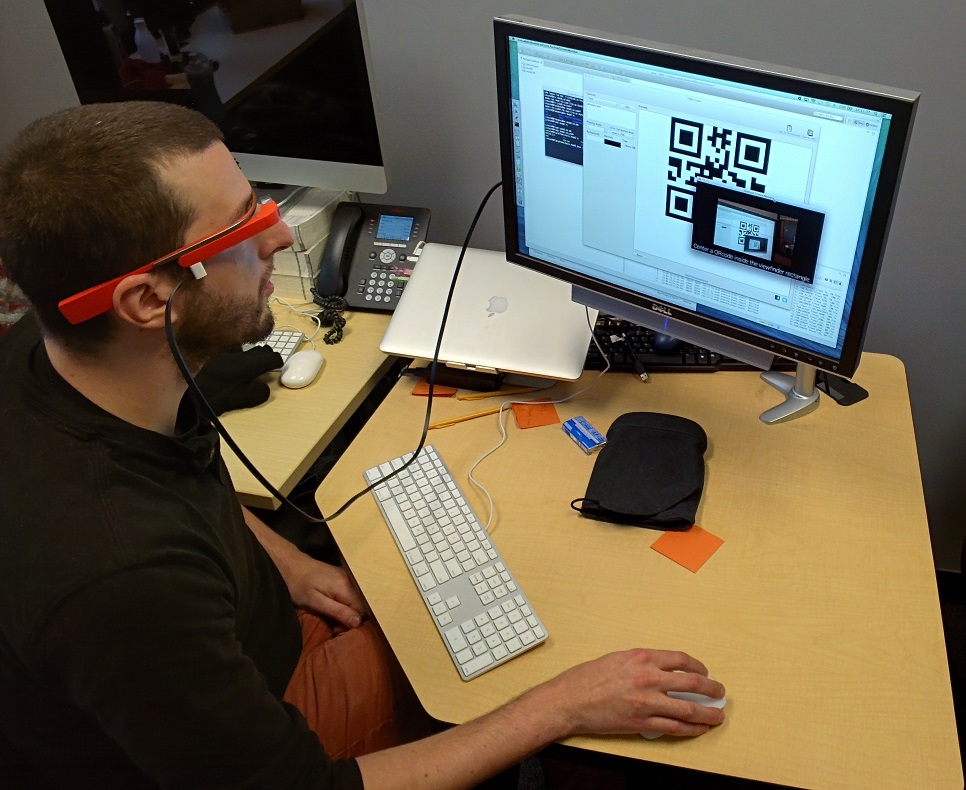 In the video below, Andrew Lincoln talks about the new App he is developing that will enable members of the VT Glass Team to connect their device to the VT wireless network.
VT Glass Team is Growing
I had a fun and creative meeting today with one half of the VT Glass team. We are now starting to map out the Glass Apps that we plan to develop and test during the Spring semester. The fusion of fields/disciplines provides a constant stream of ideas. Watch this space for more news!
Prescription Lenses for Google Glass
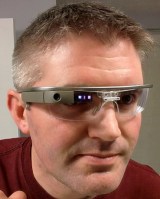 After a couple of months of searching, Dr. Steve Jacobs and I found a way to create a pair of prescription lenses for my Google Glass device. The final product has a kind of industrial edge to it that I rather like. The clip-on lenses match the curvature of the frame, so they look great. This is also the first time I have had a pair of wraparound lenses, so I have improved peripheral vision while wearing them. The first couple of times I wore them, it did take a little while for my eyes to adjust to the optics of the lenses, but this was not a major issue. Since I was not happy with the various contact lenses I tried, I was wearing Glass over my normal prescription frames. This was slightly uncomfortable and meant I did not always have a complete view of the Glass prism. Since the new clip-on lenses firmly clip into the frame, there is no movement to distort the image.
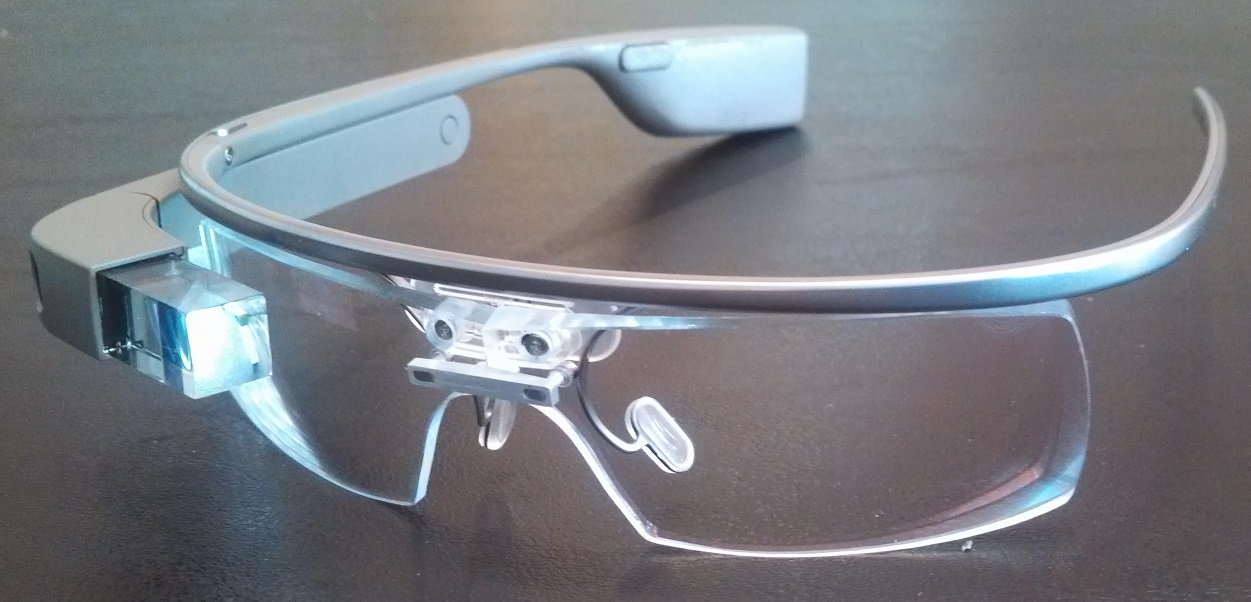 The clip-on lenses are also smaller than the lenses that came with the Glass device, which makes a big difference in their appearance. See the image below.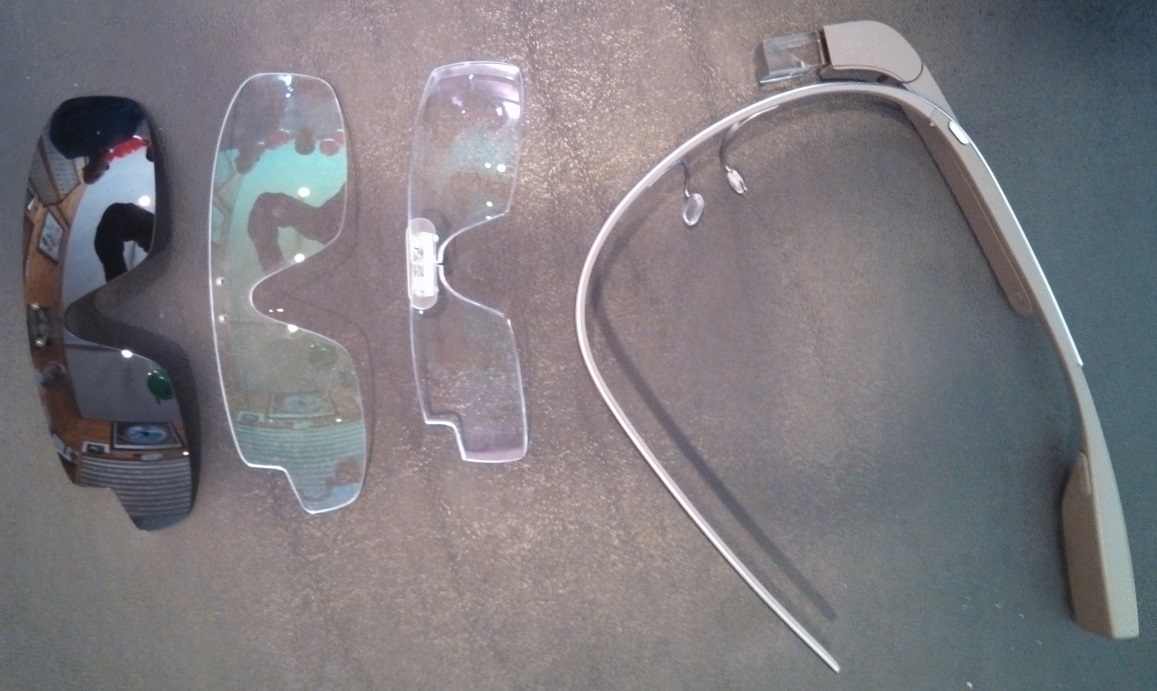
 The lenses were made by Joseph Haloua (left) in State College, PA. They are made from a military grade material called Trivex (which can be changed if your RX warrants it) that is almost as clear as optical glass. The material is ballistic which makes it very robust and perfect for drilling. A high quality antireflective treatment is added to the lenses to render the shield more scratch resistant than optical glass. UV protection is also included. The finished lenses come with a two-year warranty against accidental scratches.


Joseph is currently developing other shapes and progressive lenses to give people who need bifocals the usage of their Glass. Each of the clip-on lenses is unique, which is why the price ranges from $500 to $600. What I like most about what Joseph is doing is that he’s taken on the challenge that so many others did not. While prescription frames will become available from Rochester Optical in 2014, these frames will be missing that rogue edge. If you can wait until 2014, you may be able to purchase a new frame for Glass with prescription lenses for less than $500. However, if you are searching for an immediate solution, a pair of custom clip-on lenses is something to consider. I think Joseph would do what he can to accommodate your preferences in terms of treatments such as Transition(TM), prescription sunglasses (tinted or polarized), etc.
If you are interested in obtaining a pair of clip-on lenses, the process takes about two weeks from the time your clear shield is received. The clip-on lenses can be shipped globally if needed. When you contact Joseph (information below), you will need to provide him with your prescription and the distance between your eyes.
- Joseph Haloua
- Spectacles
- 138 West College Ave.
- State College PA 16801
- Email: Digitaldevice2020@gmail.com
I collected my new lenses last week during Dr. Jacobs’ Annual Trunk Show and Local Charity Fundraiser. I have included a few pictures from the event below. I have also included a video in which Dr. Jacobs says a few words about the lenses.
Moss Arts Center – Open House
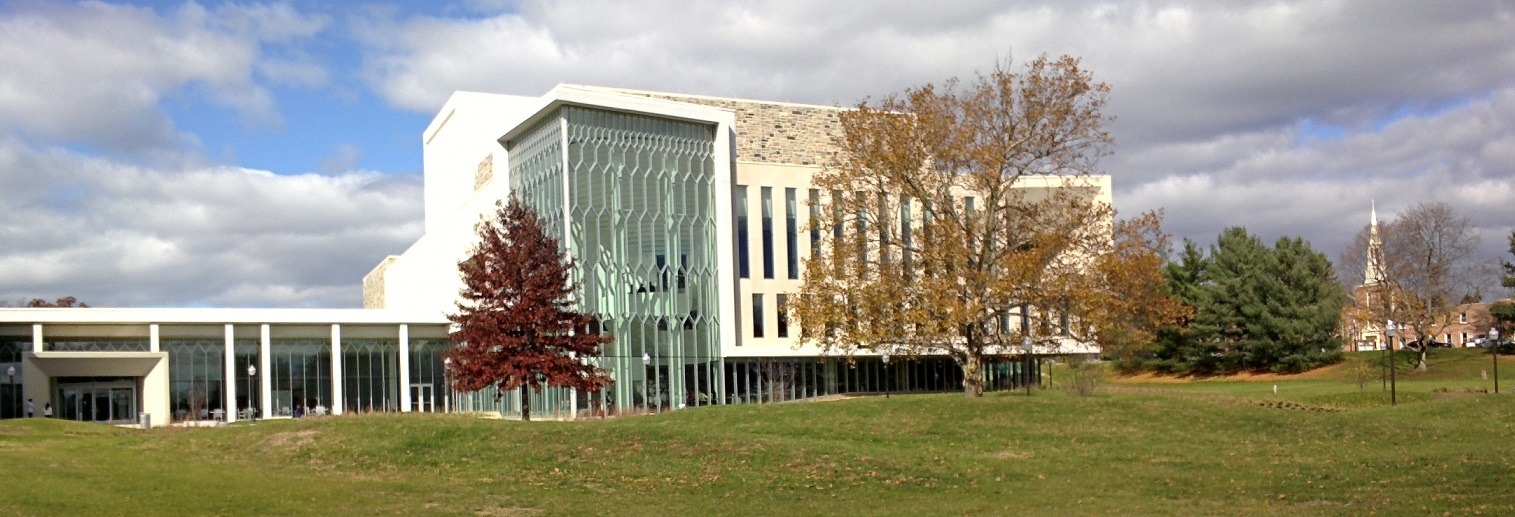 This afternoon, I wore my Google Glass device to the open house for VT’s new, and I must say rather amazing, Moss Arts Center. The 150,000-square-foot facility is designed to bring creativity, art, and technology together under one roof. The facility has a 1,260-seat performance hall, visual arts galleries, amphitheater, four-story experimental Cube, and multiple studios. The potential of this facility is immense and I’m already thinking about one or two new collaborations in the area of policy informatics that such a facility will enable.
While walking around the open house, I had the opportunity to speak with Ben Knapp, the Director of the Institute for Creativity, Arts, and Technology (ICAT). Ben was one of three colleagues who I recently invited to join the VT Google Glass team. The team now consists of Peter Sforza, Brian Mathews, Tom Sanchez, Troy Abel, Ico Bukvic, Ben Knapp, and myself. [If the Glass XE team is reading this post, I have another three colleagues waiting in the wings to join our growing team of explorers 😉 One of these individuals is shown in the second video below.] While talking with Ben, we discussed how his research into the study of human emotion could be linked to my use of Glass in the classroom. There is a ‘hint’ of this new Glass application in the video below. With the addition of an Android/Glass programmer to our team in the near future, I’m keen to see how we can turn this idea/concept into a testable platform.
I first came across Google Glass while undertaking a New Media seminar at Virginia Tech. One of the great things about the seminar was getting to know faculty from across the university. One of my fellow seminarians was Joycelyn Wilson, who I also met during the open house. I asked Joycelyn to say a few words about her digital archiving project in which she is working to document over 4,000 vinyl records among other music-related items. During the video below, I asked Joycelyn how she would use Glass if I were given an additional three Glass invitations.
Opening for a Google Glass / Android Developer
Virginia Tech’s Center for Geospatial Information Technology is looking for a Google Glass / Android Developer to support the development of programs for the new platform. This is a great opportunity for someone to join the Google Glass Team at VT and help us develop some exciting new applications for the platform. Additional information about the position is provided below.
Who we are?
A group of four Virginia Tech faculty building teaching and research applications for Google Glass. We’re looking for a couple of rockstar developers.
What’s the position like?
A full stack Android developer to work on two applications: a teaching platform and a mapping research project on Google Glass. Responsible for building applications for Google Glass. You’ll work with the Android SDK until the Glass Development Kit (GDK) is available.
What are the minimum requirements:
- Ability to communicate and collaborate effectively with a smart and diverse team
- 1+ year(s) of development experience with Android SDK
- 3+ years of software development experience
- Experience working with RESTful APIs
- Experience with live streaming data in an application
- Experience with Google services
- Ability to work part time on the Virginia Tech campus
- Strong understanding of object oriented software principles, design patterns, and agile methodologies
- Familiarity with automated test frameworks and test-driven development
- Interested to explore new approaches to mirror world applications using Google Glass.
What would give you bonus points?
- Experience with video/audio capture and streaming
- Prior work that involved augmented reality, GIS, or interactive web maps
- Experience working with 3D in a web browser (html5, x3dom, openGL, three.js, etc.)
- An ability to analyze UX/UI workflows for quality/efficiency
To apply or learn more, please contact Peter Sforza at the Virginia Tech Center for Geospatial Information Technology — sforza@vt.edu or (540) 231-8935.
Spring 2014 Courses
With Spring 2014 preregistration starting today, I wanted to post an update on the two courses I will be offering next semester.
UAP 5324 / BSE 4394: Water Supply and Sanitation in Developing Countries
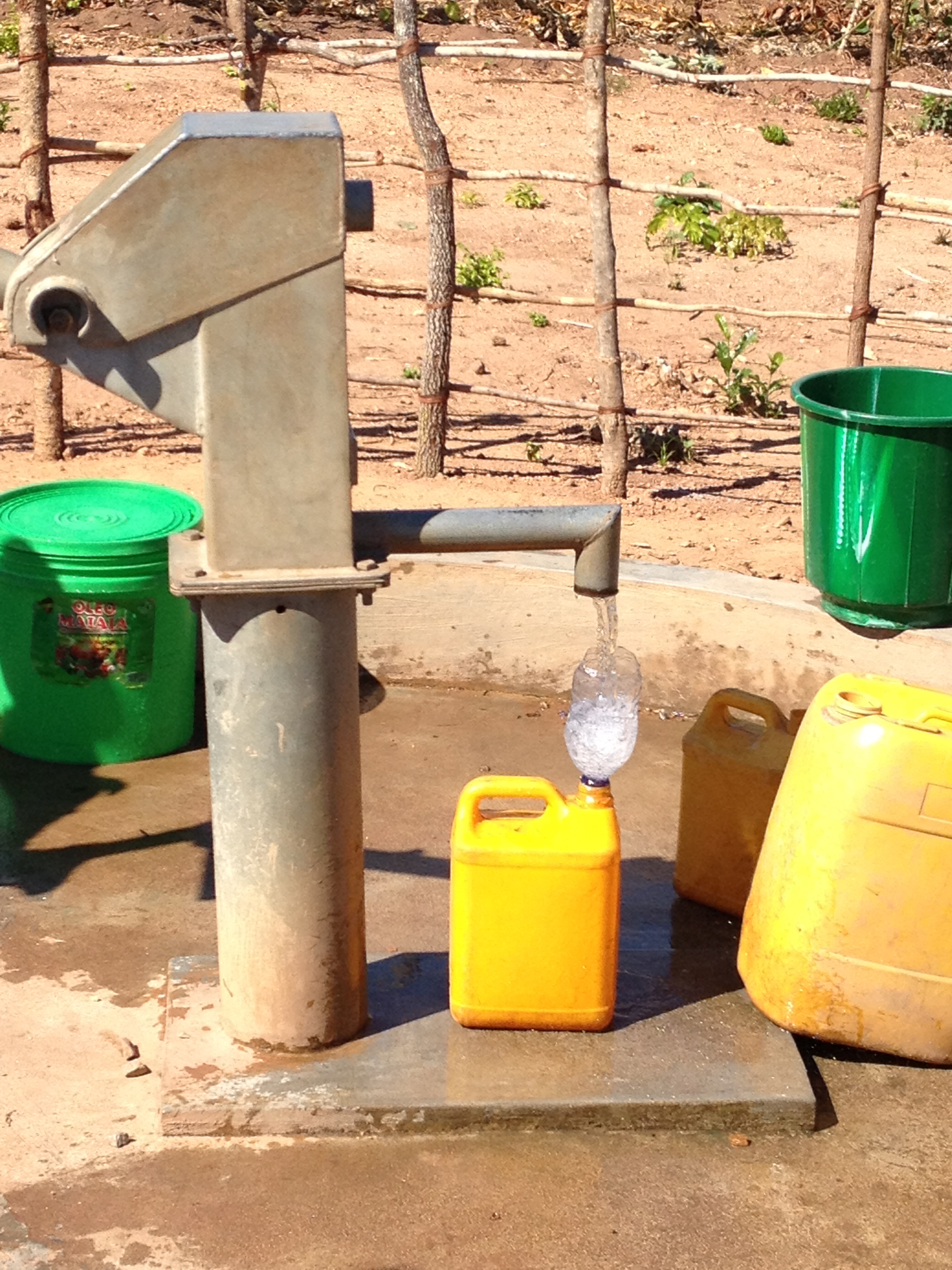 In this course, we will examine the planning process for the provision of water supply and sanitation (W&S) services in developing countries. The course is structured to provide both an engineering and policy perspective on the subject. Thus, the readings, class discussions, and assignments will require students to think as both an engineer and planner/analyst. The course will begin with a review of the state of water and sanitation services in different parts of the world and will raise the question of what constitutes “access” to water. Following this introduction, we will study the design of important W&S technologies. We will then examine the broader environmental and public health considerations in water W&S planning. Armed with an understanding of critical W&S issues and technologies, in the final section of the course we will examine key ideas/topics such as multiple-use water services (MUS), demand-oriented planning, service pricing, decentralization vs. centralization of W&S services, community participation in the planning process, and post-construction support.
Note: I plan to use a Google Glass and Google+ platform to support this course and transform the way in which the material is delivered.
Prerequisites: None (The CEE3104 prerequisite no longer applies. Students in BSE and Engineering, please “force add” the course on the first day of the class if you are unable to preregister.)
When: Tuesdays, 12:30pm to 3:15pm
Where: Wallace 407
UAP 5764: International Development Planning Studio
Concepts and practices in the field of international development have changed dramatically over the past few decades and even the past few years. This studio course is designed to prepare students with the most current approaches to the practice of international development as implemented by leading actors today. Students will learn the traditional project planning tools used by multi-lateral and financial institutions as well as alternative processes. They will be equipped with a variety of skills necessary for working on development projects in the real world.
Throughout the studio, elements of project development, planning, management, implementation, and monitoring and evaluation will be covered from the perspective of the prevalent development sectors. Emphasis will be placed on synthesizing and practicing skills through the preparation of a proposal for an international development project/program. During the studio, students will work on, present, and critique different elements of their project proposals. To complement the theoretical discussions, several studios will be led by experienced practitioners and academics in the field of international development.
Prerequisites: UAP 5764G International Development Policy and Planning
When: Thursdays, 12:30pm to 3:15pm
Where: Architecture Annex 200
The slideshow below shows the studio cohorts for 2012 and 2013. This studio is an intensive experience, but we do have some fun along the way.
VT Google Glass Team
In the past month, I was able to invite three colleagues to join me as a Google Glass Explorer. We were able to meet today to begin exploring ways in which we can use Glass to advance our research and teaching. We also plan to develop new Apps for Glass to support these activities.
In the picture below, Peter Sforza is in the middle and Brian Mathews is on the right. Tom Sanchez (not shown) is the fourth member of our Google Glass Team at VT.

Talking with Prof. Robert Siegle
At the 2013 Study Abroad Fair at Virginia Tech (VT), I was able to video Prof. Robert Siegle talking about VT’s Minor in 21st Century Studies and about the concept of post development. The latter discussion is connected with a seminar I’m teaching, where I’m using Google Glass to capture commentary on important topics by domain experts that is then introduced to students for discussion in a Google+ community dedicated to the seminar.
Video 1: Prof. Siegle talks about VT’s Minor in 21st Century Studies
Video 2: Prof. Siegle talks about Post Development
Global Forum on Urban and Regional Resilience
 Today, Virginia Tech formally announced the new Global Forum on Urban and Regional Resilience. The forum has been created to bridge research, policy, and practice in order to address risk and build resiliency at regional and urban scales in a global context. The formal description of the forum’s objectives and activities is provided in the document to the left.
Last week, I had the pleasure of learning more about this new Presidential Initiative while attending the 4th Conference on Community Resilience in Davos, Switzerland. During the conference, I was able to ask President Charles W. Steger a few questions about the Global Forum and witness the signing of a memorandum of understanding between Virginia Tech and the Global Risk Forum. I captured these events using Google Glass, and with the help of Tonya Pruitt developed the video below.
At the conference, I spoke on a panel focused on “Approaches to Infrastructure Resiliency in Different National Contexts.” In my presentation (below), I described the activities of the IITK-VT Partnership, and how they contribute towards the partnership’s vision of creating sustainable and resilient infrastructure services.
 Ralph P Hall