If you are interested in pursuing a PhD in statistics and would like to apply your skills to evaluation work in developing countries, I highly recommend you take a close look at the Laboratory for Interdisciplinary Statistical Analysis (LISA) in the Department of Statistics at Virgina Tech. Please see the flyer below for more information about being an “on-the-ground” statistician for LISA.
Category: General Interest
A Week in Bellagio
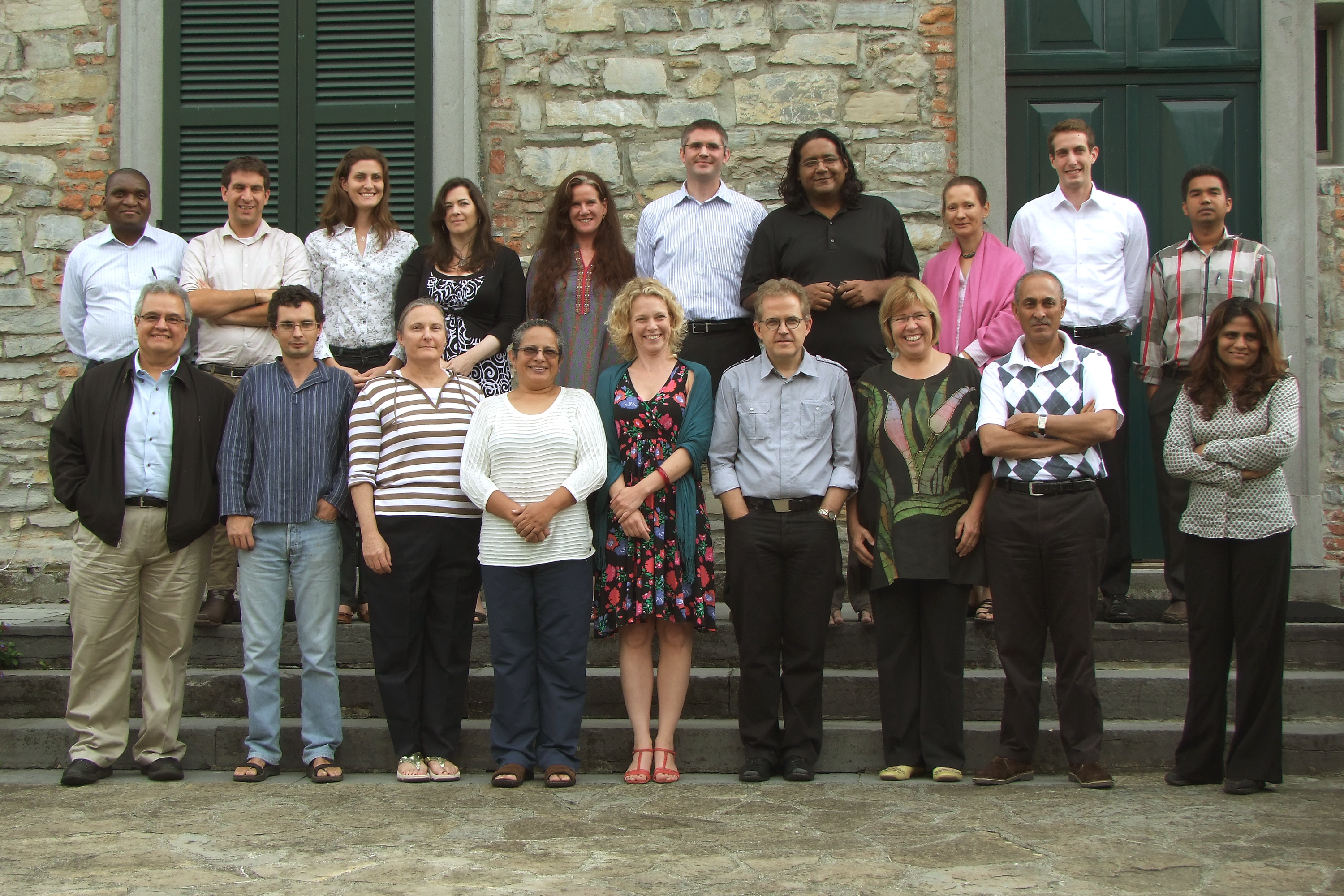
I write this post sitting in a beautiful villa at the Rockefeller Foundation’s Bellagio Center in Italy. During this past week, I have taken part in a workshop on Multiple-Use Water Services (MUS) attended by some 19 practitioners and academics from around the world. The objectives of the meeting were to: develop a common understanding and framework for MUS; elaborate a common direction and goal for the next five years around MUS; elaborate strategies for the MUS Group and its core members to reach this success; elaborate how best MUS can be moved forward; and develop a broad road-map for the way forward and clear commitments for action among the members.
The workshop was facilitated by Dr. Jürgen Hagmann and Dr. Joe Ramaru – professional facilitators from the Institute for People, Innovation, and Change in Organisations (PICOTeam) in South Africa. I mention the PICOTeam because of the superb facilitation they provided. I learnt much from watching how they worked with the group and managed the workflow as the meeting progressed.
The workshop participants developed a comprehensive agenda that will be developed further in the coming months. What was encouraging was the emphasis given to the need for a robust evidence base from which further MUS activities and programs can be built.
In addition to the workshop, we had the opportunity to meet many of the Rockefeller Fellows in residence at the Bellagio Center. I had the privilege with speaking with Geoffrey West, Ellen Silbergeld, and David Freedman and learning about the research and writing projects they are pursing at the center.
Below are several photos from the workshop and grounds of the Bellagio Center, which is now my new favorite place to work in the world. The location has a unique way of relaxing and freeing the mind.
Bern Meetings – July 2-3, 2012

To conclude the first module of the 2012 Sustainable Europe summer course, the students and I traveled to the city of Bern to discuss the notion of sustainable development with senior government officials and a researcher at the University of Bern. Our first meeting with U.S. Ambassador Donald Beyer, Susan Elbow (Deputy Chief of Mission), and Alex Daniels (Press and Cultural Attaché) provided the students with an excellent opportunity to learn about the close diplomatic and economic relationships that exist between the U.S. and Switzerland. This is the second time Ambassador Beyer has welcomed VT/UVA students taking the summer program and I believe this meeting/conversation is one of the highlights of the course. I encourage you to explore each of the students’ blogs to read more about the questions they asked during this meeting.


Our second meeting with Stefan Ruchti (Federal Department of Foreign Affairs), Daniel Wachter (Head of the Sustainable Development Section, Federal Office for Spatial Development), Daniel Dubas (Federal Office for Spatial Development), and Lorenz Kurtz (Federal Department of Foreign Affairs) was held at the impressive Bernerhof building. The topic of the meeting was the Swiss Government’s Sustainable Development Strategy. Having spent more than a decade thinking deeply about sustainable development, I was particularly interested in hearing Daniel Wachter’s presentation on how sustainable development is being operationalized in Switzerland. During the meeting, the students had an opportunity to apply the knowledge they had developed during the first module of the course by engaging Stefan, Daniel, Daniel, and Lorenz in a conversation about strategies to promote sustainable development. This conversation proved to be a valuable way to connect the theories/concepts the students had researched to the real-world challenges of creating a national sustainable development strategy.

Our final meeting was held at the University of Bern, where Fabian Streiff (a PhD candidate in Economic Geography) provided a detailed overview of the photovoltaic industry in Europe and Switzerland and explored the potential expansion of this industry domestically in the context of the Swiss Cleantech Strategy. Following this meeting, we toured the University of Bern and I had the opportunity to speak with Ellen Krause (Executive Director of the International Office, University of Bern) and Zoë Ghielmetti (Executive Director of International and National Relations, University of Bern) about the new student exchange agreement established between Virginia Tech and the University of Bern. This agreement enables students from each institution to study at the partner institution while receiving academic credit at their home institution.
Book Review: Cents and Sustainability
I recently published a review of Cents and Sustainability: Securing Our Common Future by Decoupling Economic Growth from Environmental Pressures, in the Journal of Planning Education and Research (JPER), June 2012, Vol. 32, pp. 240-242.
Textbook Wins at Green Book Festival
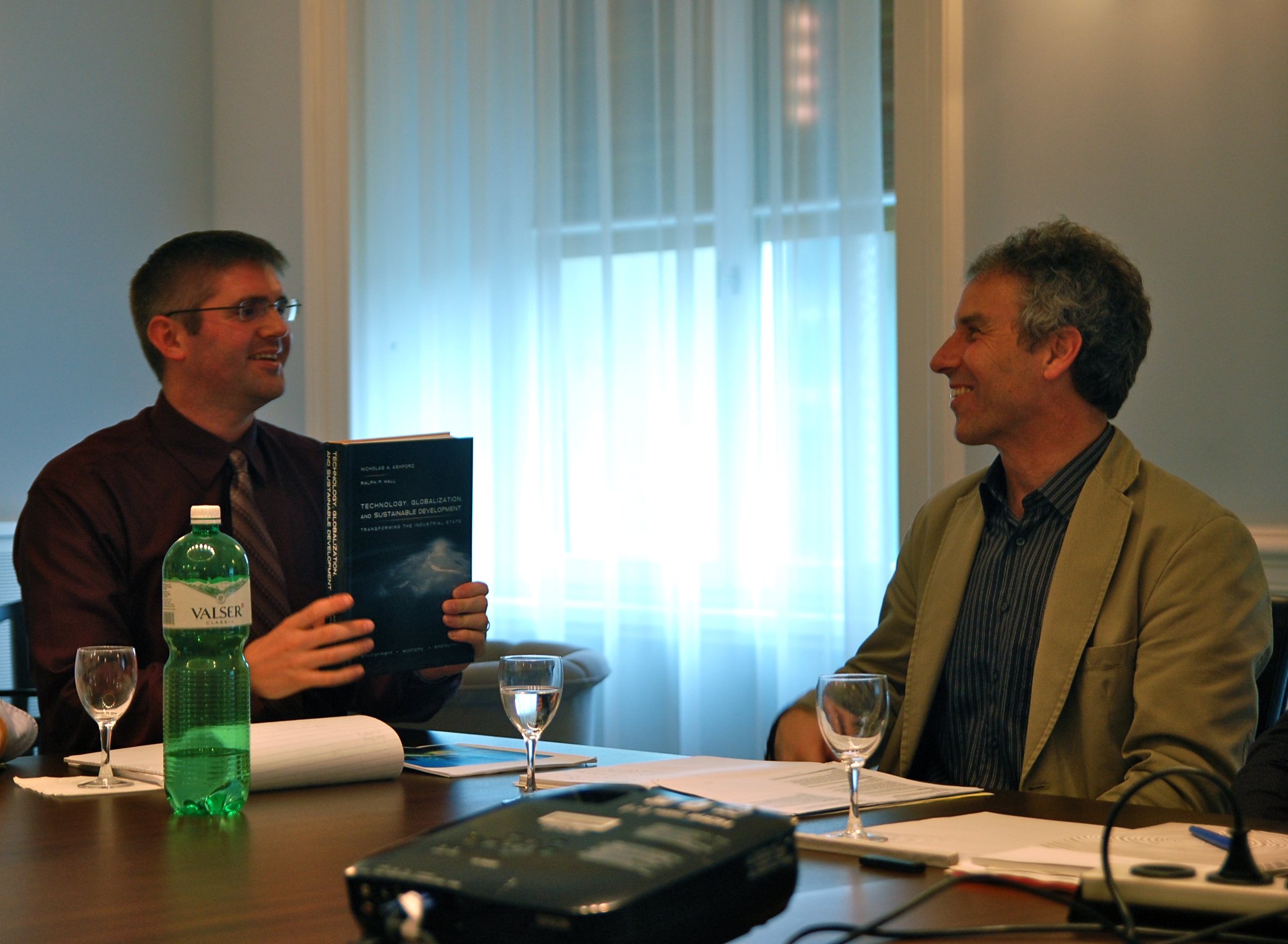
The textbook that Nicholas Ashford and I co-authored – entitled Technology, Globalization, and Sustainable Development: Transforming the Industrial State – recently won the best “Business” book category at the 2012 Green Book Festival. For more information about the award, please go to the Green Book Festival website: http://www.greenbookfestival.com/.
Congratulations Sarah Lyon-Hill!
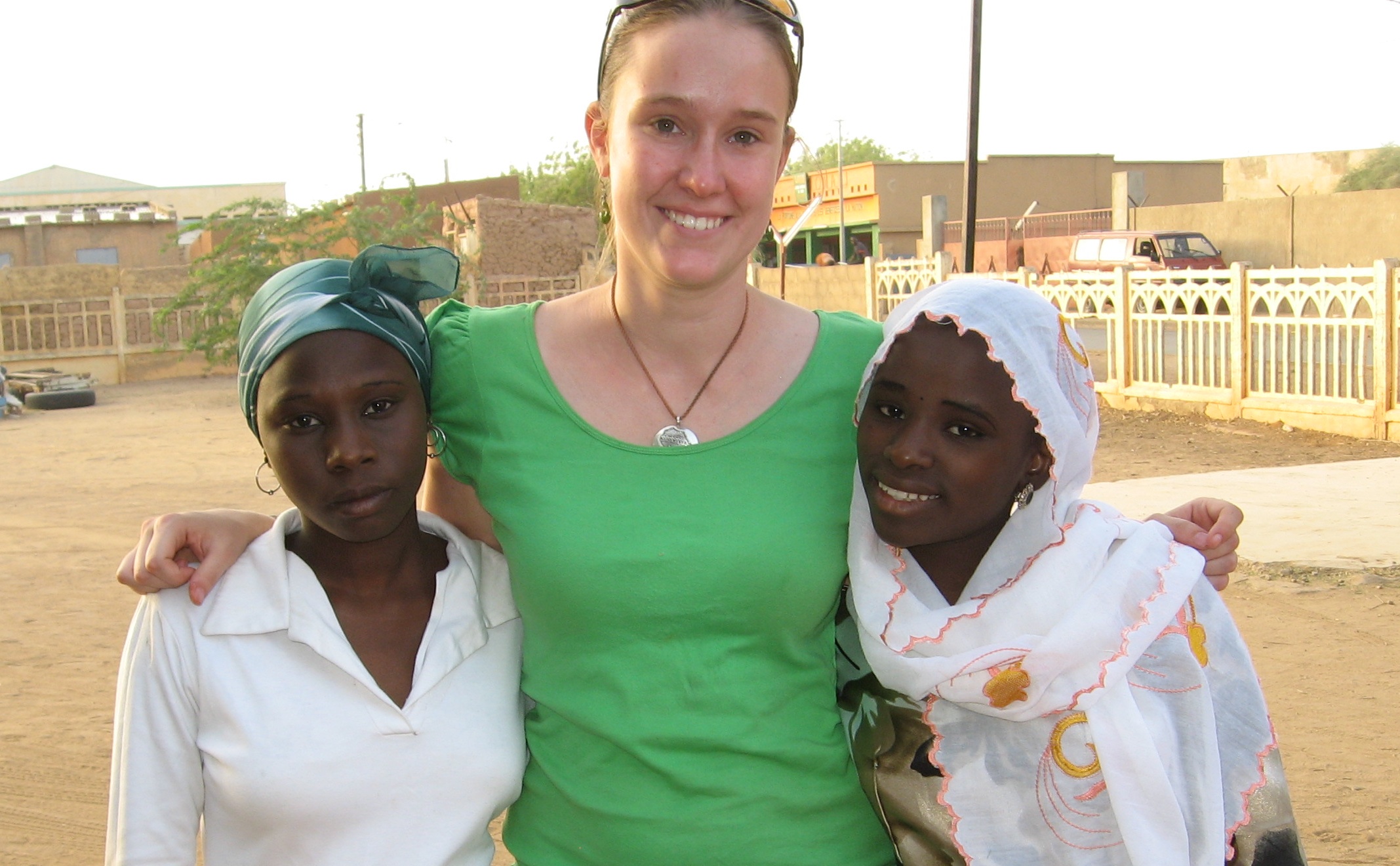
On Thursday, May 10th, Master’s International student, Sarah Lyon-Hill, successfully defended her thesis entitled Building Governance Capacity in Rural Niger: A Study of Decentralization and Good Governance Policy as Experienced in a Local Village. Sarah served as a municipal and community development volunteer for Peace Corps in Niger between 2009 and 2011. Her experience as a Peace Corps volunteer inspired her thesis topic on the challenges facing school governance in rural Niger.
For her research, Sarah interviewed members of one rural community involved in local primary school governance to gain insight on community members’ perceptions concerning national public school decentralization policy. She used data gathered from these interviews, coupled with data gathered from an analysis of program and policy documents, to compare current school practices against the expectations outlined in Niger’s national policy and goals. Key findings included limited policy implementation at the local level accompanied by a lack of state capacity, accountability and responsiveness to local school needs on the part of central and regional government. Interviewees perceive a
decline in education quality due to these reforms and a sense of powerlessness from the community. Community leadership, development of participatory public space, and trust building, could improve local education capacity to a certain extent; however, strong central government that provides additional resources and builds the capacities of school staff is necessary. Sarah plans to condense and revise her thesis for publication this summer and will pursue similar research in the Planning, Governance and Globalization doctoral program this fall.
I served as a member of Sarah’s thesis committee, along with Max Stephenson (committee chair) and Laura Zanotti.
Congratulations Julie Erickson!
On Friday, April 27, Master’s International student, Julie Erickson, successfully defended her thesis entitled Decentralization and Hospital Governance in Rural Paraguay. Julie served as a municipal development volunteer for Peace Corps in Paraguay between 2008 and 2011. Her experience as a Peace Corps volunteer inspired her thesis topic on the challenges facing hospital governance in rural Paraguay.
For her research, Julie interviewed members of two local health councils in distinct rural towns to gain insight on member understanding of council functions and their perceptions of their role as council member. She used data gathered from these interviews, coupled with data gathered from an analysis of council documents, to compare current council practices against the expectations outlined in Paraguayan law. She focused her analysis on three areas of governance: civic participation, accountability and transparency. Key findings included a weak system of downward accountability within the council and a lack of economic and human resources available to the council to effectively carry out their responsibilities, as outlined by the central government. Julie plans to present her findings at the first annual National Peace Corps Association Conference in Minneapolis this summer.
I served as a member of Julie’s thesis committee, along with Max Stephenson (committee chair) and Ioannis Stivachtis.
Congratulations Laura Zseleczky!
On Friday, April 20, Laura Zseleczky successfully defended her masters thesis entitled Gender and Pest Management in Ghana: Implications for the Introduction of an IPM Program for Tomato. I had the pleasure of serving on Laura’s thesis committee with Dr. Maria Elisa Christie (committee chair) and Prof. Tim Luke.
Laura’s research identified gender-based constraints to, and opportunities for, the introduction of an Integrated Pest Management (IPM) program for tomato based on a case study of tomato farmers in the town of Tuobodom in the Brong Ahafo Region of Ghana. Her study seeks to identify the knowledge, practices, perceptions, and access to resources of men and women tomato farmers in Tuobodom, specifically with respect to pesticides and pest management. Laura used a mixed methods approach to combine quantitative and qualitative methodologies including focus group discussions, household interviews, participatory mapping, field visits, key informant interviews, participant observation, and a survey. Key findings in the area of health and safety, markets and the tomato value chain, and information and training reveal general and gender-specific issues that an IPM program should address when working with farmers to develop an effective and sustainable IPM package for tomato in this area. The results from her research also demonstrate the importance of gender analysis in identifying context-specific gender issues. For example, while her research confirmed that men’s roles in tomato production place them at higher risk of exposure to pesticides, her findings challenge the assumption that women’s reproductive roles (e.g., food preparation, caring for the sick, etc.) make them more aware of the risks of pesticides. In the coming months, Laura plans to develop one or two journal articles to summarize the rich and important findings of her work.
FLOW – For Love of Water
This Wednesday (April 25th) at 7pm, the International Relations Organization of Virginia Tech (IROVT) will be showing the documentary FLOW: For Love of Water. After the documentary, I will lead a conversation with participants on the global water crisis and what options exists to address the emerging problem.