Global Forum on Urban and Regional Resilience

Global Forum_Page_2Today, Virginia Tech formally announced the new Global Forum on Urban and Regional Resilience. The forum has been created to bridge research, policy, and practice in order to address risk and build resiliency at regional and urban scales in a global context. The formal description of the forum’s objectives and activities is provided in the document to the left.

Last week, I had the pleasure of learning more about this new Presidential Initiative while attending the 4th Conference on Community Resilience in Davos, Switzerland. During the conference, I was able to ask President Charles W. Steger a few questions about the Global Forum and witness the signing of a memorandum of understanding between Virginia Tech and the Global Risk Forum. I captured these events using Google Glass, and with the help of Tonya Pruitt developed the video below.

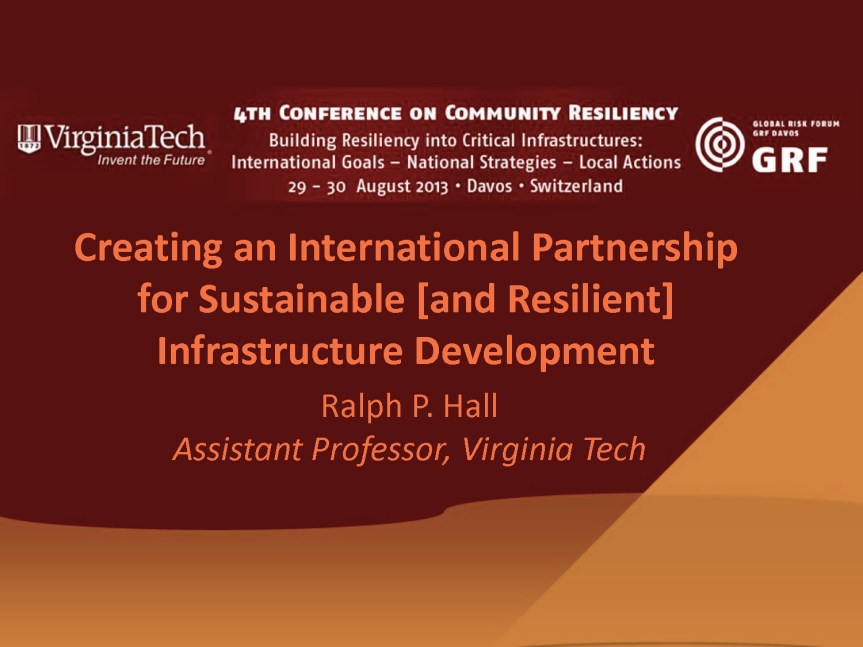
At the conference, I spoke on a panel focused on “Approaches to Infrastructure Resiliency in Different National Contexts.” In my presentation (below), I described the activities of the IITK-VT Partnership, and how they contribute towards the partnership’s vision of creating sustainable and resilient infrastructure services.

Annual2013_HallRP

Anticipating Glass

It has been only a week since I received notification that my Google Glass device was ready to be picked up, but it feels much longer. Over the next several months, I intend to use Glass to transform the way I approach my teaching at Virginia Tech (VT). I also plan to study the process of teaching with Glass in an effort to document what worked and what didn’t. In this post, I thought I’d try to capture my past week and provide some insight into the rapid learning curve I’m climbing.

Purchasing Glass

After being accepted into the Glass Explorer program in March, I realized that I lacked the personal funds to indulge in such a device ($1,500 + tax) and began searching for research funds. I was fortunate to receive encouragement from the VT Center for Innovation in Learning (CIL) to develop a proposal that captured my desire to augment or perhaps fundamentally transform – I think the difference is a matter of perspective – the way I teach. My proposal was accepted by CIL and I was awarded a research grant to purchase Glass, travel to collect the device, and purchase a smart phone and data plan to which the device will be tethered. With only a two-week window to purchase Glass (after receiving the Google notification), I needed to move quickly. One immediate challenge was how to make the purchase without a research project/fund officially in place. A related logistical problem was the rate at which the available appointments to collect the Glass device in Los Angeles, San Francisco, and New York were being taken. It was not possible to make an appointment without making a purchase.

Creating a research fund is no quick task – especially at the end of the academic fiscal year. Fortunately, we have a great team of professional staff within the School of Public and International Affairs (SPIA) who were able to help me quickly navigate and obtain the necessary approvals to start spending funds while the research account is established over the next couple of weeks.

The purchase of my flight to New York presented another hurdle. Faculty at VT are required to obtain approval before making any travel arrangements, which meant another form that needed to be completed and processed.

I mention the above to provide some insight into what was an intense couple of days that consisted of numerous emails and phone calls. These activities were also complicated by the need to set up a smart phone in time for my appointment on Friday, June 28.

Obtaining the Smart Phone

What I first considered to be a simple task turned out to be quite complex from an administrative and technological perspective. To obtain a cell phone at VT, an Interdepartmental Communication Request (ICR) needs to be made by an authorized individual. Since the location of my research budget was somewhat in flux at this time, this task led to an extensive series of communications that were complicated by my ongoing research (informed by several Google+ communities related to Glass) into what smart phone and data plan I should obtain. In the end, I settled on a Droid Razr Maxx HD smart phone with a calling plan + unlimited data from Verizon. One reason for selecting a Droid smart phone was its compatibility with Google software and the “MyGlass” App that enables Glass Explorers to fully utilize the functionality of the device.

MyGlass

Connecting with Google+ Communities

As mentioned above, there are numerous communities on Google+ that are dedicated to the Glass device. So far these forums have contained information that has answered all of my Glass-related questions. I have also found numerous individuals who have similar ambitions to use Glass in an educational setting (most of whom are members of the “Google Glass in Education” community) and I’m now following their activities.

Obtaining IRB Approval

Another task accomplished this past week was to obtain approval from VT’s Institutional Review Board (IRB) to begin the research project using Glass. While I could have waited to obtain this approval until after I collected the device, I wanted to be able to begin my research project as soon as I receive my Glass. In fact, I’m hoping to record a conversation with the Google employee I meet with to ask him/her a few questions related to which technology platform I should use to support my seminar this fall. To obtain IRB approval I completed a 14-page research protocol that outlines in detail how I plan to use the Glass device and whether this poses any risk to those involved with the project. Given the emergent nature of this research, this was a challenging document to prepare and I suspect I will need to revise my research protocol as I begin to understand how the technology can really be used in practice.

Obtaining Contact Lenses

Since the current version of Glass does not support prescription lenses, and I wear glasses, I decided to see if I could wear contact lenses. I have been wearing a pair of contacts for the past few days and so far I’ve noticed a decline in my vision due to astigmatism in both eyes. Thus, I’m not sure if I will be able to make this transition (which is not covered by my research funds) and may have to wear Glass on top of my prescription glasses. I will provide an update on this situation next week.

Looking Ahead

With most of the tasks related to establishing this project either completed or in process, my attention can now focus on the research itself. I have refrained from explaining my proposed research project in this post since I plan to let the research speak for itself when it begins. I hope this teaser brings you back to my website over the coming months to learn more about what we hope to do at VT with Google Glass.

Congratulations Yakhya Diagne!

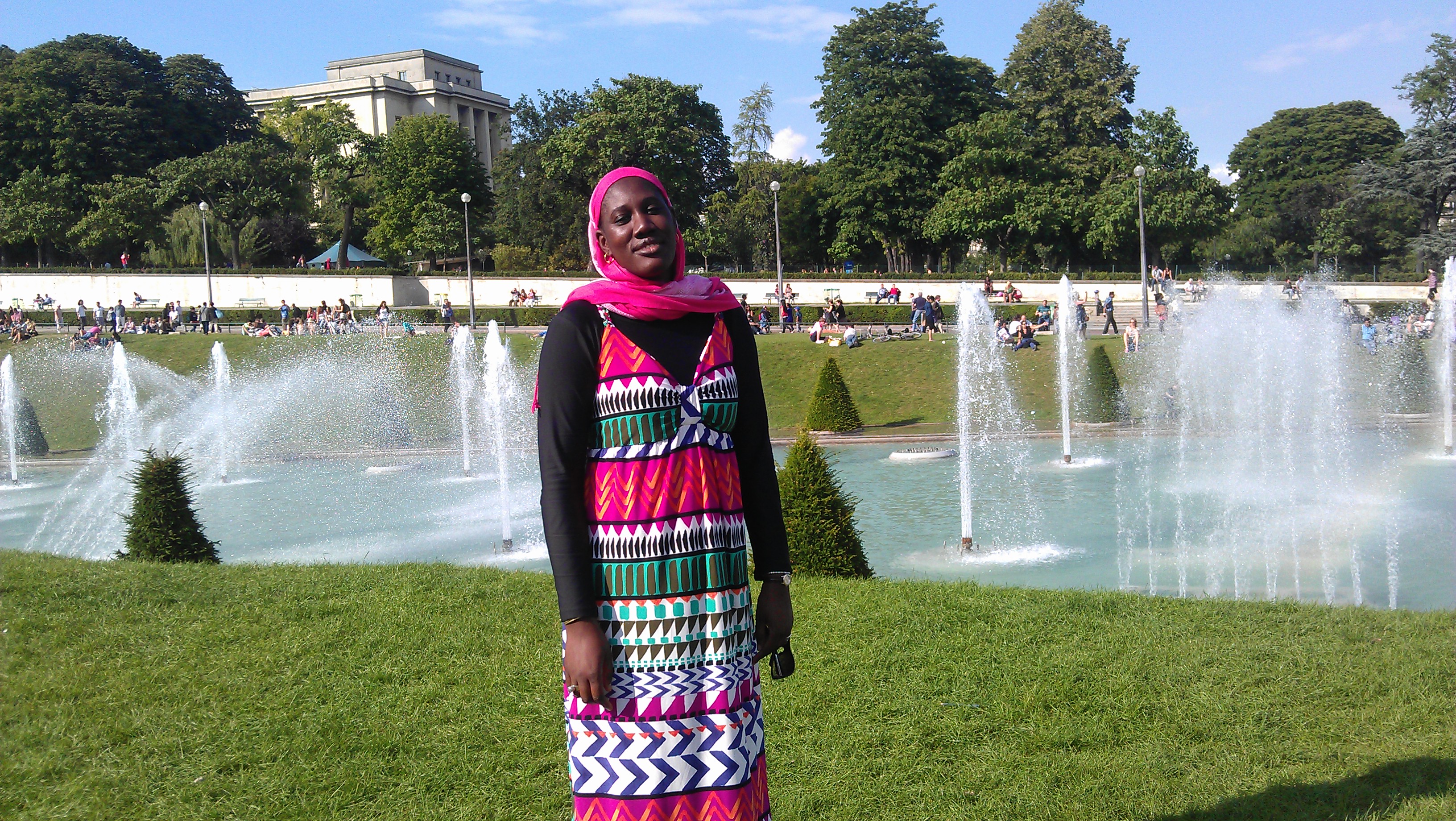
In May 2013, Yakhya (Aicha) Diagne successfully defended her thesis entitled “Planning for Sustainable Development in Senegal.” Aicha’s research focused on understanding the complex institutional, legal, and political aspects of sustainable development planning in Senegal and identified options to advance the national planning framework to promote more sustainable forms of development. Aicha received a 2012 ThinkSwiss research scholarship that enabled her to undertake part of her research at the UN in Geneva, Switzerland.Aisha_Paris

Prior to coming to Virginia Tech, Aicha led the Office of Legal Affairs, Communication, Monitoring, and Evaluation in the Senegalese Department of Environment and Classified Establishments. She also managed the Technical Permanent Secretary of the Senegalese National Commission of Sustainable Development from 2008 to 2010.

Aicha is currently undertaking an internship at the West African Development Bank in Lome, Togo. After completing the internship, she will begin a position in the Ministry of Environment and Sustainable Development in Senegal.

I served as the chair of Aicha thesis committee, along with committee members John Browder and John Randolph.

Congratulations Emily Van Houweling!

On March 29, Emily Van Houweling successfully defended her dissertation entitled “Gender, Water, and Development: The multiple impacts and perspectives of a rural water project in Nampula, Mozambique.”

Emily was a doctoral candidate in the Planning, Governance, and Globalization (PGG) program at Virginia Tech, and over the past several years has become a highly valued team member on two large-scale research projects in Senegal and Mozambique. The slide show below provides a few pictures of Emily in the field.

This slideshow requires JavaScript.

Development organizations claim that rural water projects deliver a wide variety of benefits – from poverty reduction to women’s empowerment. Emily’s research explores these claims in the context of a rural water project (RWP) in Nampula, Mozambique. From August of 2011 to July of 2012, Emily spent 11 months conducting ethnographic research in five communities where handpumps were installed as part of the RWP. The goal of her research was to describe how the water project unfolds “on the ground” from the perspective of men and women in Nampula, and illuminate the social and gender related impacts of the project that are not captured in standard evaluations. Emily’s research contributes to theoretical debates about the relationship between gender, water, and development, and also offers practical suggestions for designing water projects that are more equitable, culturally sensitive, and sustainable.

I served as the chair of Emily’s dissertation committee along with committee members Maria Elisa Christie, Keith Moore, and Brett Shadle.

Congratulations Joseph Arcella!

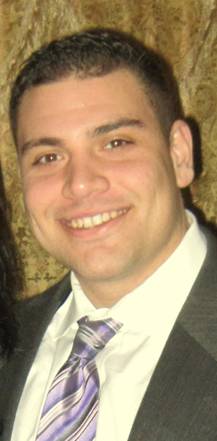
image002On Monday, March 4, Master’s Civil Engineering student, Joseph Arcella, successfully defended his thesis entitled “A Comparative Analysis of Current Performance-Based Maintenance Procurement Methods to Improve Virginia Highways.” Joseph’s research was conducted out of the Center for Highway Asset Management Programs (CHAMPS) at Virginia Tech. Funding was provided by the Virginia Department of Transportation’s Maintenance Division in an effort to help improve their current performance-based “Turnkey Asset Maintenance Services” (TAMS) contracts used on the interstates.

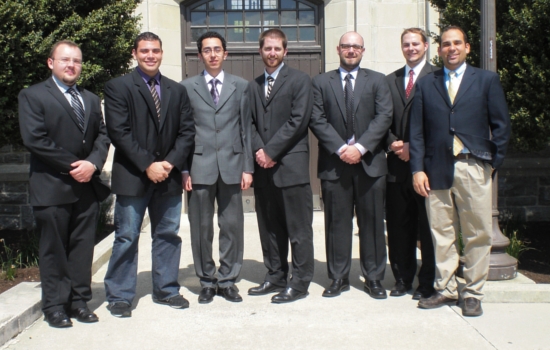
Left to Right: Berk Uslu, Joe Arcella, Omidreza Shoghli, Joe Plummer, Dimitrios Sideris, Grant Howerton, Carlos Figueroa
CHAMPS Researchers. Left to Right: Berk Uslu, Joe Arcella, Omidreza Shoghli, Joe Plummer, Dimitrios Sideris, Grant Howerton, Carlos Figueroa

For his research, Joseph studied the current state-of-practice in performance-based highway maintenance both domestically and internationally. The research was completed in two phases. Phase one involved a mini-scan study of the highway maintenance industry to identify the current practices in performance-based maintenance contracting (PBMC). This phase gathered information on domestic and foreign agencies currently using performance-based maintenance on highways. Phase two used the mini-scan study information to build, compare, and analyze agency timelines (i.e., VDOT to others). Timelines included major milestones at each agency; milestones which enabled innovation in the field of performance-based contracting. The purpose of comparing VDOT to other agencies was to provide VDOT with industry best practices as well as recommendations for future contract evolutions. Timelines were constructed for Florida DOT, Main Roads of Western Australia, England’s Highways Agency, and New Zealand Transport Agency. Connection links were made between VDOT and the other four agencies based on similarities in procurement laws and maintenance milestones. The timeline linkages and collection of information on benefits associated with PBMC (compared to traditional method-based maintenance) were used to make five recommendations for VDOT’s future maintenance program. VDOT recommendations were: Use performance-based contracting on secondary roads, use area-wide contracts to cover addition facilities, shift VDOT TAMS focus from lowest-cost to a best-value approach similar to England’s Managing-Agent Contractor, devise a strategic network of highways to prioritize maintenance, and use key performance indicators to align the Maintenance Division’s and  VDOT’s objectives. Recommendations also considered the current restrictions imposed by Virginia procurement laws.

I served as a member of Joseph’s thesis committee, along with Jesus M. de la Garza (committee chair) and Michael Garvin.

New Graduate Certificate

CertificateI am pleased to announce the launch of a new graduate certificate at Virginia Tech in Global Planning and International Development Studies.

The certificate builds on Virginia Tech’s internationally recognized, 30-year specialization in international development planning and an innovative partnership between faculty in programs such as Urban Affairs and Planning, Public Health, Geography, and Building Construction.  The certificate seeks to prepare graduate students in multiple disciplines to engage in meaningful global professional leadership and academic positions to systematically tackle and resolve these global planning and development issues.

The certificate may be taken in conjunction with most of Virginia Tech’s masters and doctoral degree programs.