
This morning, students taking our joint WASH course in Malawi presented their final presentations to a group of key stakeholders and faculty at Mzuzu University. The session was introduced by Dr. Loveness Kaunda, the Deputy Vice Chancellor of Mzuzu University. I will post the presentations from this session soon, along with the briefing documents the students prepared to capture the key findings from their research. I was extremely impressed by what the students were able to develop in such a short period of time. More to follow on this.
Author: Ralph Hall
“Experience” WASH in Malawi
Having reached the halfway point of our time in Malawi, the students are now fully immersed in their WASH-related research projects. When we designed the course, we decided to make research a central part of the student experience. Having spent a day with each of the research groups this week I can now see how important this experiential component of the course is for building a deep understanding of the WASH challenges facing communities in Malawi. The research projects are logistically and technically challenging, which means students need to work well as a team, learn new skills and knowledge, be proactive, and manage the enviable problems that come with real-world research. This week has also been characterized by the Mzuni students rising to the occasion and taking lead roles in the research projects. Their understanding of local communities and organizations and their mastery of local dialects has proven to be critical for each project. It has also been great to see the U.S. and Malawian students unite around a common research goal and work hard to advance the data collection process.
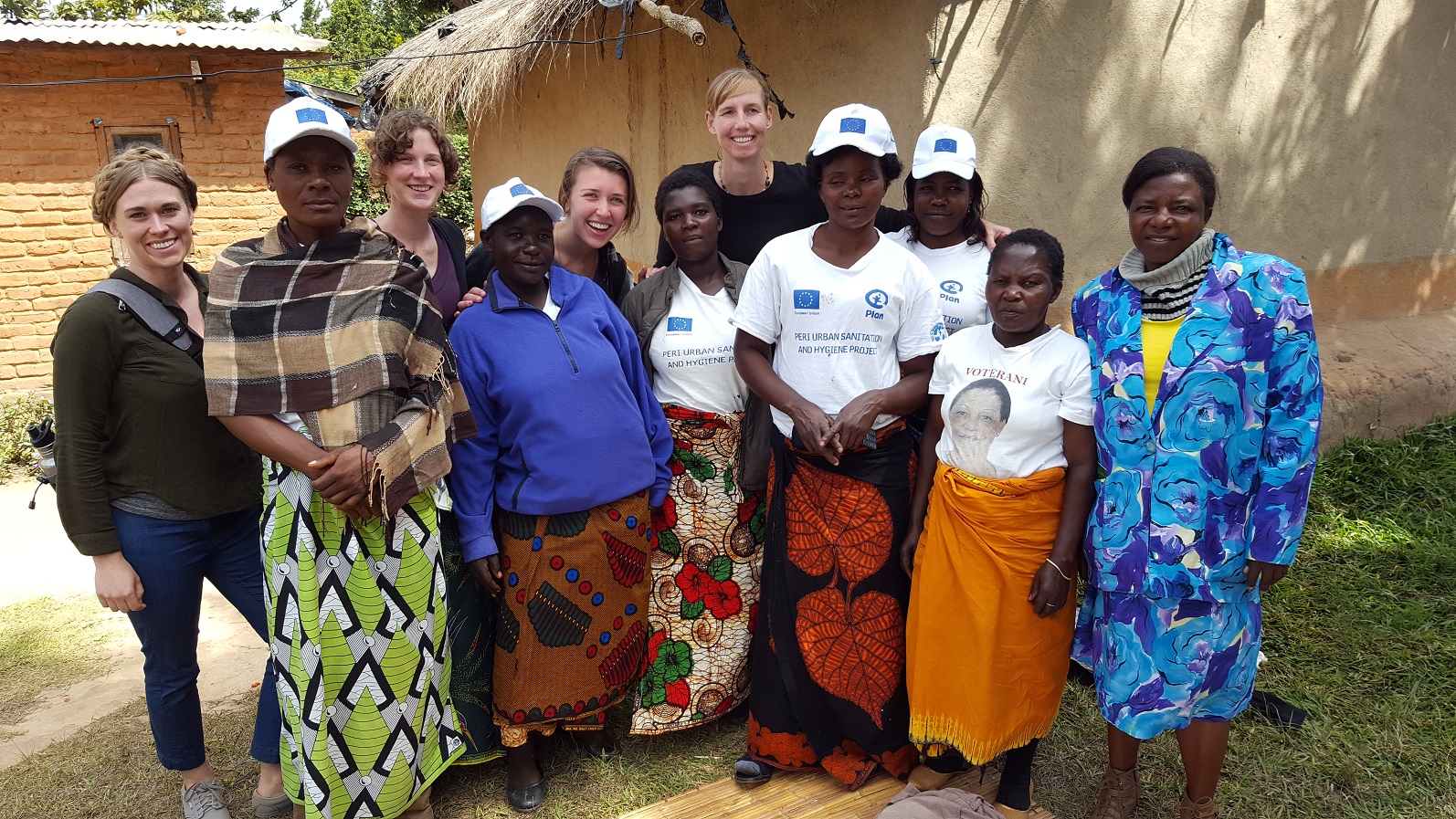 Over the past few days the three groups have become known as the Sanitation, Mapping, and Fish teams in relation to their research projects. I have briefly described each project below and have provided a few pictures from the work of each group.
A hygiene and sanitation assessment of public sites. The Sanitation team is testing public latrines in schools, public transportation sites, medical facilities, and markets for E. coli contamination and administering short interviews to assess the sanitary conditions and use of the public facilities. The team plans to assess ten public sites this week and process up to 150 samples taken from various pre-determined locations in and around a sanitation facility. As is typical in a low resource setting, these facilities can be unclean and in a dire state of repair. But this was not always the case. The study of these facilities is providing students with a clear sense of the public sanitation needs across the city. It is also requiring them to visit locations they would never have seen if we only spoke about public sanitation in a classroom setting.
Mapping the water and sanitation services in a community. The Mapping team is undertaking participatory mapping to understand the water and sanitation services in a community near Mzuzu University. The students are leading these mapping exercises and collecting GPS data that will be analyzed and integrated into one or more maps. These maps can then be used to identify the “gaps” between water needs and existing services to help the community engage in the planning of future water services. During their first day of surveying, it was clear that the data collection instruments were too detailed and needed to be revised/shortened. This experience reinforced the importance of piloting instruments before the full data collection effort begins, a valuable lesson for the students to learn.
Risk of fish contamination from the boat to the market (Nkhata Bay to Mzuzu). The Fish team is undertaking an assessment of the fish supply chain from Nkhata Bay to Mzuzu. This is perhaps the most logistically demanding project, which begins around 3am as the fishermen leave Nkhata Bay and ends at Mzuzu market some 50km away where the fish caught that morning are being sold. The students are testing the fish, the fish handlers’ hands, transport vehicles, and fish containers for E. coli, and are undertaking interviews with fish handlers along the fishing, transportation, and marketing chain. This project is characterized by intense periods of activity and periods of waiting – such as when fishermen are fishing on the lake. Perhaps, the busiest phase of the research is when the fishermen return to shore and the middle men/women rush to purchase the fisherman’s catch. The students wisely developed relationships with the fishermen to ensure that they can sample their fish when they return to shore and before the fish start their trip to Mzuzu market.
While we intended the WASH course to be experiential, I underestimated the importance of this aspect of the course, which is where much of the learning seems to be happening. The course provides a great example of the “hands on, minds on” principle that Virginia Tech is working to integrate across the institution. My hope is that we (VT) can develop a way – through initiatives such as Beyond Boundaries, Destination Areas, and InclusiveVT – to make this type of off campus experience open to all students attending the university. There are clearly financial and resource implications to realizing this vision, but the value to students is certainly worth the effort.
WASH Course in Malawi – Week 1
We have now complete the first week of our joint WASH study abroad course in Malawi. After starting in Lilongwe, we travelled to Mzuzu where we will be based for the remainder of the course. 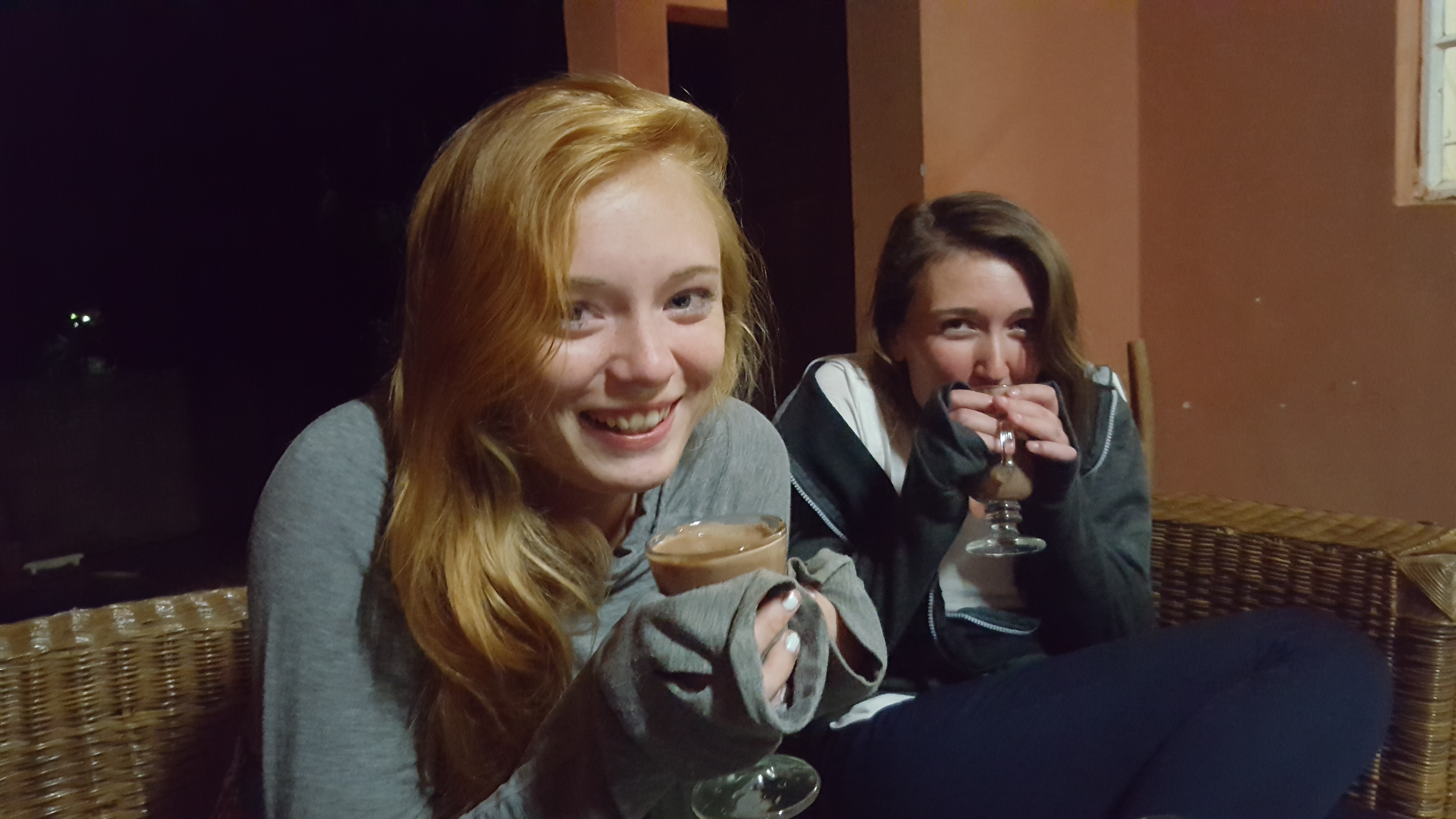 The students are settled in Joy’s Place and seem to be enjoying the relaxed environment and great food they serve. Interesting, we all underestimated how cold it can be at night, but a nice warm cup of hot chocolate seems to help.
The course is based at the Mzuzu University Centre of Excellence in Water and Sanitation and the Mzuzu SMART Centre, which have all the facilities we need and are surrounded by low-cost water and sanitation technologies that are being designed and tested by staff at the centres. This immersive environment is the perfect place to be learning about WASH in Malawi. We are also fortunate to have the technical staff on hand to answer any questions we have about these technologies.
The focus of this first week has been on introducing students to the water and sanitation situation in Malawi and the three research projects they will be undertaking over the next 1.5 weeks. The research will begin tomorrow and I will post a few pictures from each of the research teams over the next week. Our objective is for the students to present their findings to key stakeholders on July 28, after which they will be tasked to develop an academic journal article to document their findings. We have challenged the students to take on real and important research, and they have risen to this challenge by diving into their projects with energy, enthusiasm, and the focused needed to collect high quality data. I have also been very impressed by the way the students from the three universities are working as one cohesive group, which we hope will promote cultural exchange and build friendships that will last beyond the course.
Since we are based at Mzuzu University (Mzuni), we also invited several Mzuni faculty to provide guest lectures related to their areas of expertise, and had a CLTS training session provided by World Vision who have an extensive range of projects underway in Malawi.
The WASH Course Begins in Lilongwe
On July 10, 15 students from Virginia Tech and Denver University (DU) arrived in Lilongwe, Malawi, to join students from Mzuzu University (Mzuni) for a joint WASH (Water, Sanitation, and Hygiene) course. I am currently teaching this course with Dr. Rochelle Holm (Mzuni), Dr. Mavuto Tembo (Mzuni), and Dr. Emily Van Houweling (DU).
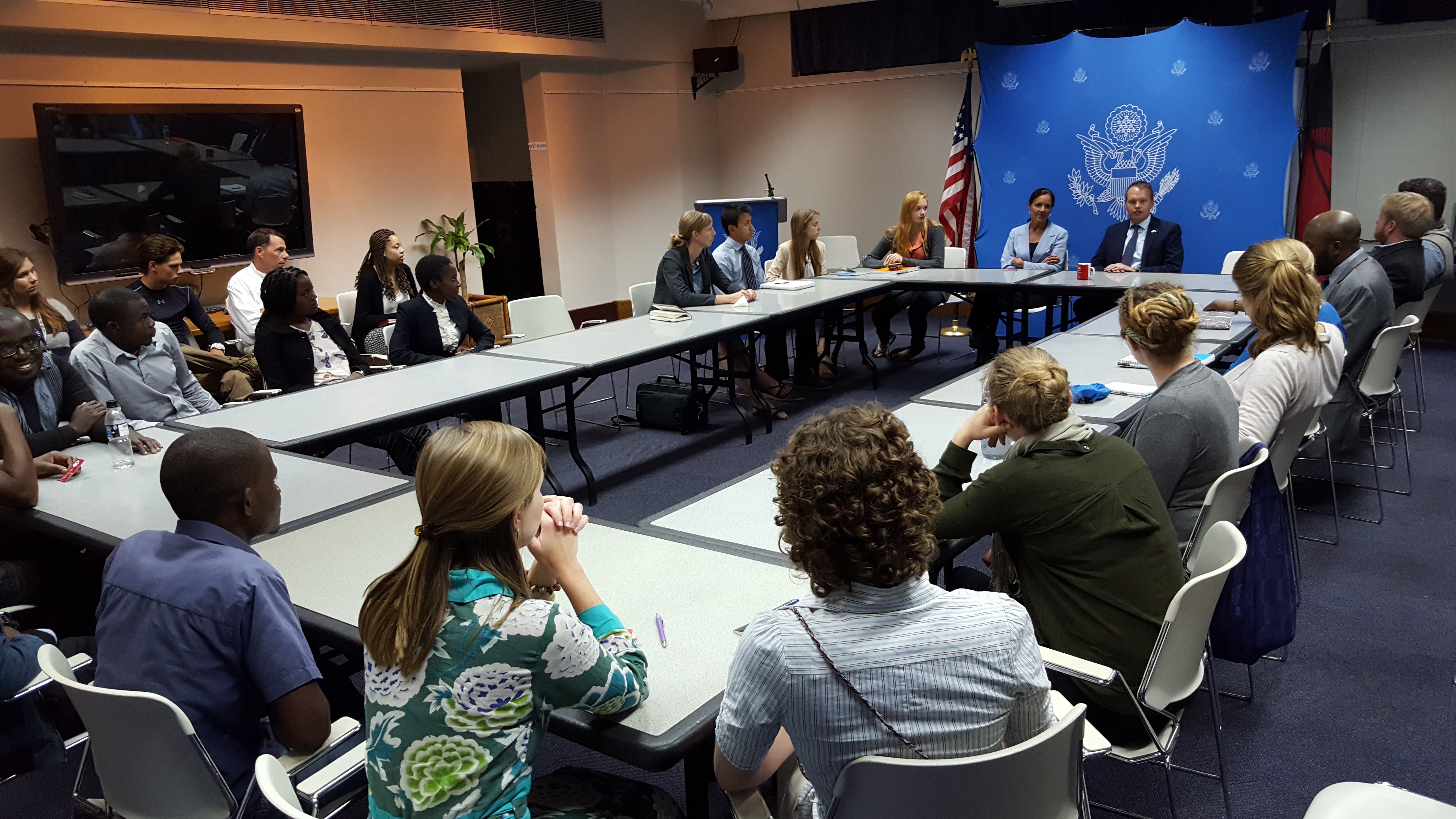
For the first two days of the course we held meetings with key officials in the capital, Lilongwe, beginning with U.S. Ambassador Palmer who described the strong U.S.-Malawi relationship. Ambassador Palmer outlined the various programs the U.S. government supports to spur economic development and help the 6.5 million Malawians at risk from flooding and drought. She also emphasized the unique opportunities that exist for U.S. companies to invest in Malawi. It was interesting to learn that Malawi (one of the poorest countries in the world) is one of a few countries that receives support from all the main U.S. foreign assistance programs.
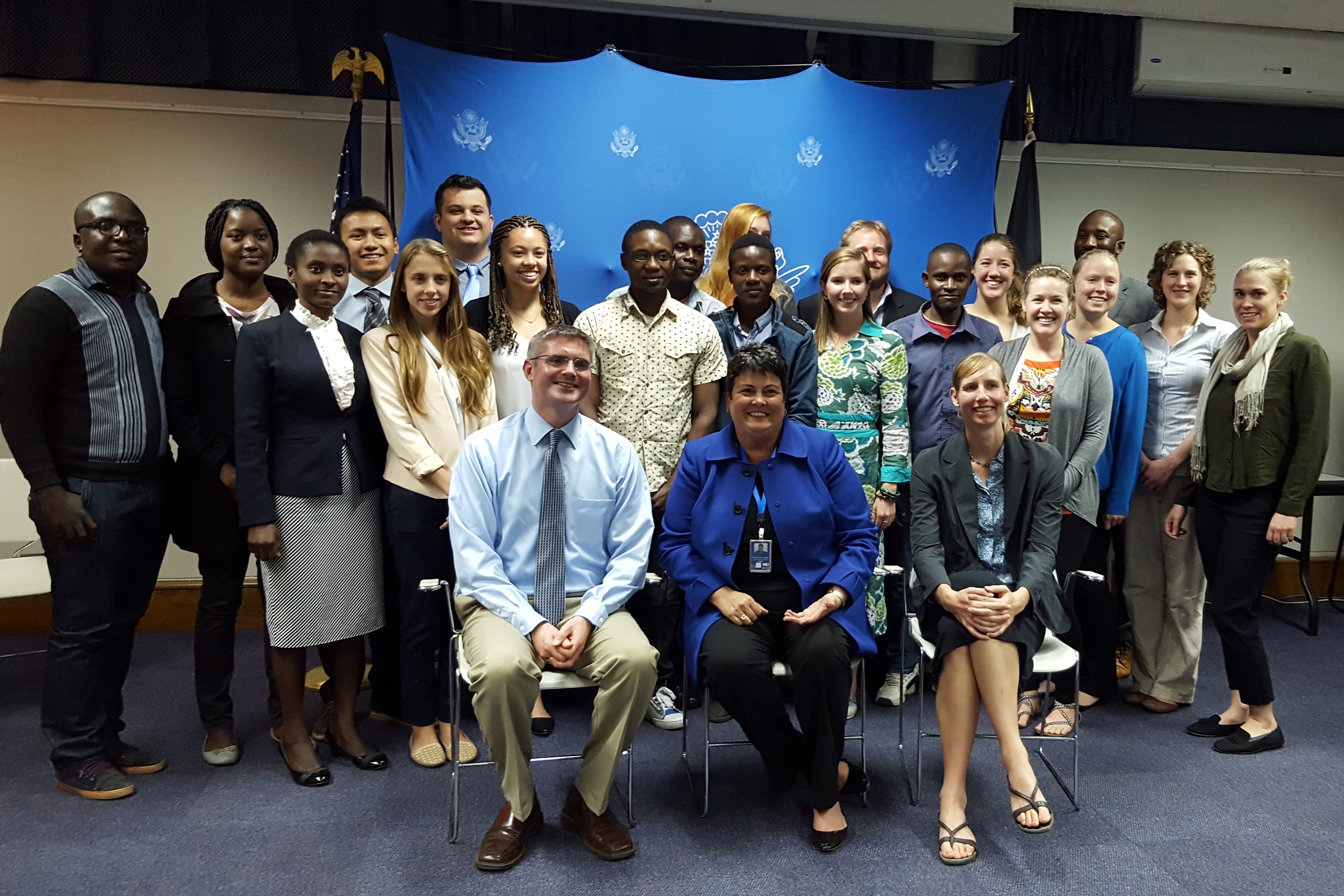
Following our meeting with the Ambassador, students had the opportunity to meet with Edward Monster, the Public Affairs Officer for the U.S. Embassy in Malawi and Carol Spahn, the Country Director for Peace Corps Malawi (below). During this conversation, students were able to learn about foreign service from the perspective of the U.S. Department of State and Peace Corps. It was interesting to hear that students can now select which country they would like to serve in for Peace Corps.
In the afternoon and evening on the first day, we held some get-to-know-you activities and relaxed a little with some games of volleyball at a local facility.
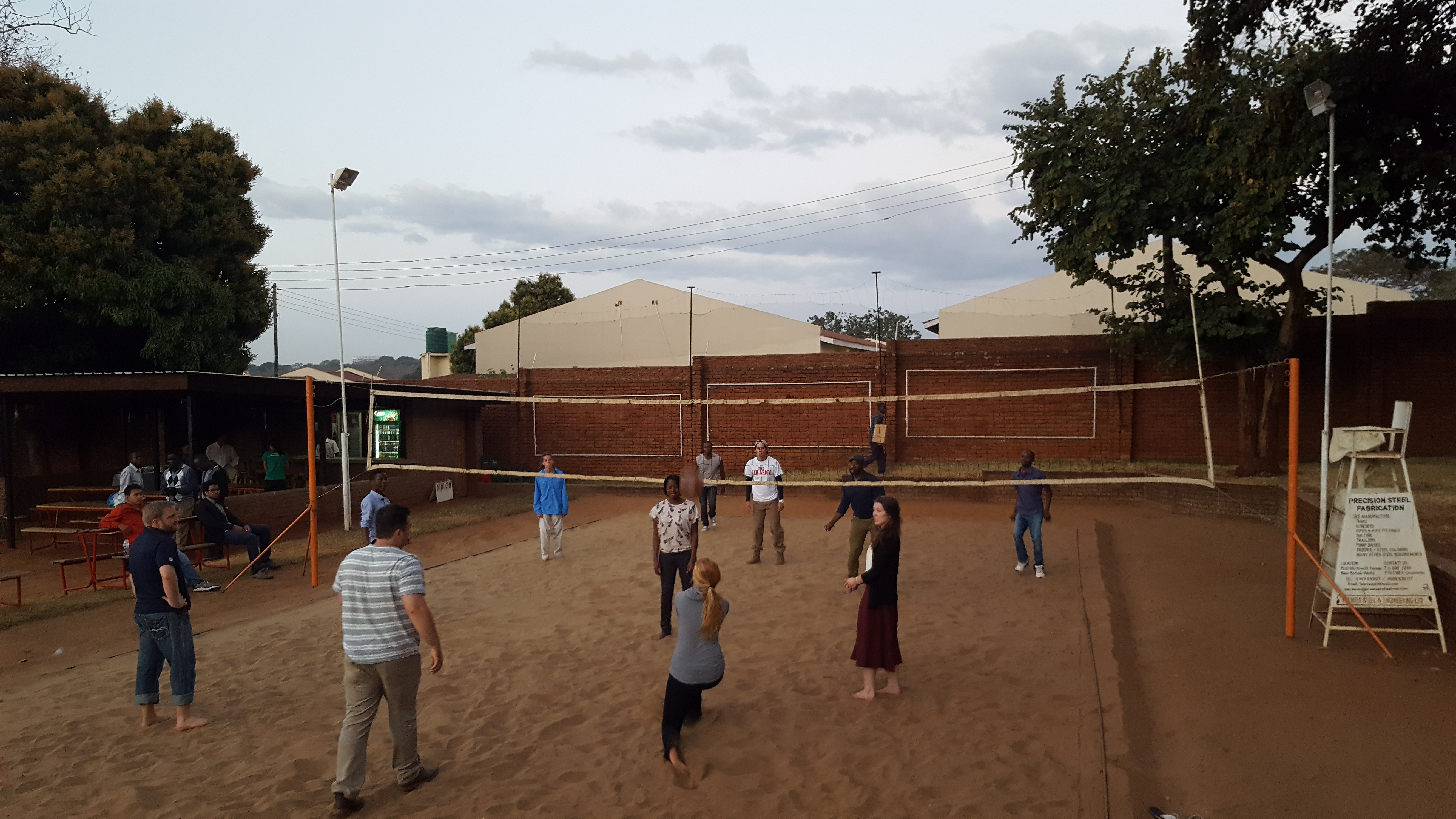
The following day, students had the opportunity to speak with Asayire Kapira (WES Network), Thanasius Sitolo (the Department of Water Supply and Sanitation), and Lucy Mungoni (USAID Malawi) about the WASH situation and WASH actors in Malawi. Following these meetings, the group left Lilongwe for a five hour drive to Mzuzu where we will hold the rest of the course.
Congratulations Josh Lee!
This morning, Josh Lee (Urban Affairs and Planning graduate) successfully defended his capstone project focused on creating “A Behavior Change Framework for Handwashing With Soap.” A unique aspect of Josh’s research is that his final capstone report will be given to the Uganda Village Project (UVP) to provide the organization with a framework for developing a handwashing program.
Capstone abstract:
One of the greatest challenges to improving hygiene in poor and undeveloped areas is changing the behavior of the target population. Behavior is informed by the interactions between the body, brain, and surrounding environment. However, most interventions and project designs tend to target one of these aspects while failing to address all three in a comprehensive manner. This report aims to familiarize Uganda Village Project (UVP) with the latest findings in handwashing with soap (HWWS). In addition, the report explores three behavior change frameworks that help identify critical factors that influence behavior. Lastly, the report provides a behavior change framework that could be used by UVP to create a new handwashing intervention in Iganga. The report emphasizes the importance of social norms, environmental cues, and habit formation on behavior change. The recommended behavior change framework incorporates these elements to expand the traditional approach to changing handwashing behaviors. The hope is that this framework will enable UVP to identify the most critical factors (psychological, social, and environmental) that influence handwashing with soap behavior in Iganga, Uganda.
This September, Josh will be traveling to Senegal to start a two-year Peace Corps placement.
I served at the chair of Josh’s capstone committee, along with committee members Max Stephenson and Kerry Redican.
First Reviews of Sustainable Transportation Book
The first reviews of my co-authored book entitled Sustainable Transportation: Indicators, Frameworks, and Performance Management have been published.
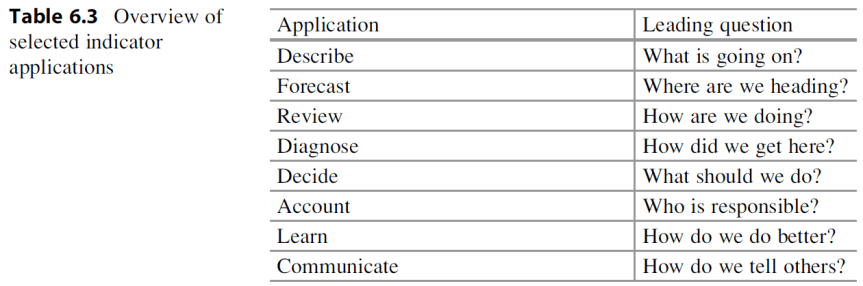
 The first review (in Danish) is from Prof. Steen Leleur (Technical University of Denmark) and can be accessed by clicking on the image to the left. I appreciate that Prof. Leleur highlighted the chapters on indicators (Chapter 6) and frameworks (Chapter 7). We tried to make these chapters as comprehensive and accessible as possible given their importance to the measurement of sustainable transportation. I believe a unique aspect of the book is the presentation of eight indicator applications (below), which embody the purpose to which the indicators are to be put. These indicator applications are applied to the four case studies in part two of the book to identify how indicators are being used for analysis, communication, and/or decision support. I agree with Prof. Leleur that it would have been nice to have included an index in the back of the book. Unfortunately, we did not have the resources to do this, but I hope this can be rectified in a future edition of the book.
“Bogen kan varmt anbefales til læsere, der ønsker et nærmere kendskab til transport og bæredygtighed og specielt til læsere, der på en eller anden måde er inddraget i udvikling og implementering af bæredygtig transport” (Steen Leleur). [Translation: The book is highly recommended for readers who want a closer knowledge of transport and sustainability, especially for readers who are in some way implicated in the development and implementation of sustainable transport.]
The second review is from Prof. Joseph Sussman (MIT) and can be accessed from the Journal of Planning Education and Research. During my doctoral research at MIT I had the pleasure of holding many extended discussions with Prof. Sussman on how sustainable transportation should or could be framed within the context of sustainable development. I credit much of the clarity we were able to develop on this complex subject to these early conversations and debates, which I continued with my co-authors during the writing of the book. I was pleased Prof. Sussman believes the book provides “a deeper, more scholarly treatment” of this subject than what we were able to achieve over a decade ago.
“This book represents a milestone along the path of a deeper understanding of both the transportation field and the planet’s need for an effective strategy to work toward a sustainable society. Any serious student of these topics would be remiss in not obtaining this book and reading it with care” (Joseph Sussman).
Interim Library Open
Mzuzu University recently opened an interim library. We are now working to ship several palettes of books to Malawi that we have collected via the Mzuni Library Initiative.
In May 2016, Mzuzu University opened an interim library. The former students’ dining hall has been remodeled into a small, but functional, university library. Some book donations have already been received from individuals and organizations in Malawi, the UK, and other countries, and more will soon be sent from the US. However, many of the specific titles needed for student’ course work are missing. Click HERE for more information about how you can help.
Selma’s Commencement
This morning I had the pleasure of hooding Selma Elouardighi, who successfully defended her PhD in Planning, Governance, & Globalization in April. Since Selma’s family were not able to travel from Morocco to the CAUS Commencement Ceremony, I recorded a video of the event for them through Google Glass. The video below captures my perspective of the ceremony and includes some fun behind the scenes moments.
Novnit Kashyap (IITK-VT Scholar)
I’d like to thank Ricky Cox and Theresa Burriss for hosting this visit to Radford University’s Selu Conservancy. This was an excellent way for Novnit Kashyap and Charles Chirwa (two visiting scholars from India and Malawi, respectively) to learn about Virginia’s culture and history.
IITK-VT Partnership on Sustainable and Resilient Infrastructure
Novnit Kashyap, a student in the Department of Civil Engineering at IIT Kanpur, has arrived at Virginia Tech as a visiting research scholar. He will be working under the guidance of Dr. Ralph Hall in the School of Public and International Affairs for a period of two months (May and June, 2016).
Novnit will work on creating proposals for short term professional development courses to be offered at Virginia Tech’s India ICTAS Innovation Center. Accordingly, he will carry out research to study the nature of professional development courses that are needed in India and engage with prospective faculty at Virginia Tech.
In India, his research focuses on the sustainability parameters for urban water resource infrastructure in the context of smart cities.
The images below were taken during a recent visit to Radford University’s Selu Conservancy, where Novit and visiting scholar Charles Chirwa (from Mzuzu University, Malawi) were able…
View original post 12 more words
2016 International Development Studio Presentations
Today marked the end of the 2016 International Development Planning Studio. This year we continued to advance the quality of the proposals being developed by students, in large part due to the support of a number of international development experts at Virginia Tech. These experts worked closely with the students to help shape their ideas and refine their application of specific tools such as logical framework analysis. This semester, I also used a formative assessment framework to help guide the structure of the studio, which I will discuss in a future post.
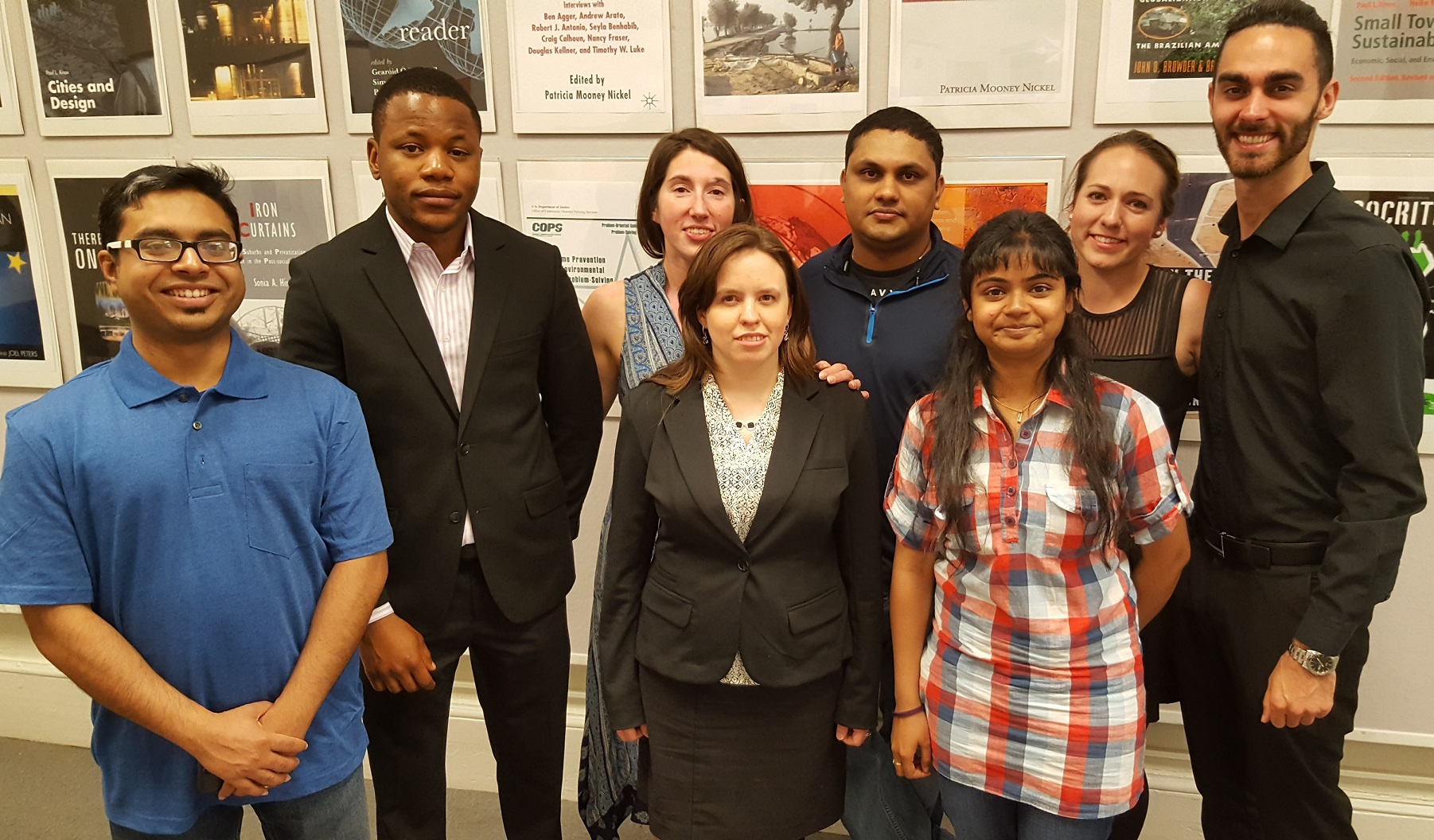
I have listed below the titles of the student proposals to provide an indication of the range of subjects covered this semester.
- Implementation of Sexual Health Programs within Iran
- HIV Prevention Program in Bujumbura, Burundi
- Reducing Child Mortality in Burkina Faso Through Breastfeeding Education
- Preventing Adolescent Pregnancy in Abidjan (Côte d’Ivoire)
- Planning a Bus Rapid Transit System in New Delhi, India
- Gudri and Tantnagar Open Defecation Pilot Project
- Mobile Clinic and Educational Bus Bucharest, Romania
- Domestic Violence Support and Awareness in Guyana
In the final two studios, students formally presented and defended their proposals to a panel of international development experts. I would like to thank the following individuals for serving on these proposal review panels: Sophie Wenzel, Hannah Menefee, Maria Elisa Christie, John Browder, Bill Anderson, James Foreman, and Van Crowder. I greatly their time and the important contributions they make to student learning.
 Ralph P Hall