Congratulations Josh Lee!

This morning, Josh Lee (Urban Affairs and Planning graduate) successfully defended his capstone project focused on creating “A Behavior Change Framework for Handwashing With Soap.” A unique aspect of Josh’s research is that his final capstone report will be given to the Uganda Village Project (UVP) to provide the organization with a framework for developing a handwashing program.

This slideshow requires JavaScript.

Capstone abstract:

One of the greatest challenges to improving hygiene in poor and undeveloped areas is changing the behavior of the target population. Behavior is informed by the interactions between the body, brain, and surrounding environment. However, most interventions and project designs tend to target one of these aspects while failing to address all three in a comprehensive manner. This report aims to familiarize Uganda Village Project (UVP) with the latest findings in handwashing with soap (HWWS). In addition, the report explores three behavior change frameworks that help identify critical factors that influence behavior. Lastly, the report provides a behavior change framework that could be used by UVP to create a new handwashing intervention in Iganga. The report emphasizes the importance of social norms, environmental cues, and habit formation on behavior change. The recommended behavior change framework incorporates these elements to expand the traditional approach to changing handwashing behaviors. The hope is that this framework will enable UVP to identify the most critical factors (psychological, social, and environmental) that influence handwashing with soap behavior in Iganga, Uganda.

This September, Josh will be traveling to Senegal to start a two-year Peace Corps placement.

I served at the chair of Josh’s capstone committee, along with committee members Max Stephenson and Kerry Redican.
First Reviews of Sustainable Transportation Book

The first reviews of my co-authored book entitled Sustainable Transportation: Indicators, Frameworks, and Performance Management have been published.

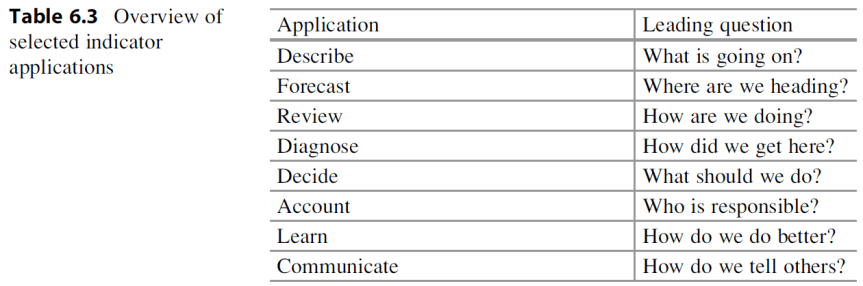
2016-06-17_2014The first review (in Danish) is from Prof. Steen Leleur (Technical University of Denmark) and can be accessed by clicking on the image to the left. I appreciate that Prof. Leleur highlighted the chapters on indicators (Chapter 6) and frameworks (Chapter 7). We tried to make these chapters as comprehensive and accessible as possible given their importance to the measurement of sustainable transportation. I believe a unique aspect of the book is the presentation of eight indicator applications (below), which embody the purpose to which the indicators are to be put. These indicator applications are applied to the four case studies in part two of the book to identify how indicators are being used for analysis, communication, and/or decision support. I agree with Prof. Leleur that it would have been nice to have included an index in the back of the book. Unfortunately, we did not have the resources to do this, but I hope this can be rectified in a future edition of the book.

2016-06-17_2027

Bogen kan varmt anbefales til læsere, der ønsker et nærmere kendskab til transport og bæredygtighed og specielt til læsere, der på en eller anden måde er inddraget i udvikling og implementering af bæredygtig transport” (Steen Leleur). [Translation: The book is highly recommended for readers who want a closer knowledge of transport and sustainability, especially for readers who are in some way implicated in the development and implementation of sustainable transport.]

2016-06-17_2039

The second review is from Prof. Joseph Sussman (MIT) and can be accessed from the Journal of Planning Education and Research. During my doctoral research at MIT I had the pleasure of holding many extended discussions with Prof. Sussman on how sustainable transportation should or could be framed within the context of sustainable development. I credit much of the clarity we were able to develop on this complex subject to these early conversations and debates, which I continued with my co-authors during the writing of the book. I was pleased Prof. Sussman believes the book provides “a deeper, more scholarly treatment” of this subject than what we were able to achieve over a decade ago.

This book represents a milestone along the path of a deeper understanding of both the transportation field and the planet’s need for an effective strategy to work toward a sustainable society. Any serious student of these topics would be remiss in not obtaining this book and reading it with care” (Joseph Sussman).